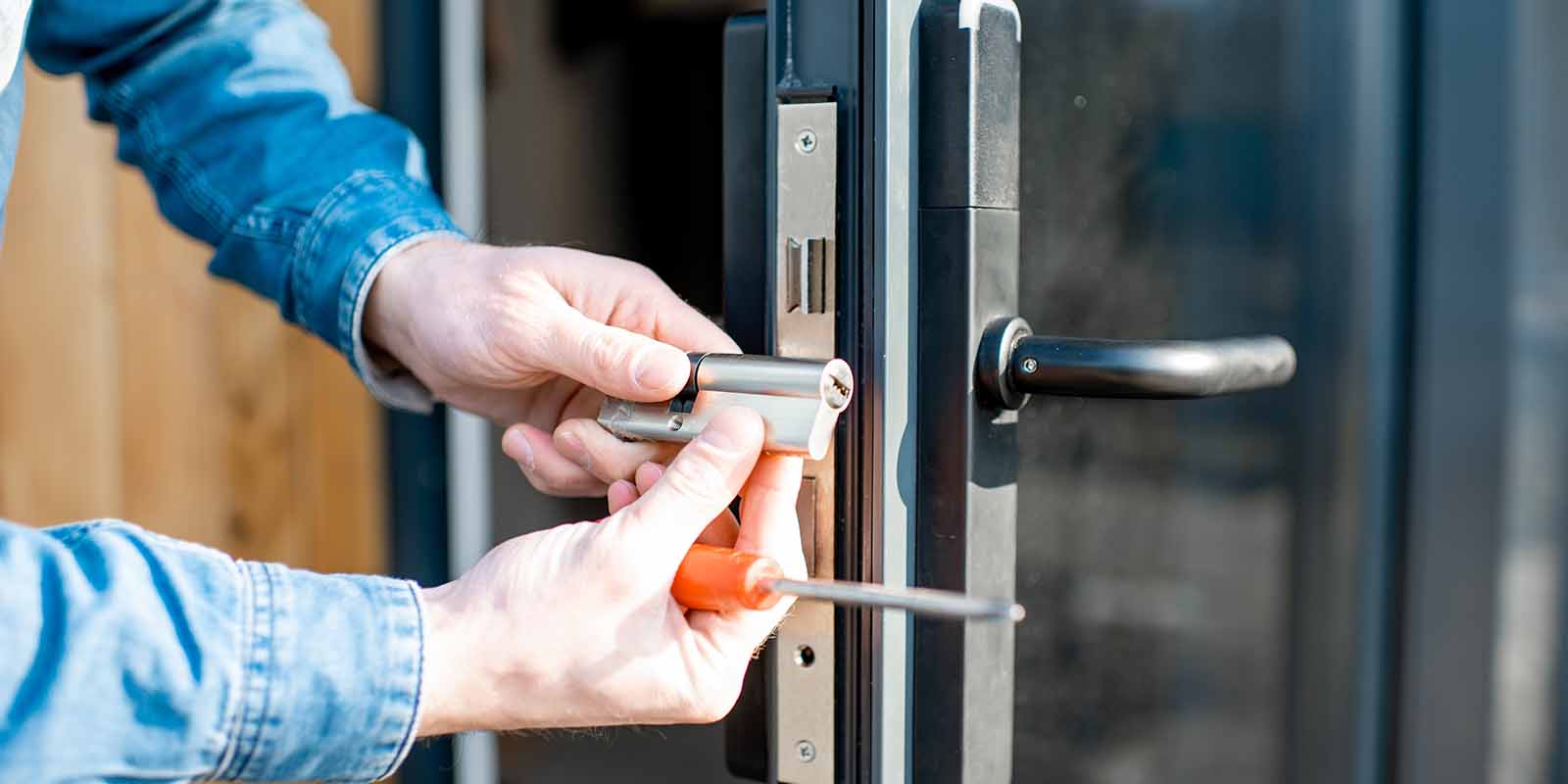
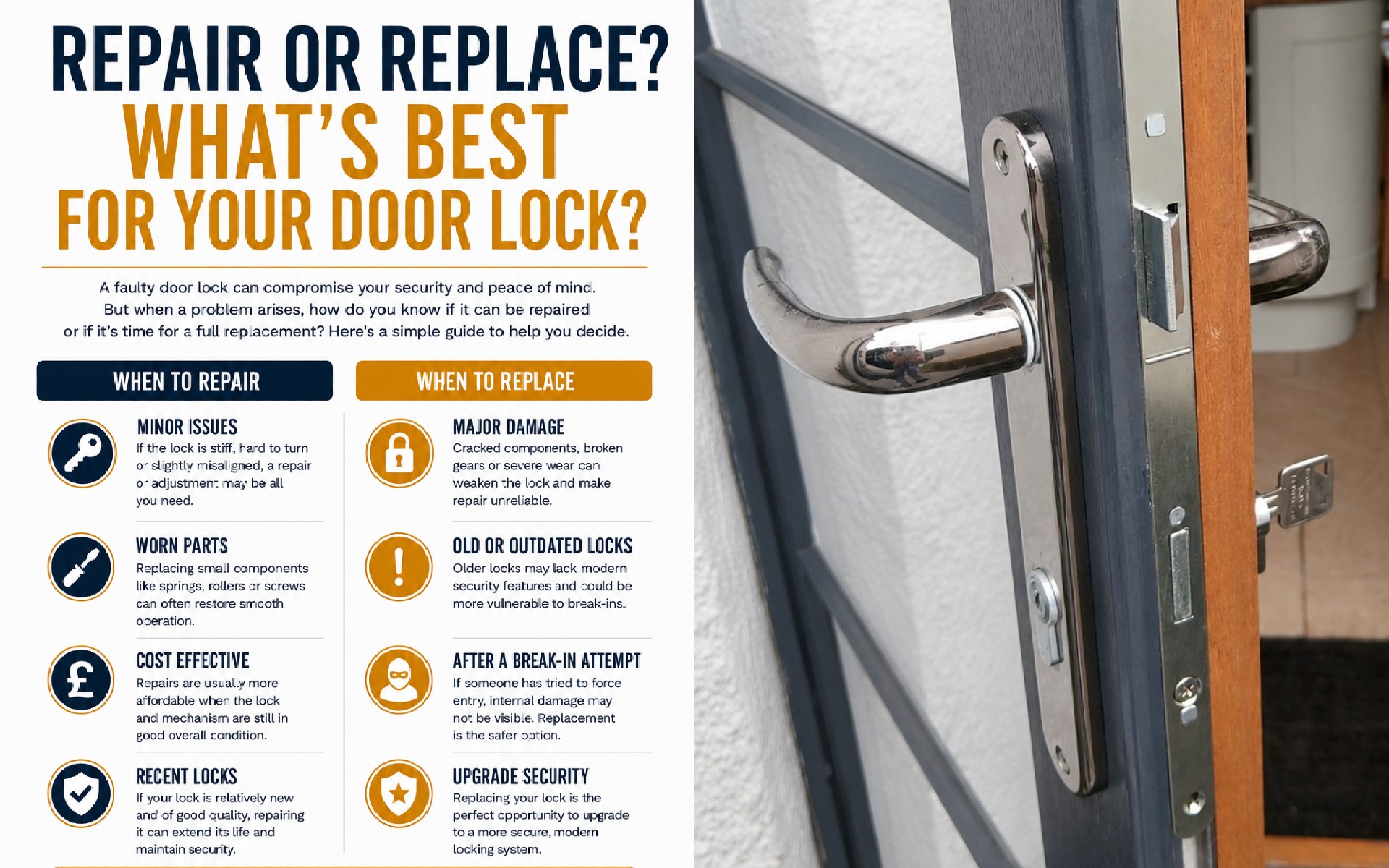
When a door lock starts playing up, many homeowners assume it needs replacing. While that is sometimes the best option, many lock problems can be repaired, saving both time and money.
The key is identifying what's actually causing the fault. Replacing the wrong part won't solve the problem and could leave you paying for unnecessary work.
When a Lock Can Be Repaired
Many lock faults affect just one component rather than the entire locking system.
Common repairable problems include:
- A failed gearbox
- A dropped door causing poor alignment
- Loose or worn door handles
- A faulty lock cylinder
- Stiff locking points
- Broken springs inside the handle
Repairing these components can often restore the lock to full working order.
When Replacement Is the Better Option
Sometimes replacing the lock is the most reliable long-term solution.
This may be necessary if:
- The lock has extensive internal wear
- The multipoint mechanism is damaged throughout
- Several locking points have failed
- The mechanism is beyond economical repair
- Replacement parts are no longer available
In these cases, replacing the complete mechanism provides a dependable repair.
Not Every Gearbox Can Be Changed
A failed gearbox doesn't always mean a simple gearbox replacement.
If the mechanism has:
- Broken connecting rods
- Worn hooks or rollers
- Seized locking points
- Damage across multiple components
the entire multipoint locking mechanism may need replacing.
A proper inspection determines which repair is appropriate.
Sometimes the Door Isn't the Problem
Many locking faults are caused by poor door alignment rather than the lock itself.
A dropped door can make the lock feel faulty by placing constant pressure on the mechanism.
Signs include:
- Difficulty lifting the handle
- Having to push or pull the door to lock it
- The door catching the frame
- Scrape marks on the keeps
Correcting the alignment may prevent unnecessary lock replacement.
Lock Cylinders Are Often Replaced
If the key becomes difficult to turn or you've recently moved home, replacing the lock cylinder is often the best solution.
It's also an opportunity to upgrade to a modern snap-resistant cylinder for improved security.
Don't Replace the Whole Door
One of the biggest misconceptions is that a faulty lock means you need a new door.
In reality, many problems can be resolved by repairing or replacing:
- The gearbox
- The multipoint mechanism
- The lock cylinder
- The handles
- Individual locking components
This is usually far more cost-effective than replacing the entire door.
Ignoring Small Problems Can Make Repairs More Expensive
A lock that's becoming stiff today may only need a minor repair.
If it's ignored and repeatedly forced, it can lead to:
- A failed gearbox
- Broken handles
- Damaged locking points
- A complete lockout
Early repairs often prevent more extensive damage.
The Importance of Correct Diagnosis
No two lock faults are exactly the same. A stiff handle, difficult key, or door that won't lock can all have different causes.
Replacing parts without identifying the real fault can waste both time and money. A proper diagnosis ensures the correct repair is carried out the first time.
Repair First Where Possible
In many cases, repairing a lock is the most economical option. However, if the mechanism is badly worn or damaged beyond repair, replacement provides the most reliable long-term solution. The best approach is always to assess the condition of the lock and repair only what's necessary, replacing components only when repair is no longer practical.