Getting locked out of your home is frustrating at any time, but finding yourself outside late at night can be stressful, particularly in cold or wet weather.
Whether you've lost your keys, left them inside or discovered that your lock has failed, the first priority is your safety. Before rushing to call an emergency locksmith, take a moment to assess your options.
At A.L.S Locksmith, we believe in giving homeowners practical advice to help them make sensible decisions when they're locked out.
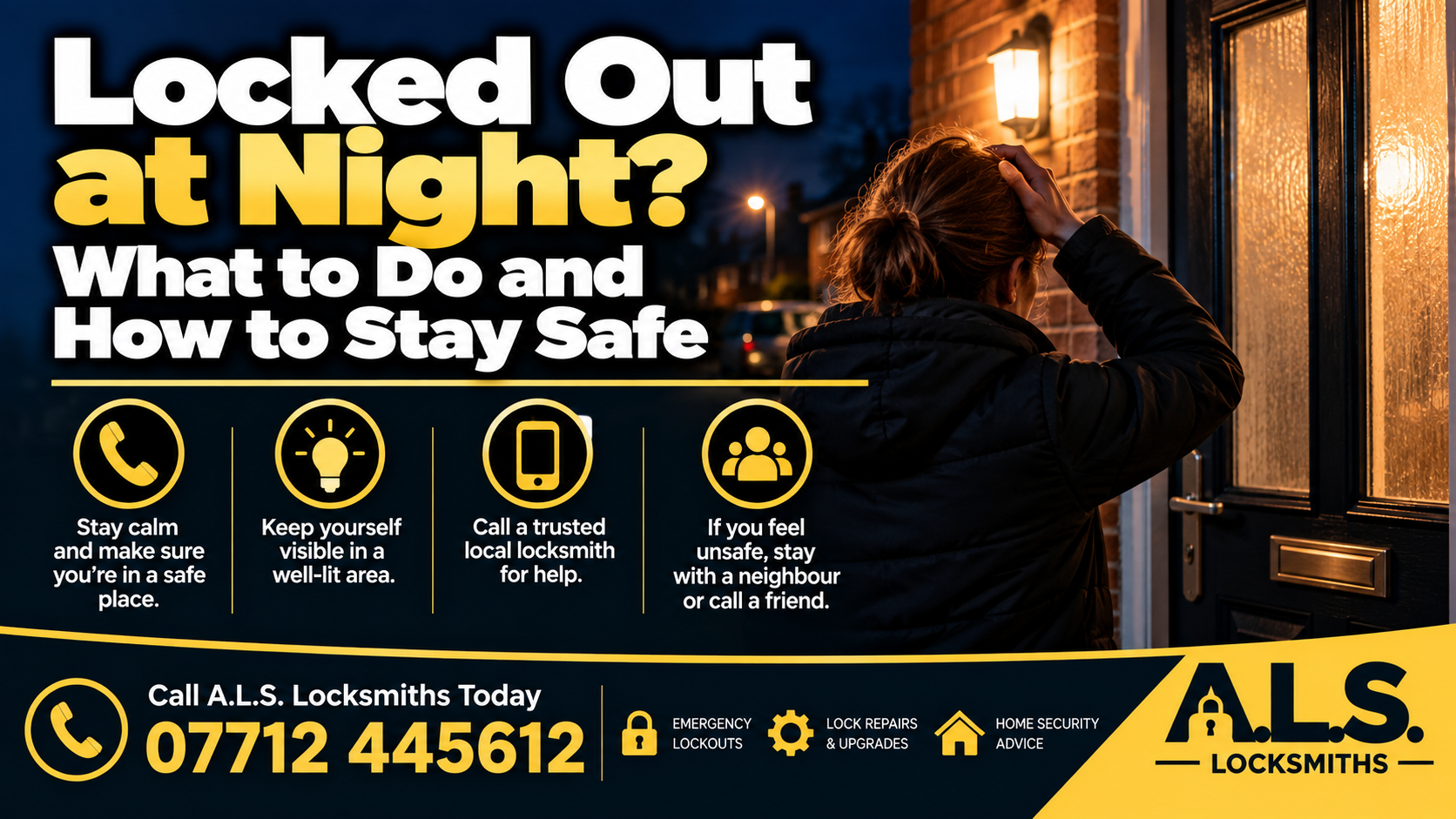
Step 1: Put Your Safety First
Before worrying about getting back inside, consider your surroundings.
Move Somewhere Safe and Well Lit
If you're standing outside in a dark or secluded area, move somewhere better lit if possible. A well-lit pavement, a trusted neighbour's property or another safe location may be a better place to wait.
Avoid remaining in an isolated garden or doorway if you feel vulnerable.
Find Somewhere Warm if Necessary
If the weather is particularly cold, wet or windy, consider going somewhere safe and sheltered.
A nearby 24-hour petrol station or another open public establishment may be an option. Alternatively, contact a trusted friend, family member or neighbour.
If you feel threatened or are in immediate danger, move to safety and call 999.
Preserve Your Phone Battery
Your phone may be essential for contacting family, a landlord or a locksmith.
If your battery is low, conserve power by closing unnecessary apps, reducing screen brightness and avoiding prolonged use of the torch.
Step 2: Check Your Options Before Calling a Locksmith
Once you're somewhere safe, consider whether you can regain access without paying for an emergency call-out.
Contact Someone Who Has a Spare Key
A partner, family member or trusted friend may have a spare key.
If someone can bring it to you safely and reasonably quickly, this may be the simplest solution.
Contact Your Landlord or Property Manager
If you rent your home, check your tenancy documents for an emergency contact number.
Some landlords and property management companies have arrangements for out-of-hours lockouts. Check whether a fee applies before agreeing to any work.
Consider Staying with a Friend or Relative
If nobody has a spare key and there's no immediate reason you must enter your home, consider staying with someone you trust until morning.
This can be particularly sensible if you're alone, the weather is poor or you're concerned about the cost of an emergency locksmith.
Sometimes, the safest and cheapest option is to leave the repair until daylight.
Step 3: Do You Really Need an Emergency Locksmith Tonight?
Not every lockout requires immediate professional assistance.
If you've simply misplaced your keys and your home is otherwise secure, staying with a friend or relative and arranging help the following morning may save you money.
Emergency locksmith services can involve additional out-of-hours charges. Prices and charging arrangements vary between businesses, so establish the likely cost before agreeing to a call-out.
However, if your lock has failed, your property cannot be secured or there is an urgent safety concern, professional assistance may be necessary.
Step 4: Choosing a Reputable Emergency Locksmith
If you need help that night, take time to check the locksmith before agreeing to the work.
-
Ask for the total expected cost: Clarify the call-out charge, labour, parts and any out-of-hours surcharge.
-
Explain the problem clearly: Tell them whether you've lost your keys, the key has snapped or the door is jammed.
-
Ask about the proposed method: Find out whether they expect to open the door without damage and under what circumstances drilling or replacement may be necessary.
-
Check what happens if the price changes: Ask them to obtain your approval before carrying out additional chargeable work.
-
Avoid pressure tactics: Be cautious if someone refuses to explain the pricing or insists that the entire lock must be replaced before properly assessing the problem.
A professional locksmith should explain the likely options and costs clearly. The cheapest quotation isn't always the best, but you should know what you're agreeing to pay.
Step 5: Avoid Forcing the Door or Lock
When you're cold, tired and frustrated, it can be tempting to try to get inside by forcing a window, pushing the door or repeatedly turning the key.
Avoid doing this. You could damage the door, locking mechanism or window, turning a straightforward lockout into a more expensive repair.
If the key is stuck or the lock won't turn, stop applying force. The problem may be a faulty cylinder, a failed gearbox or a door that has dropped out of alignment.
These faults often require a different solution from a simple lost-key lockout.
How to Avoid Being Locked Out Again
A few simple precautions can reduce the chance of finding yourself outside late at night.
-
Keep a spare key with someone you trust.
-
Consider fitting a suitable, securely installed key safe in a discreet location.
-
Check that your keys are with you before closing the door.
-
Replace worn keys if they are becoming difficult to use.
-
Arrange repairs if your door is becoming stiff or unreliable.
-
Keep your landlord's or property manager's emergency contact details accessible.
A key safe needs careful consideration because it creates another way to access your property. Choose a reputable model, fit it securely and protect the code.