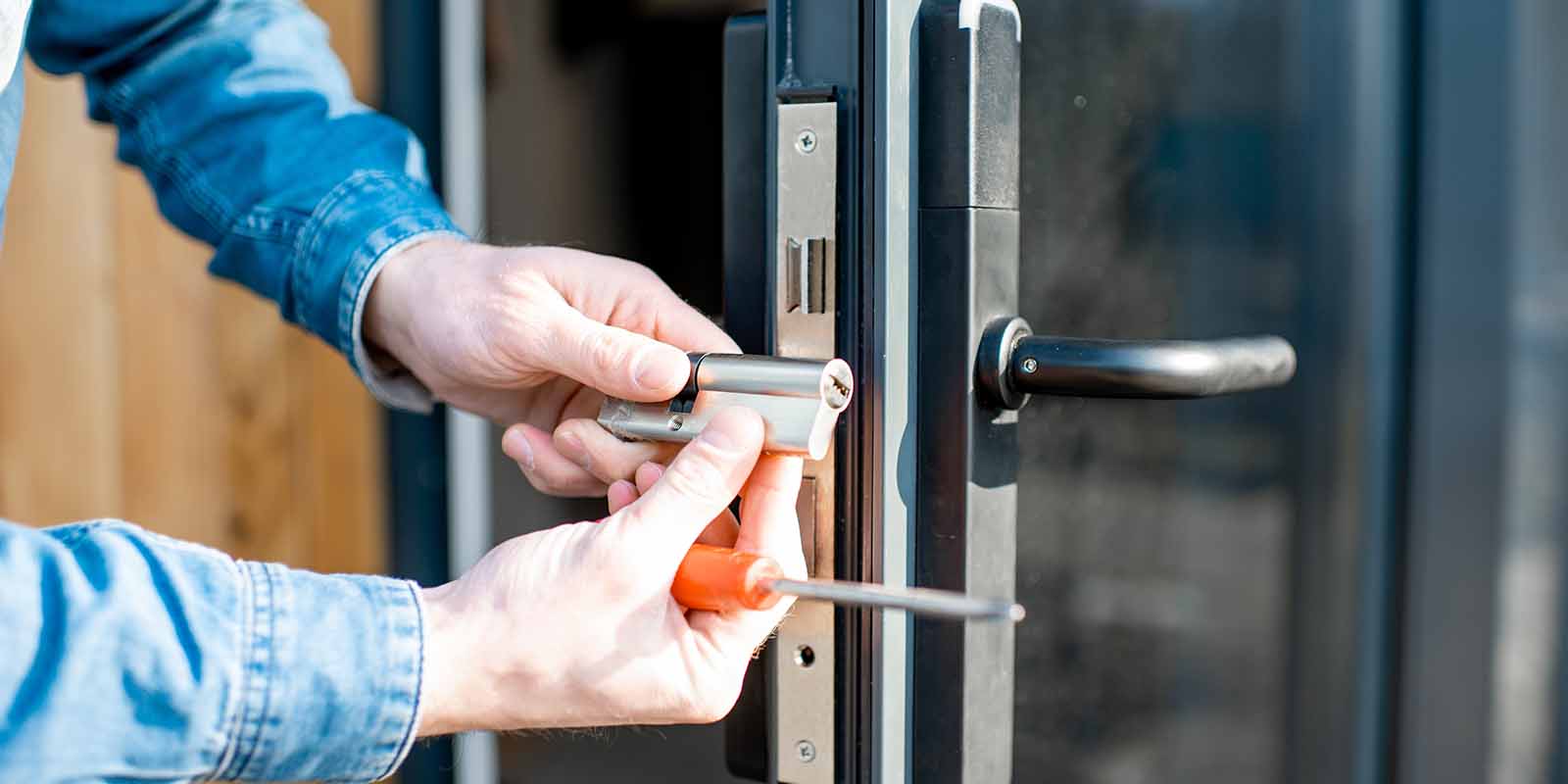
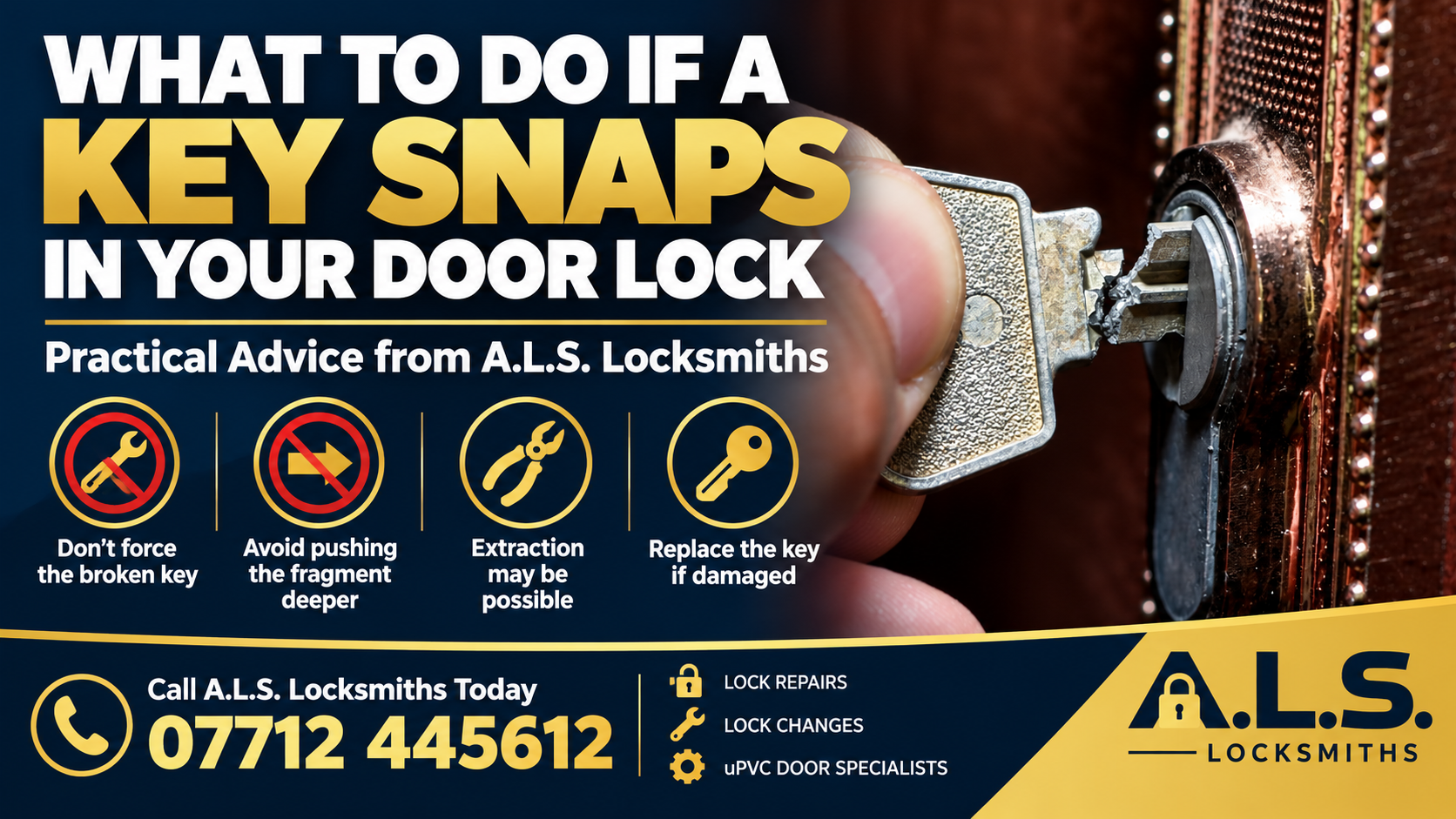
A key snapping inside a door lock can happen without warning. You might be trying to unlock your front door, lock up before leaving the house or open a UPVC door when suddenly the key breaks, leaving part of it stuck inside the lock.
The good news is that a snapped key does not automatically mean you need a new lock. In many cases, the broken piece can be removed and the lock can continue to be used, provided it has not been damaged.
At A.L.S Locksmiths, we help homeowners across Glasgow, Paisley and the surrounding areas with broken keys, faulty locks and door entry problems.
Why Do Keys Snap Inside Locks?
Keys can break for several reasons:
-
Wear and tear: Keys gradually wear down through repeated use, making them more vulnerable to snapping.
-
A stiff lock: If the lock is difficult to turn, extra force can put excessive strain on the key.
-
Door misalignment: A door that has dropped or moved out of position can put pressure on the locking mechanism.
-
A damaged lock mechanism: Worn or failing internal components can prevent the lock from moving freely.
-
Poor-quality duplicate keys: An inaccurately cut or poorly made copy may not operate smoothly and can place additional strain on the lock.
If a key snaps because the lock is stiff, simply removing the broken piece may not solve the underlying problem.
DIY Methods for Removing a Snapped Key
If a key snaps inside a door lock, there are a couple of methods you may be able to try yourself before calling a locksmith. Success depends on how far the broken piece has entered the cylinder and whether it is accessible.
1. Try a Thin Wire From the Opposite Side
On some lock cylinders, if the keyway is accessible from both sides, a thin wire inserted carefully from the opposite side may be able to push the broken key out through the other side.
This will not work on every cylinder, and you should never force the wire. If the broken key does not move easily, stop rather than risk pushing it further into the lock or damaging the mechanism.
2. Use a Thin Stanley Blade Carefully
A thin Stanley blade may sometimes help catch the edge of a broken key and flick it out of the keyway. This can work better than tweezers when the broken piece is sitting just inside the cylinder and there is enough room to get behind it.
Take care: Stanley blades are extremely sharp and can slip easily. Do not force the blade into the cylinder, and keep your fingers clear of the cutting edge. If the key is buried deep inside the lock, this method is unlikely to help. A purpose-made broken-key extractor is generally a safer option.
3. Why Tweezers Often Don't Work
Tweezers may be useful when a substantial piece of the key is sticking out, but they can struggle to grip a small fragment sitting flush with the keyway. Repeated attempts can also push the key further inside.
If the broken piece is not accessible, it is often better to stop before making the job more difficult.
What Should You Avoid Doing?
If your key snaps while you are turning it, stop immediately. Continuing to twist the remaining piece can push the broken section further into the lock or cause additional damage.
Avoid forcing screwdrivers, needles or other unsuitable objects into the keyway. Do not repeatedly turn the lock with the remaining piece of key, and avoid pouring household oils or lubricants into the cylinder without knowing whether they are suitable.
If the key snapped because the lock was stiff, the underlying fault may need attention even after the broken piece has been removed.
What If the Key Snaps in a UPVC or Composite Door?
UPVC and composite doors commonly use multipoint locking systems. These operate several locking points along the edge of the door when the handle is lifted and the mechanism is engaged.
If a key snaps in the euro cylinder, the broken piece may prevent the cylinder from operating. However, the problem may also be related to a stiff gearbox or a door that is not correctly aligned with its frame.
Forcing the handle or repeatedly turning the remaining key can make matters worse.
A locksmith can assess whether the fault is limited to the cylinder or whether the door's alignment or multipoint mechanism also needs attention.
Can a Locksmith Remove a Snapped Key Without Changing the Lock?
In many cases, yes. A locksmith may be able to extract the broken section using specialist tools designed for key removal.
Whether the existing lock can be reused depends on several factors:
-
Where the broken key is positioned.
-
Whether the cylinder or internal components have been damaged.
-
Whether the key snapped because the lock was already faulty.
-
Whether the lock operates correctly after extraction.
If the cylinder remains in good condition, replacing the lock may not be necessary. If the lock is damaged or continues to stick, replacement may be the more reliable solution.
Should You Call an Emergency Locksmith or Wait Until Morning?
If your key snaps outside normal working hours, consider whether you genuinely need an emergency call-out.
If the door can be left secure and you do not need immediate access, waiting until daytime before calling a locksmith may save you money. Emergency and out-of-hours services can cost considerably more than a routine daytime appointment.
However, if the broken key leaves your home insecure, you are locked out in an unsafe location, or someone vulnerable is inside and needs assistance, do not delay getting help just to avoid an emergency charge.
When contacting a locksmith, ask about the call-out cost, the total expected price and any additional out-of-hours charges before agreeing to the work.
At A.L.S Locksmiths, we operate on a fixed-price basis. The quoted price is the price you pay, with no hourly rates or call-out fees.
Why Does a Key Keep Getting Stuck or Snapping?
If a key has snapped, it is worth considering why it happened in the first place.
A cylinder that has become difficult to operate may need servicing or replacement. If the door has dropped, the locking points may be under strain. A failing gearbox can also make a multipoint door increasingly difficult to lock.
Simply removing the broken key without addressing the cause could leave you facing the same problem again.
A professional assessment can help establish whether the lock needs repair, a replacement cylinder or further work to the door mechanism.
Broken Key Removal in Glasgow and Paisley
If your key has snapped inside a door lock, A.L.S Locksmiths can assess the problem and advise on the appropriate solution.
We deal with a range of residential lock problems, including faulty euro cylinders, mortice locks, UPVC door mechanisms and composite door locks across Glasgow, Paisley and surrounding areas.
Where possible, the aim is to remove the broken key and retain the existing lock if it remains safe and functional. If another fault has caused the key to snap, that should be addressed to help prevent a repeat problem.
A snapped key does not automatically mean you need a new lock or a new door. Avoid forcing the mechanism, try only safe removal methods, and consider a daytime appointment if the situation can safely wait.