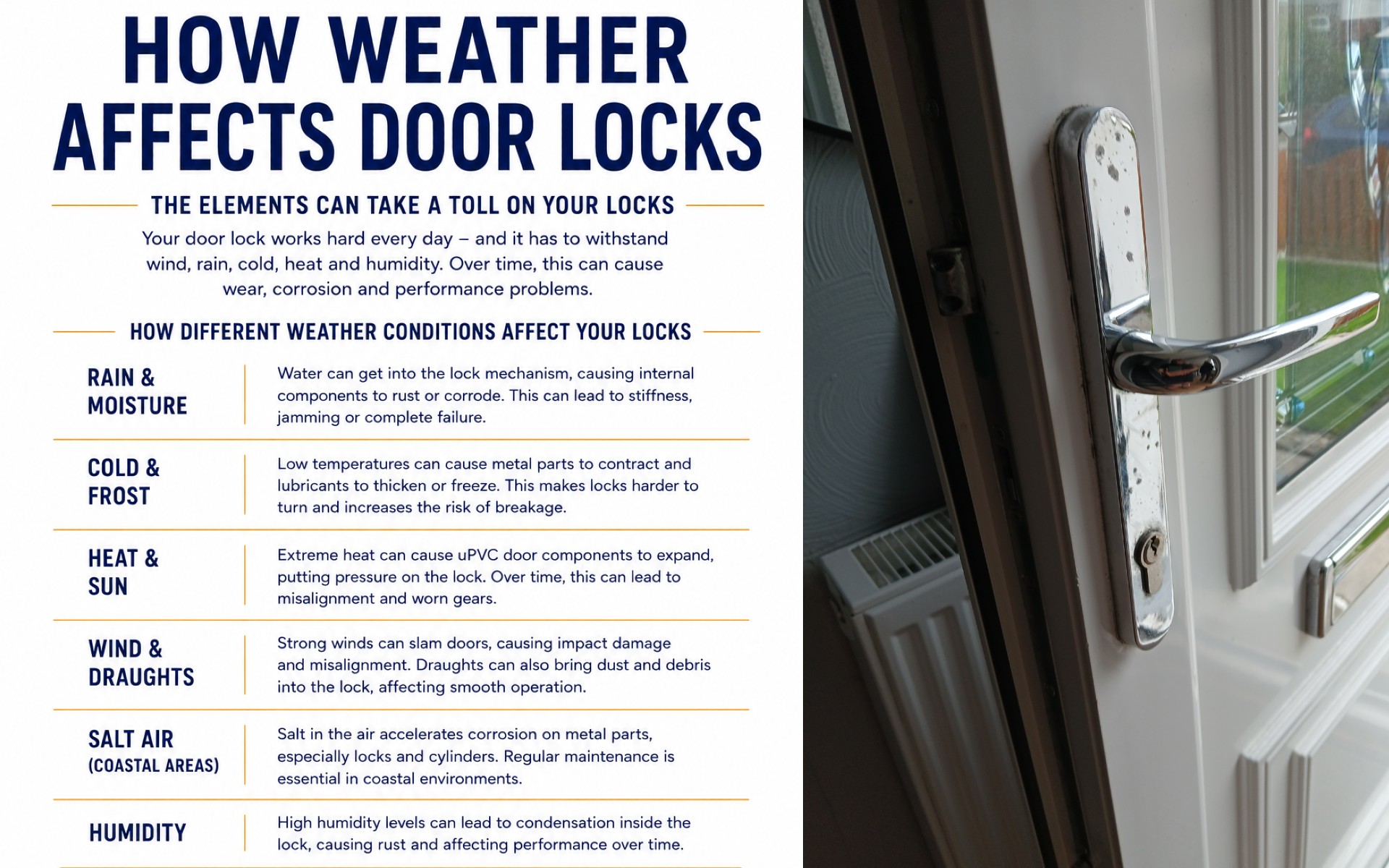
Scotland's weather can be hard on doors and locks. Rain, frost, temperature changes, and strong winds can all affect how a lock operates. If your lock becomes stiff during winter or your door suddenly becomes difficult to close after a spell of warm weather, the weather may be playing a bigger role than you think.
Cold Weather Can Make Locks Stiff
During colder months, metal components contract slightly. While the change is small, it can affect how smoothly a lock operates, particularly if the lock is already worn or struggling with an alignment issue.
- The key becoming harder to turn
- The handle feeling stiff
- Locking points becoming sluggish
- Increased resistance when locking the door
Cold weather often exposes existing problems that may not have been obvious during warmer months.
Heat Causes Expansion
During warmer weather, doors and frames expand.
This can cause:
- Doors rubbing on the frame
- Difficulty closing the door
- Handles becoming harder to lift
- Locks becoming difficult to operate
Composite doors are generally more stable than timber doors, but all doors experience some degree of movement as temperatures change.
Rain and Moisture
Scotland sees plenty of rain, and moisture can eventually affect moving parts within locks and mechanisms.
Over time this can lead to:
- Corrosion
- Stiff locking points
- Seized components
- Increased wear
A lock exposed to years of wet weather without maintenance may begin to operate poorly or fail altogether.
Wind and Door Movement
Strong winds can place additional strain on doors, hinges, and locking mechanisms.
Repeated slamming caused by wind can:
- Knock doors out of alignment
- Loosen handles
- Damage locking points
- Accelerate wear on gearboxes
A door that regularly catches the wind is often more prone to alignment problems.
Seasonal Door Movement
It's common for doors to operate differently throughout the year.
Many homeowners notice:
- The door works perfectly in winter but catches in summer.
- The lock feels stiff during cold spells.
- Draughts appear at certain times of year.
- The handle becomes harder to lift as temperatures change.
These changes are often caused by the door and frame expanding and contracting with the seasons.
Why Alignment Matters
A correctly aligned door is far less affected by weather changes.
When a door is already sitting on the edge of acceptable tolerances, seasonal movement can be enough to create locking problems.
Common symptoms include:
- Difficulty lifting the handle
- Keys becoming stiff
- Locking points catching the frame
- Increased wear on the gearbox
Weather Can Shorten Mechanism Life
When a lock or mechanism is forced to work against poor alignment caused by seasonal movement, additional strain is placed on internal components.
Over time this can contribute to:
- Gearbox failure
- Seized locking points
- Worn cylinders
- Broken handles
Simple Maintenance Helps
Regular maintenance can help reduce weather-related problems:
- Keep locking points clean
- Lubricate moving parts periodically
- Check handles for looseness
- Address alignment issues early
- Don't ignore stiff locks
Small adjustments and preventative maintenance can often prevent bigger repairs later.
Don't Blame the Weather Alone
While weather can affect how a door operates, it is often exposing an existing problem rather than causing it.
If your door suddenly becomes difficult to lock during a cold spell or after hot weather, it's worth having it checked. A simple realignment or repair may be all that's needed to restore smooth operation.