Introduction
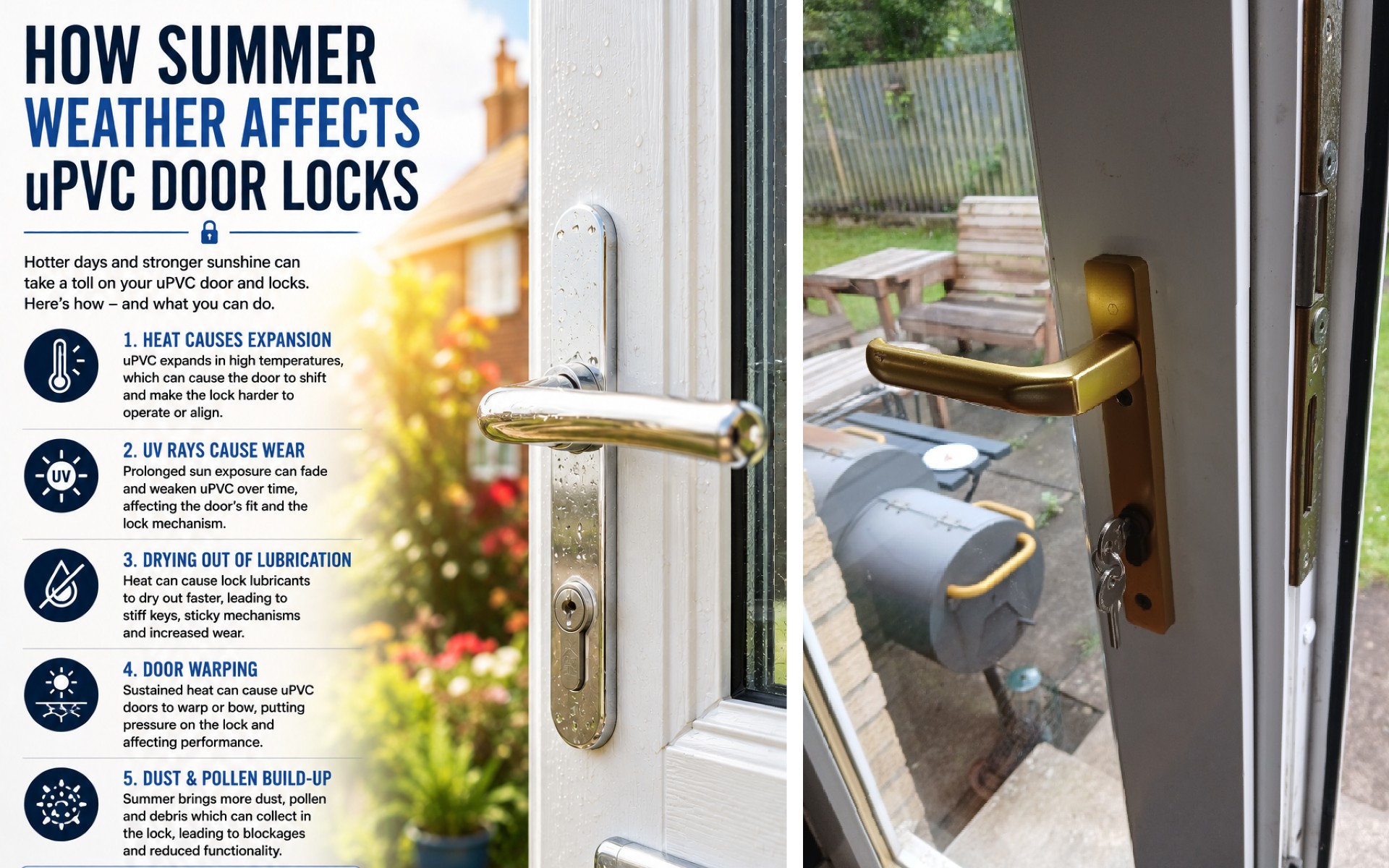
Many homeowners expect problems with their doors during winter, but summer can be just as challenging. Warm temperatures, prolonged sunshine and daily expansion and contraction can all affect how a uPVC or composite door operates.
If your door suddenly becomes difficult to lock during a spell of hot weather, don't ignore it. While the warmer temperatures may be highlighting the problem, they're often exposing an alignment issue that has been developing for months.
The good news is that, in most cases, the solution is a straightforward adjustment rather than an expensive replacement.
Why Heat Affects Doors
All building materials expand and contract as temperatures change.
On warm summer days, especially when exposed to direct sunlight, a uPVC door can expand slightly. Although the movement is often only a few millimetres, that's enough to alter the relationship between the door, the frame and the locking mechanism.
As a result, the locking points may no longer align perfectly with the keeps, making the door more difficult to operate.
Common Signs of Heat-Related Door Problems
You may notice:
- The handle becoming harder to lift.
- The key becoming stiff to turn.
- The door feeling tight when closing.
- The door catching the frame.
- Having to push or pull the door to lock it.
- Increased resistance when unlocking.
- The lock operating normally early in the morning but becoming stiff later in the day.
These symptoms often disappear as temperatures fall during the evening, only to return the following afternoon.
Existing Alignment Problems Become More Noticeable
In many cases, the hot weather isn't actually causing the fault.
Instead, it's highlighting an existing alignment problem.
A door that is only slightly out of adjustment during cooler months may become noticeably harder to operate once it expands in the heat.
This is why many customers report that their door only plays up on hot sunny days.
Extra Strain on the Gearbox
When the locking points no longer line up correctly, the gearbox has to work much harder every time the handle is lifted.
This constant extra strain can eventually cause:
- Premature gearbox wear.
- Broken internal springs.
- Damaged cams.
- Failed locking mechanisms.
- A jammed door.
Many gearbox failures begin with nothing more than a door that was becoming slightly stiff to lock.
Lock Cylinders Can Feel Stiffer
Heat can also make existing cylinder problems more noticeable.
If your cylinder is already worn, you may experience:
- Rough key operation.
- Increased resistance.
- Difficulty removing the key.
- Intermittent locking problems.
The cylinder itself may not be the primary cause, but the extra pressure being placed on it by a tight door often makes the symptoms much worse.
South-Facing Doors Experience the Greatest Movement
Doors exposed to direct sunshine for several hours each day are usually affected the most.
These include:
- South-facing front doors.
- West-facing entrance doors.
- Patio doors exposed to afternoon sun.
- Conservatory doors.
The repeated cycle of heating during the day and cooling overnight can gradually affect alignment over time.
Composite Doors Can Also Be Affected
Composite doors are generally more dimensionally stable than uPVC doors, but they are not completely immune to temperature changes.
During periods of prolonged heat, even composite doors can experience slight movement.
If the hinges are already worn or the door is slightly out of alignment, the symptoms become much more noticeable.
Don't Force the Lock
If your door suddenly becomes difficult to lock, resist the temptation to force the handle or key.
Excessive force can damage:
- The gearbox.
- The lock cylinder.
- The handles.
- The multipoint locking mechanism.
- The locking points.
What starts as a simple adjustment could quickly become a much more expensive repair.
What Usually Needs Adjusting?
Depending on the cause, the solution may involve:
- Realigning the door.
- Adjusting the hinges.
- Adjusting the keeps.
- Servicing the multipoint mechanism.
- Lubricating moving components.
- Replacing worn gearboxes or handles where necessary.
A correctly adjusted door should operate smoothly throughout the year, regardless of seasonal temperature changes.
Preventing Summer Lock Problems
You can reduce the risk of seasonal lock problems by:
- Having stiff doors adjusted early.
- Lubricating moving parts regularly.
- Replacing worn handles before they fail.
- Keeping locking points clean.
- Avoiding forcing the handle when resistance is felt.
- Having alignment checked if the door starts catching the frame.
Small adjustments made early can often prevent much larger repairs later.
Repair Before It Fails
Many homeowners continue using a stiff door because it still locks eventually.
Unfortunately, every operation places additional stress on the locking mechanism.
By the time the gearbox finally fails, what could have been a simple adjustment may require replacement parts and emergency repairs.
Addressing the problem while it's still minor is almost always the most cost-effective solution.
Conclusion
Summer weather can have a noticeable effect on both uPVC and composite doors, particularly if they are already slightly out of alignment. Heat causes doors to expand, increasing pressure on the locking mechanism and making existing problems more obvious. If your door becomes difficult to lock during warm weather, don't assume it will simply fix itself when temperatures fall. Having the door inspected and correctly adjusted can restore smooth operation, protect the gearbox and locking mechanism from unnecessary wear, and help avoid more expensive repairs in the future.