Introduction
Most modern French doors are fitted with a multipoint locking system rather than a traditional single-point lock. Instead of securing the door with just one latch or deadbolt, the mechanism locks the door at multiple positions along its height, making it far more secure while also pulling the door tightly against the frame.
Understanding how the system operates can help homeowners recognise early warning signs and prevent small faults from becoming expensive repairs.
What Is a Multipoint Lock?
A multipoint locking mechanism is a long metal strip fitted into the edge of the main opening door.
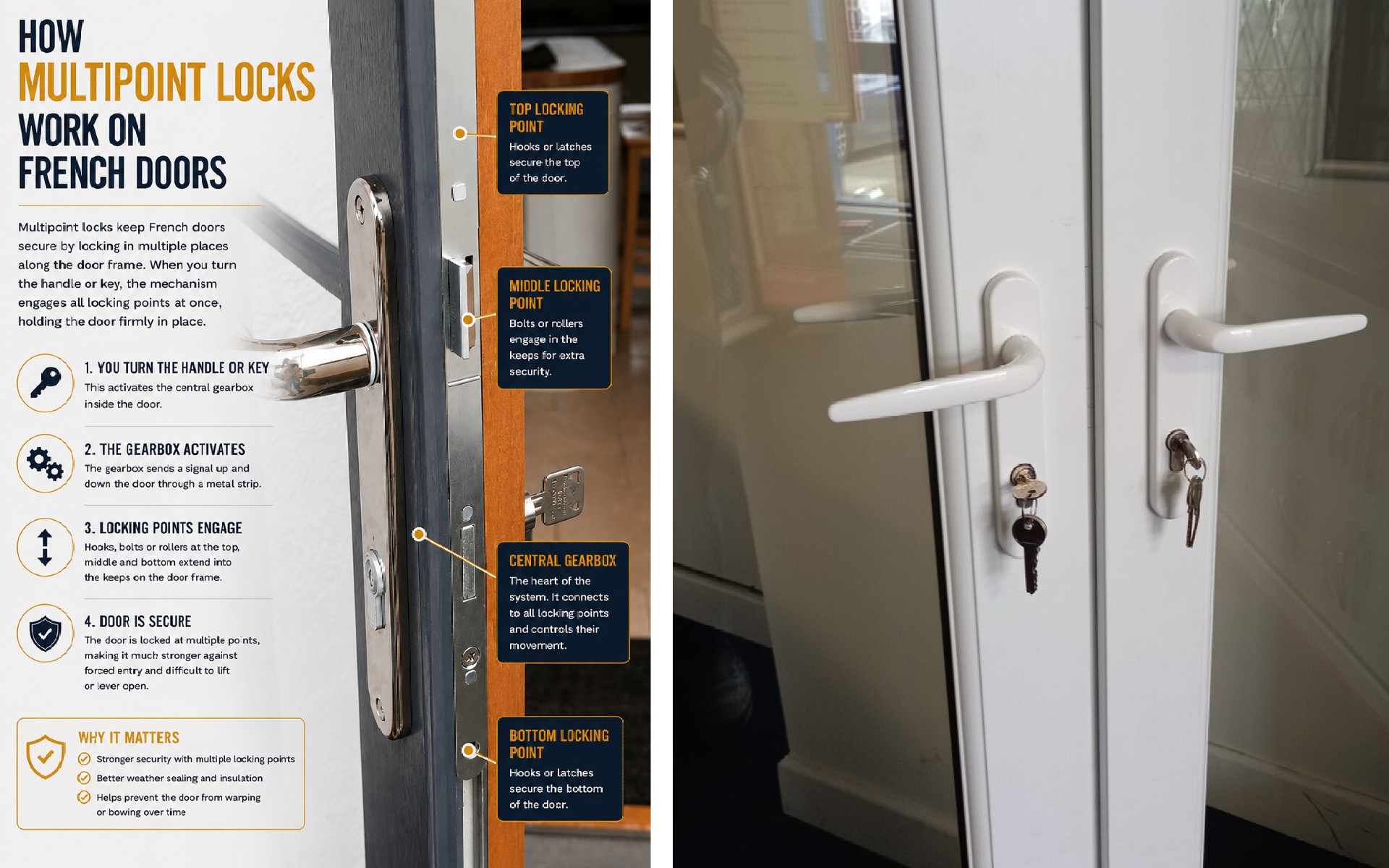
When the handle is lifted, the mechanism operates several locking points simultaneously. Depending on the manufacturer, these may include:
- Hooks
- Rollers
- Mushroom cams
- Deadbolts
- Latches
- Combination locking points
Each locking point engages with matching keeps fitted to the frame, securing the door from top to bottom.
The Main Door and the Slave Door
Most French doors consist of two separate leaves that work together.
The Main Door
The primary door normally contains:
- The external and internal handles.
- The euro cylinder.
- The gearbox.
- The multipoint locking mechanism.
- The main latch.
This is the door that is used most frequently.
The Slave Door
The secondary door is usually secured by:
- Top shoot bolts.
- Bottom shoot bolts.
- A slave locking mechanism (on some designs).
When both doors are locked, they create one secure opening with both leaves held firmly in position.
How the Locking Mechanism Works
The locking process is usually as follows:
- Close both doors fully.
- Ensure the slave door is secured.
- Lift the handle on the main door.
- The gearbox moves the hooks, rollers and locking points into the keeps.
- Turn the key to lock the gearbox and secure the mechanism.
To unlock:
- Turn the key.
- The gearbox releases.
- Press the handle down.
- The locking points retract.
- The door opens normally.
Each stage depends on the previous one working correctly.
Why Multipoint Locks Are More Secure
Unlike a traditional single lock, a multipoint mechanism spreads the locking force across the full height of the door.
This offers several advantages:
- Greater resistance to forced entry.
- Improved protection against door flexing.
- Better weather sealing.
- Reduced draughts.
- Increased structural stability.
- More even pressure against the frame.
This is one reason why multipoint locking systems are fitted to almost all modern uPVC and composite French doors.
The Gearbox – The Heart of the Lock
At the centre of every multipoint lock is the gearbox.
The gearbox converts the movement of the handle and key into movement throughout the locking strip.
It controls:
- Hooks.
- Rollers.
- Deadbolts.
- The central latch.
- Internal linkages.
If the gearbox fails, the rest of the mechanism cannot operate correctly.
Common Types of Locking Points
Different manufacturers use different locking arrangements.
You may find:
- Hook bolts.
- Roller cams.
- Mushroom cams.
- Deadbolts.
- Combination hook-and-roller systems.
Each design provides slightly different levels of compression and security, but they all perform the same basic function—holding the door securely against the frame.
Why Door Alignment Matters
Even the highest-quality locking mechanism will struggle if the doors are out of alignment.
A dropped French door causes the locking points to miss or bind against the keeps.
This places additional strain on:
- The gearbox.
- The lock cylinder.
- The handles.
- The locking points.
Many gearbox failures actually begin with poor alignment rather than a defective lock.
Common Multipoint Lock Problems
As mechanisms age, components naturally wear.
Common faults include:
- Failed gearboxes.
- Worn locking points.
- Seized hooks or rollers.
- Misaligned doors.
- Broken handle springs.
- Worn lock cylinders.
- Faulty slave door shoot bolts.
Fortunately, most of these faults can be repaired without replacing the doors.
Warning Signs to Watch For
Most locking systems give plenty of warning before failing completely.
Common symptoms include:
- The handle becoming difficult to lift.
- A stiff key.
- The doors catching the frame.
- Hooks or rollers failing to retract.
- Grinding or clicking noises.
- Difficulty locking or unlocking.
- Having to push or pull the doors before locking.
Addressing these problems early can prevent a complete lockout.
Can Multipoint Locks Be Repaired?
In most cases, yes.
Depending on the fault, repairs may involve:
- Replacing a failed gearbox.
- Repairing or replacing the locking mechanism.
- Adjusting the door alignment.
- Replacing worn handles.
- Fitting a new snap-resistant cylinder.
- Servicing seized locking points.
- Adjusting the keeps.
Repairing the existing locking system is often far more cost-effective than replacing the French doors themselves.
Looking After Your Multipoint Lock
A few simple maintenance checks can help prolong the life of the mechanism.
It's worth:
- Keeping the locking points clean.
- Lubricating moving components occasionally.
- Checking the handles return properly.
- Investigating stiffness early.
- Having dropped doors adjusted promptly.
- Avoiding forcing the handle or key.
Small preventative measures can often add years to the life of the locking system.
Conclusion
A French door multipoint locking mechanism is designed to provide excellent security, weather sealing and reliable everyday operation. By securing the door at several points along its height, it offers far greater protection than a traditional single-point lock.
Like any mechanical system, however, it depends on good alignment and regular use. If the handle becomes stiff, the key becomes difficult to turn or the doors no longer lock smoothly, dealing with the problem early can prevent unnecessary wear, avoid costly repairs and keep your French doors operating reliably for many years.