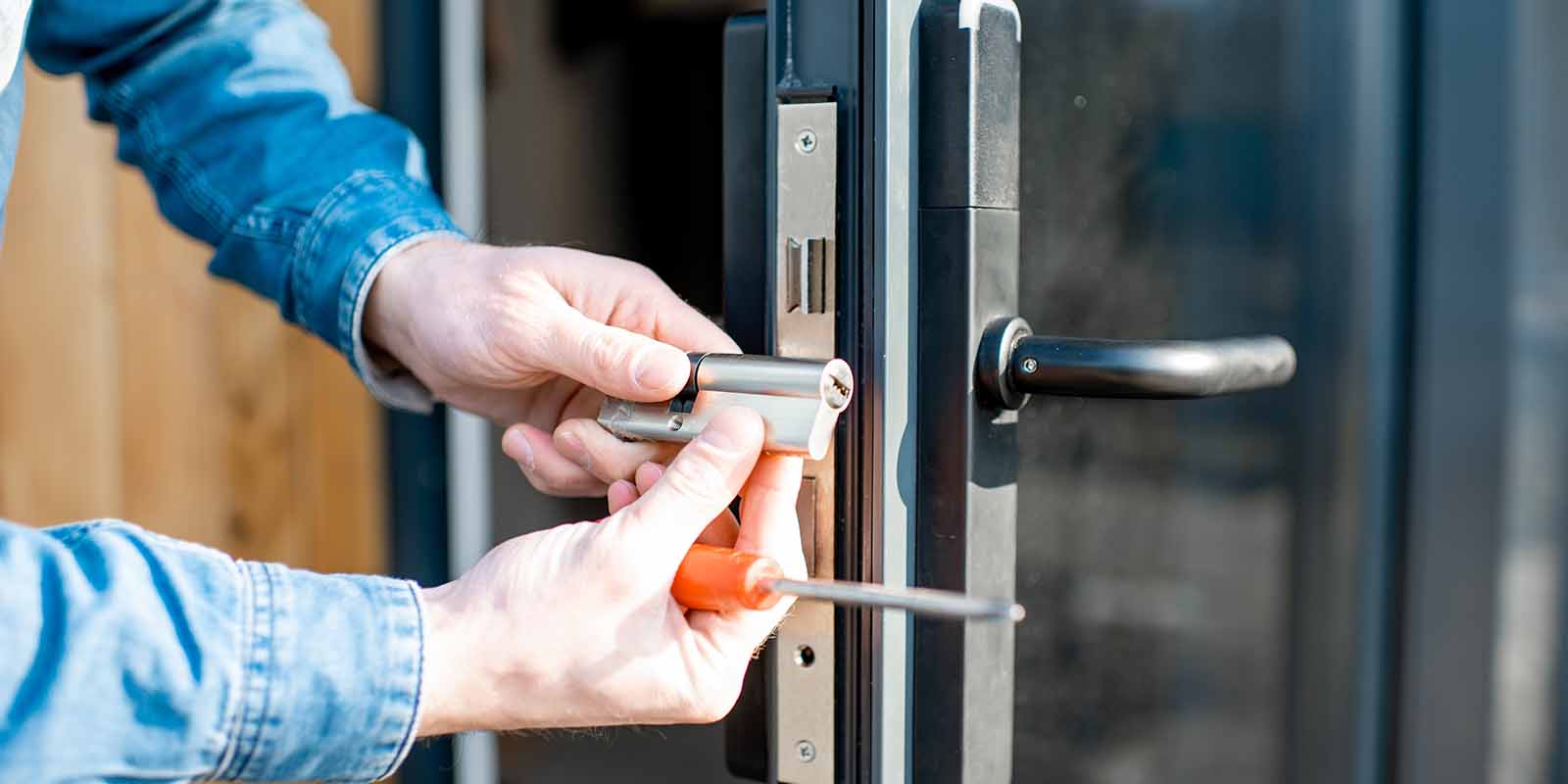
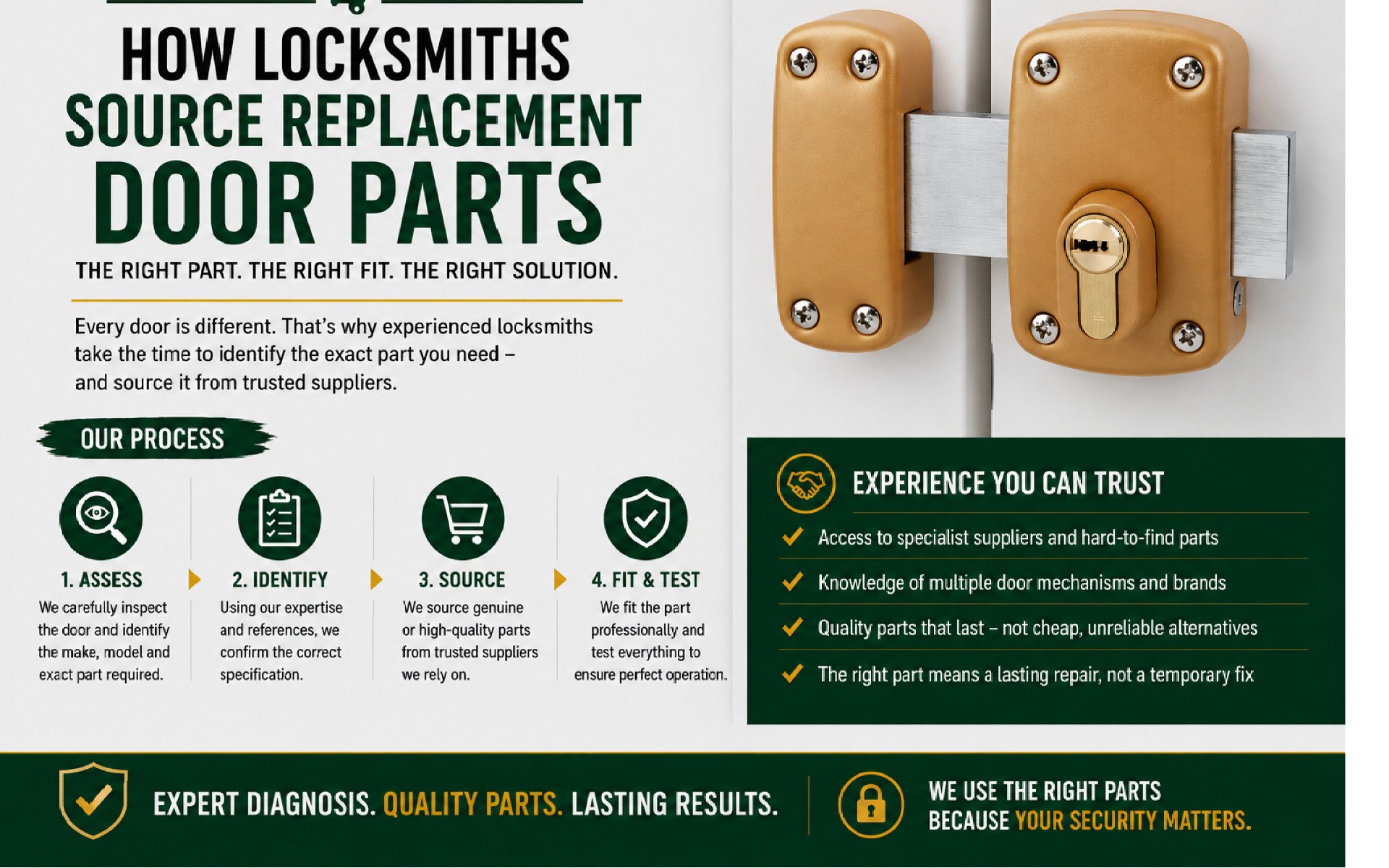
One of the questions we're often asked is, "Where do you get replacement parts for older doors?"
Many homeowners assume that if a door lock or mechanism is no longer sold in DIY stores, the only option is to replace the entire door.
Fortunately, that's rarely the case.
Experienced locksmiths have access to specialist suppliers, trade-only distributors and years of product knowledge that allow them to source replacement parts for doors of almost every age. Even when original components have been discontinued, there are often compatible alternatives that can restore the door to full working order.
Every Door Is Different
Before any parts are ordered, the first step is identifying exactly what's fitted to the door.
This may include checking:
- The manufacturer
- The age of the door
- The type of locking mechanism
- Handle centres (PZ)
- Backset
- Faceplate width
- Overall mechanism length
- Locking point positions
These measurements are essential because even mechanisms that look almost identical can be completely different.
Identifying the Correct Part
An experienced locksmith doesn't simply search for a brand name.
Many locking mechanisms have been manufactured in dozens of variations over the years.
Instead, identification often involves comparing:
- Gearbox dimensions
- Locking point layout
- Fixing positions
- Keep locations
- Centre case design
- Door thickness
Getting these details right ensures the replacement part fits and operates correctly.
Access to Specialist Suppliers
Unlike DIY retailers, locksmiths often use specialist suppliers who stock thousands of replacement parts for domestic doors.
These include:
- Multipoint locking mechanisms
- Replacement gearboxes
- Euro cylinders
- Door handles
- Hinges
- Keeps
- Security hardware
Many of these parts are only available through trade suppliers.
Finding Parts for Older Doors
One of the biggest advantages of experience is knowing where to look when original parts have been discontinued.
Possible solutions include:
- Genuine old-stock components
- Compatible replacement mechanisms
- Replacement centre cases (gearboxes)
- Modern upgraded versions
- Adapted replacement systems where appropriate
Just because a manufacturer no longer produces a mechanism doesn't mean the door can't be repaired.
Sometimes Only One Part Needs Replacing
Homeowners are often surprised to learn that a complete mechanism isn't always required.
Depending on the fault, the repair may involve replacing only:
- The gearbox
- The euro cylinder
- The handles
- The latch
- A damaged locking point
Replacing only the worn component is usually the most economical solution.
Experience Makes the Difference
Years of working on residential doors allow experienced locksmiths to recognise mechanisms quickly.
Rather than relying solely on manufacturer names, they understand:
- Which mechanisms share common components.
- Which parts have direct replacements.
- Which systems have been discontinued.
- Which upgrades work best.
That knowledge often saves considerable time and expense.
Quality Matters
Not all replacement parts are manufactured to the same standard.
Whenever possible, quality components are chosen to provide:
- Reliable operation
- Long service life
- Good compatibility
- Smooth locking
- Improved durability
Choosing the cheapest available part isn't always the best long-term solution.
The Repair Doesn't End With the Parts
Even the correct replacement mechanism won't perform properly if the door is out of alignment.
After fitting replacement components, the door should always be checked for:
- Correct alignment
- Smooth handle operation
- Free movement of the locking points
- Easy key operation
- Proper engagement with the frame
This helps prevent premature wear and repeat failures.
Repairing Doors That Others Replace
Many homeowners are told their door can't be repaired simply because replacement parts aren't immediately available. In reality, experienced locksmiths spend years building knowledge of different locking systems and the suppliers who stock them. By accurately identifying the mechanism, sourcing the correct replacement parts and ensuring the door is properly aligned, it's often possible to repair doors that might otherwise be condemned to replacement. That's not just good for your wallet—it's often the best solution for keeping a quality door in service for many more years.