If your French doors have become difficult to lock, the handle is getting harder to lift, or you have to push or pull the doors to get them closed properly, you might think the lock has failed.
In many cases, the real problem is simply that the doors have moved out of alignment.
A professional door realignment can completely transform how your French doors operate, often without replacing a single lock component.
Why French Doors Go Out of Alignment
French doors are opened and closed thousands of times over their lifetime.
Over the years, factors such as:
- Everyday use
- The weight of the doors
- Hinge wear
- Seasonal expansion and contraction
- Natural movement of the property
can all cause the doors to move slightly.
Even a few millimetres of movement can affect how the locking mechanism operates.
Signs Your Doors Need Realigning
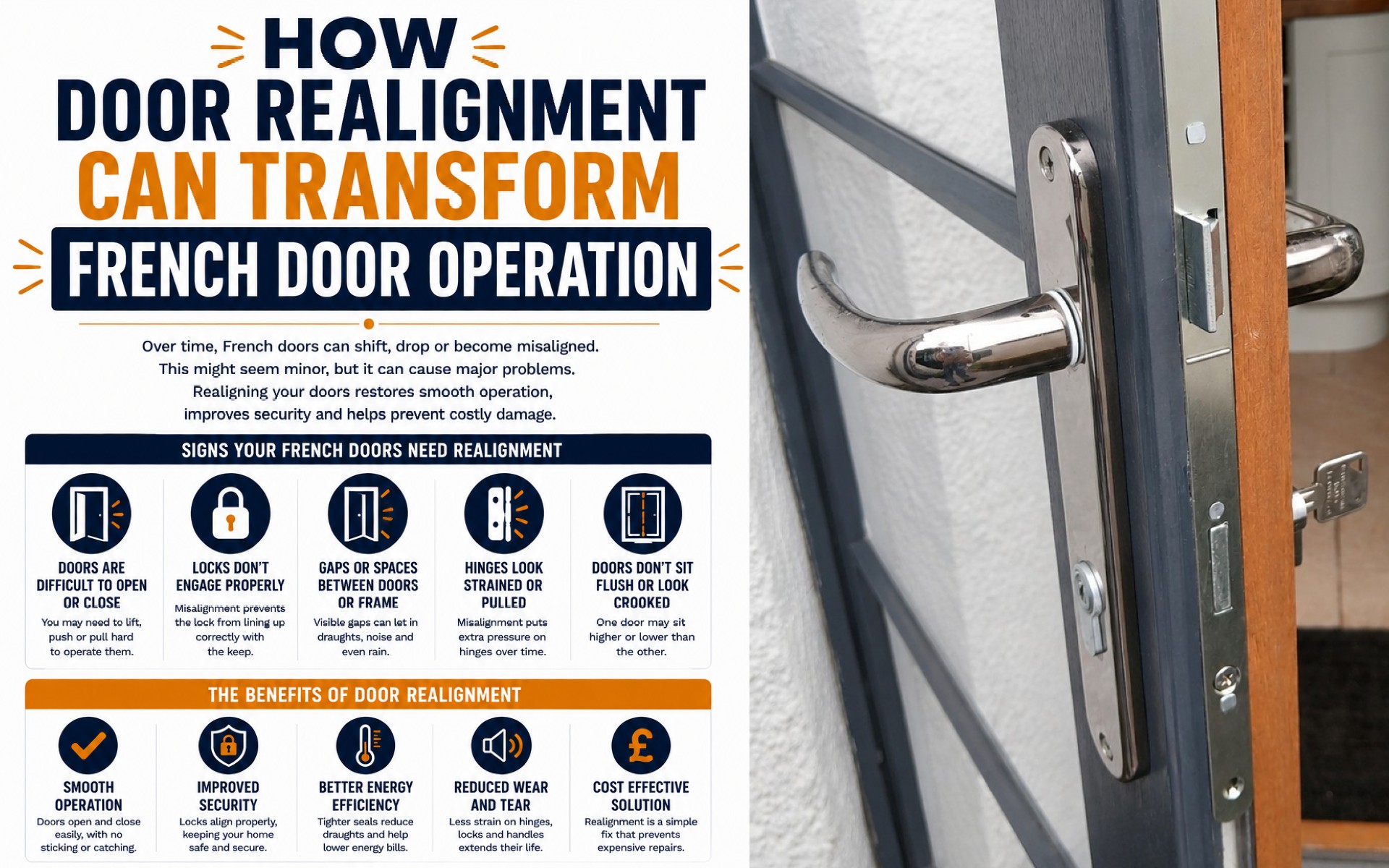
Common symptoms include:
- Difficulty lifting the handle
- The key becoming stiff
- Having to push or pull the door to lock it
- The doors catching the frame
- Uneven gaps around the doors
- Scrape marks on the frame or keeps
These are all signs that the locking mechanism is working harder than it should.
Realignment Reduces Strain on the Lock
When the doors are correctly aligned:
- The locking points line up properly.
- The handle operates with less effort.
- The key turns more smoothly.
- The gearbox isn't placed under constant strain.
This not only improves how the doors feel but can also extend the life of the locking mechanism.
It Can Prevent Gearbox Failure
One of the most common causes of gearbox failure is a door that's been out of alignment for months or even years.
Every time the handle is forced upwards, extra pressure is placed on:
- The gearbox
- Internal linkages
- Hooks and rollers
- Locking points
Correcting the alignment early can help prevent these components from wearing prematurely.
The Slave Door Matters Too
French doors rely on both doors lining up correctly.
If the secondary (slave) door has dropped or moved, you may notice:
- Stiff shoot bolts
- Difficulty opening one door
- Poor locking
- The main door becoming difficult to operate
Both doors should be checked during a realignment.
Realignment Doesn't Always Mean New Parts
Many homeowners are surprised to find that no replacement parts are needed.
If the mechanism hasn't suffered permanent damage, a professional realignment can often restore:
- Smooth locking
- Easy handle operation
- Correct engagement of the locking points
- Reliable day-to-day use
This is usually much more cost-effective than replacing parts unnecessarily.
Sometimes Realignment Isn't Enough
If the door has been difficult to lock for a long time, the additional strain may already have caused damage.
In these cases, the repair may also involve:
- Replacing the gearbox
- Fitting a new multipoint mechanism
- Replacing worn handles
- Installing a new lock cylinder
Correcting the alignment remains an essential part of the repair to prevent the same problem happening again.
Don't Wait Until the Doors Won't Open
Many French door lock failures begin with a door that simply feels a little stiff. By having the alignment checked when the first signs appear, you can often avoid a complete lock failure, reduce repair costs, and keep your doors operating smoothly for years to come.