Most homeowners don't think about their door lock until it becomes difficult to use. While worn parts and poor alignment are common causes of lock problems, dirt and debris can also have a significant impact on how smoothly your locking system operates.
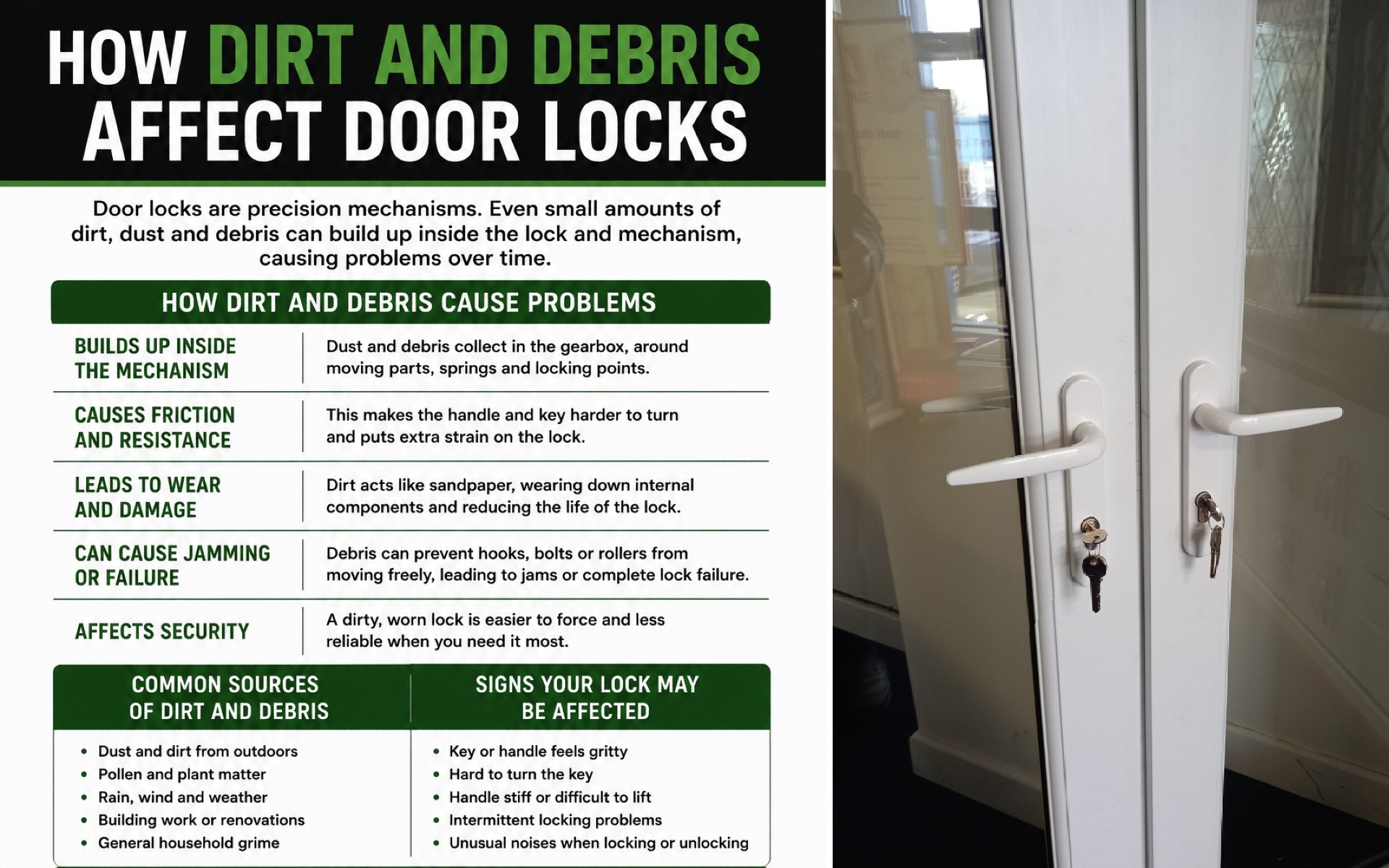
Over time, dust, grit and general dirt can build up in and around the lock, increasing wear and making the mechanism harder to operate.
Where Does the Dirt Come From?
Every time you open your door, small amounts of dirt are introduced into the locking system.
Common sources include:
- Dust
- Sand and grit
- Mud
- Pollen
- Building debris
- Metal particles from normal wear
External doors are constantly exposed to the elements, making dirt build-up inevitable.
The Lock Cylinder
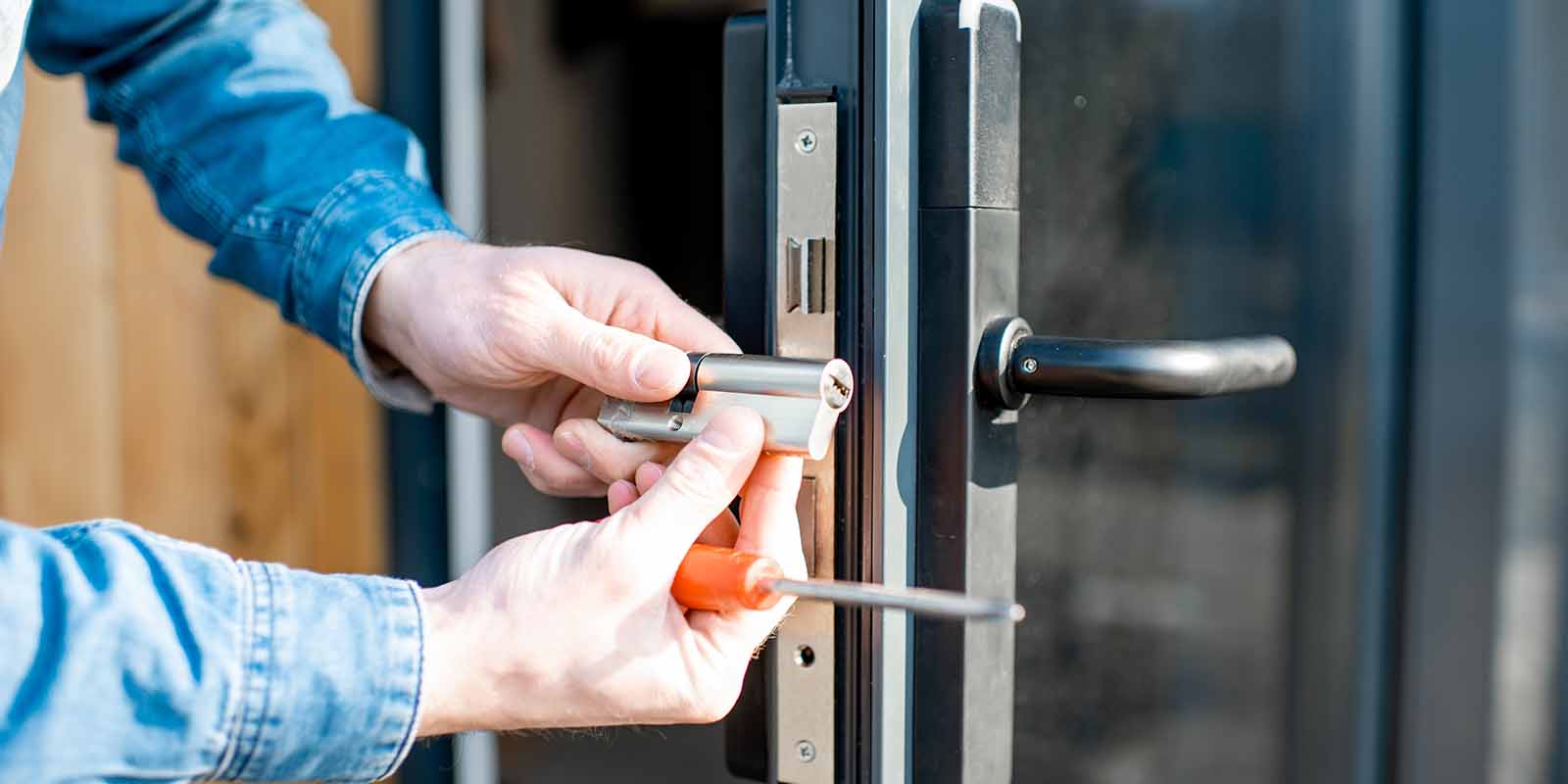
The euro cylinder contains a series of small pins that must move freely when the correct key is inserted.
If dirt enters the cylinder, you may notice:
- The key becoming difficult to insert.
- The key sticking.
- The key becoming difficult to turn.
- The key feeling rough when removed.
Using the correct lock lubricant can help keep the pins moving freely.
The Multipoint Locking Mechanism
The hooks, rollers and deadbolts travel in and out every time the handle is lifted.
If dirt builds up around these moving parts, it can:
- Increase friction.
- Make the handle feel stiff.
- Reduce smooth operation.
- Accelerate wear on moving components.
Regular cleaning helps prevent unnecessary strain.
Dirt Doesn't Usually Cause Complete Failure
It's important to understand that dirt alone rarely causes a gearbox or locking mechanism to fail.
More commonly, dirt:
- Makes existing problems more noticeable.
- Increases resistance.
- Speeds up wear on already ageing components.
If your lock suddenly becomes very stiff, there's often another fault that also needs attention.
Don't Spray Everything With Oil
A common mistake is soaking the lock with household oils or general-purpose sprays.
These products can actually:
- Attract more dirt.
- Leave sticky residue.
- Trap grit inside the mechanism.
- Make the problem worse over time.
Always use a lubricant designed specifically for locks and apply it sparingly.
Clean the Locking Points
As part of routine maintenance, wipe the locking points along the edge of the door.
Pay particular attention to the:
- Hooks
- Rollers
- Deadbolts
- Latch
Removing dirt allows these components to move more freely.
Dirt Isn't the Only Cause of a Stiff Lock
If cleaning the lock doesn't improve the operation, the problem may be:
- A dropped door
- Poor door alignment
- A worn gearbox
- A failing multipoint locking mechanism
- A worn euro cylinder
Cleaning won't repair worn mechanical components.
Regular Maintenance Makes a Difference
Simple maintenance can help extend the life of your locking system.
Good practice includes:
- Keeping the locking points clean.
- Using a lock-specific lubricant on the cylinder.
- Wiping dirt from the edge of the door.
- Investigating stiffness early.
- Having the door realigned if it becomes difficult to lock.
Preventative maintenance is often far less expensive than repairing a failed locking mechanism.
Clean Locks Last Longer
Dirt and debris are a normal part of everyday life, but allowing them to build up inside your door lock can make the locking system work harder than necessary. While dirt rarely causes a complete lock failure on its own, it can increase wear and highlight existing problems. Keeping the lock clean, using the correct lubricant and addressing alignment issues early will help your uPVC or composite door operate smoothly and extend the life of its locking mechanism.