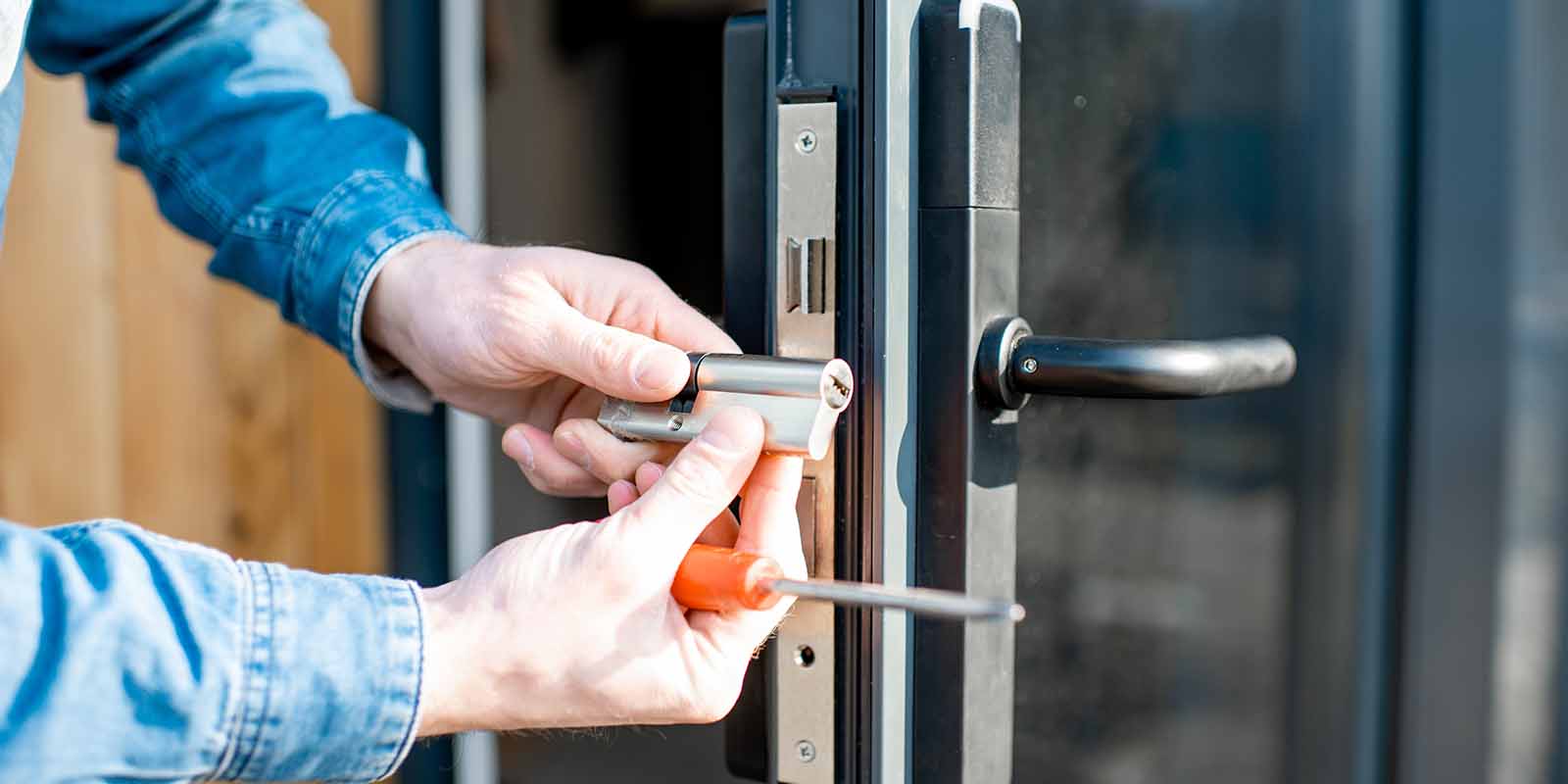

Glasgow and its surrounding areas have an enormous variety of homes, from traditional sandstone tenements with original timber entrance doors to modern suburban properties fitted with uPVC and composite doors.
Although both types of property need reliable locks, their security problems can be very different.
An older timber door might have a worn mortice lock, loose hinges or a lock keep pulling away from the wood. A modern uPVC door might have a faulty multipoint gearbox, a dropped door leaf or a euro cylinder that needs upgrading.
Understanding the difference matters. The right repair depends on the door, its construction and the type of locking system fitted.
At A.L.S Locksmiths, we work on residential door locks across Glasgow, Paisley and the surrounding areas. Here are some of the common issues associated with traditional tenement properties and modern suburban homes.
1. Traditional Glasgow tenements: preserving the original timber door
Glasgow's sandstone tenements are a distinctive part of the city's architectural character. Many properties retain traditional timber entrance doors, sometimes alongside an additional internal or external storm door.
These doors can remain serviceable for decades, but age, repeated use and exposure to the weather can affect their condition.
Unlike modern uPVC doors, a traditional timber door relies on the condition of the wood, the quality of its fixings and the alignment of its hinges and locking components.
The problem with worn timber and loose lock keeps
A common issue with older timber doors is the condition of the wood around the lock.
A mortice lock operates within a pocket cut into the edge of the door. Its bolt engages with a keep or striking plate fitted to the frame. Depending on the lock and installation, the keep may be secured by screws into timber that has weakened over time.
Years of use, movement and repeated slamming can loosen the fixings. If the wood around the keep becomes damaged, the plate may move or pull away when the bolt engages.
The result can be a door that no longer closes securely, a bolt that catches against the frame or a lock that becomes increasingly difficult to operate.
Simply fitting longer screws is not always the right answer. If the surrounding timber is split, rotten or badly damaged, the underlying material may need repairing before the keep can be secured properly.
Mortice locks: the right repair matters
Traditional timber doors often use mortice locks, which fit into a recess in the door itself.
Some older locks may have worn internal components, damaged cases or dimensions that make an exact replacement difficult to source.
A suitable replacement needs to match the relevant dimensions and function of the existing door. The lock's backset, case size, bolt arrangement and position of the keyhole all need consideration.
Where a new lock is fitted, the surrounding timber and frame should also be checked. A new lock cannot compensate for a damaged door edge or a poorly secured keep.
What about traditional storm doors?
Some older properties have an additional storm door or secondary entrance door. These can provide an extra layer of protection against weather and may contribute to security, depending on their construction and locking arrangements.
However, a storm door should not be assumed to replace the need for a sound primary entrance door and suitable lock.
Hinges, catches, timber joints and locking points should be checked for wear. Where a door forms part of an escape route, its operation must also be considered so that security improvements do not prevent safe exit.
The objective is to preserve the door where practical while ensuring that its locking system works reliably.
2. Modern homes in Bearsden and Milngavie: the multipoint locking system
Move from a traditional tenement to a modern suburban property in Bearsden or Milngavie and the locking system may be completely different.
Many newer properties have uPVC or composite entrance doors fitted with multipoint locking mechanisms.
Instead of relying on a single deadbolt, these systems use several locking points along the edge of the door. Depending on the design, they may include hooks, rollers and deadbolts operated by a central gearbox.
When working correctly, the mechanism allows the door to engage at multiple points along the frame.
However, these systems depend on accurate alignment.
Why a uPVC door may become difficult to lock
If the door drops slightly on its hinges, or the frame and locking points no longer align correctly, the hooks and rollers can begin catching against the keeps.
You might notice that:
-
The handle is becoming stiff.
-
You have to push or pull the door to lock it.
-
The key is difficult to turn.
-
The door catches against the frame.
-
The handle moves but the locking points do not operate correctly.
These symptoms can have different causes. A door that has dropped may need adjustment, whereas a failed gearbox may require replacement.
Repeatedly forcing a stiff handle can place extra strain on the mechanism and potentially cause further damage.
If the problem is identified early, an adjustment may be sufficient. If internal components have failed, a more substantial repair may be necessary.
3. Composite doors: strong construction still needs maintenance
Composite doors are popular because they combine different materials to provide a robust door leaf and a range of finishes.
However, a composite door is not maintenance-free. Its hinges, frame, cylinder, handles and multipoint locking mechanism still need to operate correctly.
A faulty gearbox can prevent the door from locking, while misalignment can cause the locking points to bind against the frame keeps.
Another consideration is the euro cylinder. If the door uses this type of lock, homeowners should check that the cylinder is suitable for the door and provides an appropriate level of resistance to common attacks.
A cylinder upgrade may improve security, but it must be compatible with the existing mechanism and fitted correctly.
There is little benefit in installing a security cylinder if the door itself does not close or lock correctly.
4. Clydebank and surrounding areas: older doors meet newer replacement hardware
Across Clydebank, Paisley and other surrounding communities, housing varies considerably in age and design. Some properties retain older timber doors, while others have replacement uPVC or composite entrance doors.
This creates an important challenge for locksmiths: not every door can be repaired using the same parts or methods.
An older timber door might need its damaged frame timber repaired before a keep can be secured. A replacement uPVC door might use a multipoint mechanism whose original gearbox is no longer available.
In the latter case, a compatible alternative may sometimes be fitted, depending on the mechanism dimensions and the condition of the door.
The important thing is to identify the actual fault and assess the available repair options rather than assuming that every door needs the same solution.
5. Security upgrades: different doors need different approaches
A security upgrade should be chosen according to the door and lock already fitted.
For a traditional timber door, the priorities might include:
-
Checking the condition of the door and frame.
-
Ensuring the mortice lock and keep are securely fitted.
-
Selecting an appropriate replacement lock where necessary.
-
Checking the condition of the hinges and surrounding timber.
For a uPVC or composite door, the priorities might include:
-
Checking the operation of the multipoint mechanism.
-
Correcting alignment problems.
-
Inspecting the gearbox and locking points.
-
Checking whether the euro cylinder has suitable security features.
-
Replacing worn or damaged components where required.
For any property, security should be balanced with reliable operation and safe escape. A lock should not be fitted without considering how the complete door system works.
6. Repairing an older door can be better than replacing it
When an older lock fails, homeowners sometimes assume that the entire door needs replacing.
That is not necessarily the case.
If a traditional timber door remains structurally sound, repairing the damaged timber, securing the keep or replacing the mortice lock may restore its operation.
Similarly, a uPVC or composite door may be repairable without replacing the entire door. A suitable adjustment, replacement gearbox or compatible mechanism may be enough.
Of course, there are circumstances where replacement is the sensible option. Severe rot, structural damage or a locking system that cannot be repaired reliably may justify more extensive work.
The important step is to establish the cause of the problem before committing to a replacement.
7. Why local experience matters
A locksmith working across Glasgow and the surrounding areas encounters a wide variety of door designs and locking systems.
Traditional timber doors, older mortice locks, modern multipoint mechanisms and composite door cylinders all require different knowledge and repair techniques.
At A.L.S Locksmiths, we aim to diagnose the fault and explain the available options before carrying out the work.
We offer fixed pricing, no call-out fees and a 12-month guarantee on parts supplied and fitted, subject to the guarantee's terms and exclusions. The agreed price includes the parts and labour for the specified repair, and we are not VAT registered.
Our services include timber door lock repairs, mortice lock replacement, uPVC and composite door repairs, multipoint gearbox replacement, euro cylinder upgrades and door alignment.
We serve Glasgow, Paisley, Bearsden, Milngavie, Clydebank and surrounding areas.
Final thoughts
From traditional sandstone tenements in Glasgow's West End to modern suburban homes in Bearsden and Milngavie, different properties present different door security challenges.
Older timber doors may need attention to their locks, hinges and surrounding wood. Modern uPVC and composite doors often depend on correctly aligned multipoint mechanisms and compatible cylinders.
In either case, a faulty lock does not automatically mean the whole door needs replacing.
If your door is becoming difficult to lock, the handle is stiff or the locking points are no longer engaging correctly, an inspection can help establish what needs to be done.
The right repair starts with understanding the door you have — not assuming every door needs the same solution.
Contact A.L.S Locksmiths for residential door lock repairs and security upgrades in Glasgow, Paisley and surrounding areas.