Introduction
French doors are designed to provide secure, smooth operation for many years, but they rely on both doors working perfectly together. When the passive (slave) door develops a fault, it can prevent the entire door set from operating correctly. Many homeowners assume a jammed slave mechanism means the doors need replacing, but in most cases the problem lies within the locking mechanism itself.
This was a perfect example of how a professional repair, combined with correct door realignment, restored the doors to full working order while avoiding the cost of a complete replacement.
The Problem
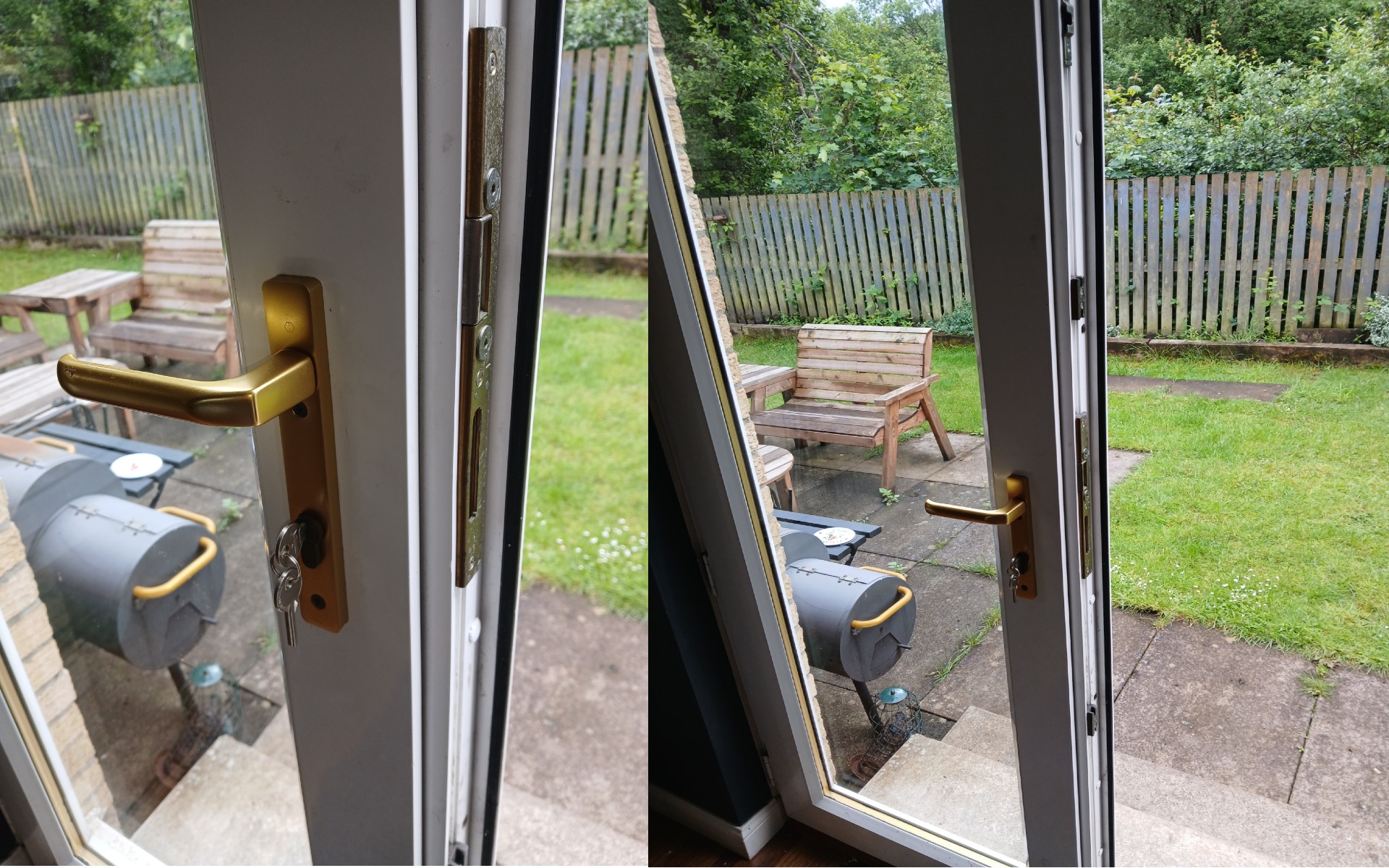
I was called to a property where the passive (slave) French door had completely jammed shut. The customer could no longer open the secondary door because the finger bolts had failed to retract.
As a result, the doors could no longer be used properly and there were concerns that the complete locking system—or even the doors themselves—would need replacing.
Diagnosing the Fault
After inspecting the doors, I quickly identified the fault as a failed internal slave locking mechanism.
The internal components had worn to the point where the finger bolts could no longer operate correctly, leaving the passive door locked firmly in place.
The first priority was to gain access without damaging the doors.
Using non-destructive techniques, I successfully opened the passive door without causing damage to the door, frame or locking mechanism.
Repairing the Mechanism
With the door open, the slave mechanism was removed and dismantled.
Rather than simply freeing off the seized parts, the failed internal components were repaired so the mechanism could operate correctly again.
Simply forcing the mechanism free would only have provided a temporary fix. Repairing the failed components addressed the actual cause of the fault and greatly reduced the likelihood of the problem returning.
Why the Mechanism Failed
Like any mechanical component, a French door locking mechanism gradually wears through years of everyday use.
However, wear alone is rarely the only reason these mechanisms fail.
In this case, the mechanism had also been operating under unnecessary strain.
Common causes include:
- Doors gradually dropping on their hinges.
- Slight movement of the door frame over time.
- Finger bolts not lining up perfectly with the keeps.
- Dirt and lack of maintenance.
- Years of repeated operation under resistance.
Every time the handles are lifted, the finger bolts should slide smoothly into the keeps.
If the doors move even a few millimetres, the mechanism has to force the bolts into position. This constant strain accelerates wear on the internal components until something eventually fails.
Door Realignment
Repairing the mechanism was only part of the job.
To prevent the same failure happening again, both French doors were carefully checked and realigned.
The hinges were adjusted so both doors sat square within the frame before the keeps were checked and adjusted to ensure the finger bolts entered them cleanly without resistance.
Correct alignment is particularly important on French doors because both leaves must work together.
If one door is slightly out of position, excessive pressure is transferred directly into the slave mechanism every time the doors are locked.
Final Testing
Once the adjustments were complete, both doors were thoroughly tested.
The passive door opened and closed smoothly, the finger bolts retracted and engaged correctly, and both doors locked securely without needing excessive force.
The handles operated smoothly, the locking points engaged properly and the doors sealed tightly against the frame.
Why Repair Was the Better Option
Many homeowners are told that a jammed French door requires a complete replacement mechanism or even new doors.
In reality, the original mechanism is often repairable, especially when the fault is diagnosed correctly.
Repairing the original mechanism while correcting the alignment preserved the existing locking system, reduced costs and restored the doors to reliable operation without the disruption and expense of replacement.
Long-Term Reliability
The longevity of any French door locking mechanism depends on far more than the quality of the parts fitted.
Even a brand-new mechanism will wear prematurely if the doors remain out of alignment or the finger bolts continue to operate under excessive strain.
By repairing the failed components, restoring the correct door alignment and ensuring every locking point engaged within the manufacturer's tolerances, the load on the mechanism was significantly reduced.
This allows the finger bolts, gearbox and locking components to operate as they were designed, helping to minimise wear, reduce friction and greatly extend the service life of the repair.
Regular maintenance, occasional lubrication of the moving parts and dealing with any signs of stiffness or door movement early will help keep the mechanism operating smoothly for many years.
Conclusion
This repair demonstrates why accurate diagnosis is so important. The jammed slave door wasn't caused simply by a failed mechanism—it was the result of years of wear combined with doors that were no longer operating within their correct alignment. By repairing the original locking mechanism instead of replacing it, and correcting the underlying cause of the failure, the French doors were restored to smooth, reliable operation. The customer avoided the cost of a new door set, gained a long-lasting repair, and can now enjoy doors that lock securely, operate effortlessly and should continue to perform reliably for many years.