A front door can still lock and appear secure even when its internal locking mechanism is damaged, worn or missing important components. But does a landlord have to repair it if the door still keeps the property secure?
In Scotland, a door does not have to become completely unusable before a landlord may be legally required to repair it. Private landlords must ensure their rental properties meet the Repairing Standard, including keeping landlord-provided fixtures and fittings in a reasonable state of repair and proper working order.
This guide explains what tenants may be entitled to, what to do if a landlord refuses to repair a faulty door mechanism, and where to seek help.
Does a landlord have to repair a faulty door mechanism?
Generally, yes, if the fault means the door or its locking mechanism is no longer in a reasonable state of repair or proper working order.
Under the Repairing Standard in the Housing (Scotland) Act 2006, private landlords must maintain the property to the required standard throughout the tenancy. The condition and functionality of fixtures and fittings matter, not simply whether they still perform part of their intended purpose.
For example, a UPVC or composite door might still lock, but its multipoint mechanism could have damaged internal components, missing parts or a faulty gearbox. The handle might be stiff, the latch might not retract correctly, or the mechanism might be close to failing.
The fact that the door can currently be secured does not automatically mean the landlord has fulfilled their legal obligations.
However, the precise position depends on the nature and severity of the defect. A minor issue that does not affect normal operation or safety may be treated differently from a damaged mechanism that prevents the door working as designed.
What if the door is secure but parts are missing?
This is an important distinction.
A door might appear secure because the remaining locking points still engage. Nevertheless, missing or damaged internal components can affect the mechanism's reliability and operation.
Consider these examples:
-
Faulty multipoint gearbox: The key still turns, but the mechanism is damaged internally and may stop operating correctly.
-
Missing mechanism components: The door locks, but the mechanism is incomplete and does not operate as intended.
-
Faulty handle or latch: The door can be secured, but opening or closing it requires excessive force or does not work consistently.
-
Door that intermittently jams: It works on some occasions but sticks or fails to unlock on others.
These faults should be reported to the landlord or letting agent. The landlord should investigate the problem and arrange any necessary repair within a reasonable time.
The landlord is not necessarily required to replace the entire mechanism if a suitable repair will restore proper operation. Equally, simply making the door lock temporarily may not be sufficient if the underlying fault remains.
What does the Repairing Standard require?
The Scottish Government's Repairing Standard guidance explains that landlord-provided fixtures, fittings and appliances must be in a reasonable state of repair and proper working order.
The landlord is generally responsible for necessary repairs unless an applicable exception applies, such as damage caused by the tenant beyond normal wear and tear.
The landlord must also respond within a reasonable period after being notified of a defect. What is reasonable depends on the circumstances, including the seriousness of the fault and any safety risk.
A door that is difficult to operate may require attention sooner if there is a risk of it failing, trapping an occupant or preventing safe exit.
There is no universal rule that every faulty door mechanism must be repaired within a fixed number of days. The appropriate timescale depends on the particular problem.
What about fire safety and being able to escape?
A door is not only there to keep intruders out. Occupants must also be able to use it safely.
If a faulty mechanism prevents someone from opening the door from the inside, creates a risk of becoming trapped, or interferes with an emergency escape route, the issue becomes more serious.
The specific requirements depend on the property and door type. Scottish guidance expressly requires common doors in tenement buildings to be secure and fitted with satisfactory emergency-exit locks.
If the door cannot be opened safely from inside, or there is an immediate risk to occupants, report this urgently to the landlord or letting agent. If there is immediate danger, contact the appropriate emergency service.
What should you do if your landlord refuses to repair it?
If your landlord says the door is secure enough and refuses to act, there are practical steps you can take.
1. Report the defect in writing
Email or message the landlord or letting agent. Describe what is wrong, explain which parts are faulty or missing, and state how the defect affects the door's operation.
Keep a copy of the message and any reply. If you have already reported the fault verbally, send a written follow-up confirming what you discussed.
2. Take photographs or a video
Record any visible damage and, where safe, demonstrate the problem with the handle, latch or locking mechanism.
Do not dismantle the mechanism yourself simply to obtain evidence. A locksmith's inspection or written report may help establish what is wrong and whether a repair is needed.
3. Ask for the door to be inspected and repaired
Explain that the fact the door can still be locked does not necessarily mean it meets the Repairing Standard.
Ask the landlord to arrange an inspection by a competent tradesperson or locksmith and to confirm when the necessary work will be carried out.
4. Give the landlord a reasonable opportunity to act
The landlord should be given a reasonable opportunity to investigate and arrange the repair. If the defect presents a significant safety or security risk, make that clear and request urgent attention.
Keep a record of dates, correspondence and any missed appointments.
5. Contact the Housing and Property Chamber
If you rent privately in Scotland and the landlord fails to resolve a defect that may breach the Repairing Standard, you can apply to the First-tier Tribunal for Scotland (Housing and Property Chamber).
The Tribunal can consider the evidence, inspect the property where appropriate and, if it finds a breach, issue a Repairing Standard Enforcement Order requiring specified work to be completed by a deadline.
Ignoring such an order is a criminal offence. The Tribunal also has further enforcement powers.
Official guidance and application information are available from the Housing and Property Chamber.
Important: Do not simply stop paying rent because a repair has not been completed. Tenants do not have an automatic right to withhold rent over a repair dispute.
Who pays for the repair?
In general, the landlord is responsible for repairs needed to meet the Repairing Standard, unless an exception applies. For example, a landlord may not be responsible for damage caused by a tenant beyond normal wear and tear.
A tenant should report the problem and allow the landlord a reasonable opportunity to arrange the work. Avoid paying for repairs yourself on the assumption that the landlord must reimburse you; the position can be more complicated if the work was not agreed or the landlord disputes responsibility.
How a locksmith can help
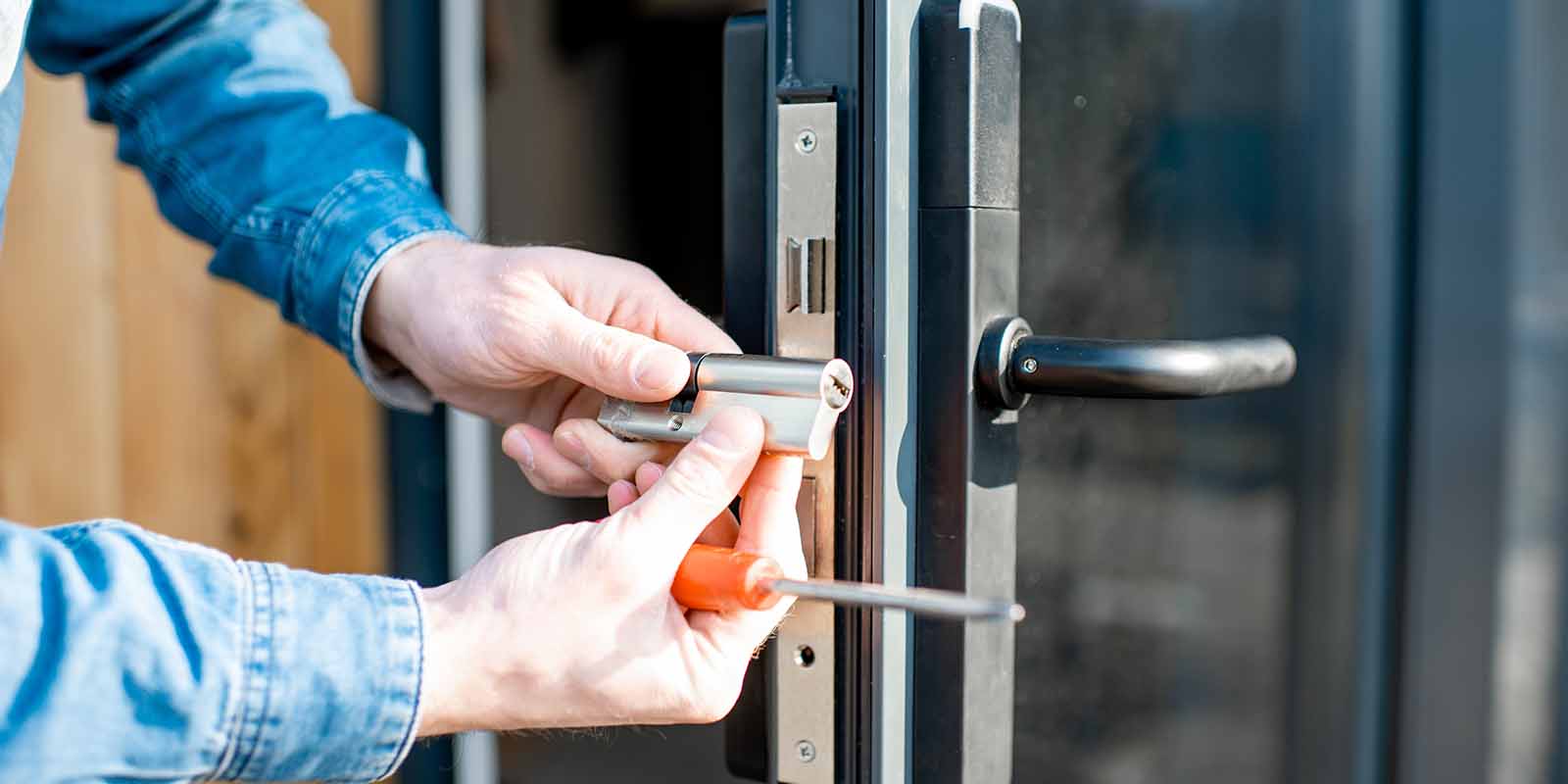
A competent locksmith can inspect a faulty UPVC or composite door, identify damaged or missing mechanism components, and explain whether the mechanism can be repaired or needs replacement.
An inspection may establish whether the fault is in the gearbox, multipoint locking strip, handles, cylinder or door alignment. Sometimes a repair is possible without replacing the whole mechanism, but the correct solution depends on the fault and the parts available.
A written report describing the defect and its effect on the door's operation may also help a tenant explain the problem to their landlord.
A.L.S Locksmiths provides door lock repair and mechanism services in Glasgow, Paisley and surrounding areas.
Frequently asked questions
If the door still locks, can the landlord refuse to repair it?
Not necessarily. A door can remain secure while its mechanism is still defective. If it is not in a reasonable state of repair or proper working order, the landlord may still have a duty to repair it.
Does a landlord have to replace the whole mechanism?
No. The legal obligation is to meet the required repair standard, not automatically to replace every faulty component. A suitable repair may be sufficient if it restores proper operation.
How quickly must the landlord fix the door?
The repair must be carried out within a reasonable time. The urgency depends on the defect, the risk it presents and whether the door can be operated safely.
Can I take my landlord to a tribunal?
If you rent privately in Scotland and believe the landlord has failed to meet the Repairing Standard, you can apply to the First-tier Tribunal for Scotland (Housing and Property Chamber). Keep copies of your repair requests and supporting evidence.
Final thoughts
A front door does not have to be completely broken before a landlord's repair responsibilities arise. A faulty locking mechanism or missing components may require attention even if the door can still be locked.
If you are a tenant, report the defect in writing, keep evidence and ask the landlord to arrange an inspection and any necessary repair. If the issue remains unresolved, the Housing and Property Chamber can explain the process for bringing a Repairing Standard application.
The key issue is whether the door and its mechanism meet the required standard of repair and proper working order, not simply whether the door can still be locked.