Why Won't My Door Open?
Introduction
Few household problems are as stressful as a door that suddenly refuses to open. Whether you're locked outside your home, unable to leave the property, or your door simply feels jammed, it's easy to assume the worst.
Fortunately, most door opening problems are caused by faults within the lock or hardware rather than the door itself. Components such as the gearbox, lock cylinder, handles or multipoint mechanism can usually be repaired or replaced, restoring the door to full working order without the expense of fitting a new one.
Failed Gearbox
The most common cause of a uPVC or composite door refusing to open is a failed gearbox.
The gearbox is the heart of the multipoint locking mechanism, transferring movement from the handle and key to the hooks, rollers, mushrooms and deadbolts.
When it fails, the locking points may remain engaged even though the handle and key appear to be operating normally.
Typical symptoms include:
- The handle moves but nothing happens.
- The key turns but the door stays locked.
- The locking points don't retract.
- The handle feels loose or floppy.
- The door remains firmly shut.
In many cases, only the gearbox requires replacing rather than the complete locking mechanism.
Failed Multipoint Locking Mechanism
The gearbox isn't the only component that can fail.
A multipoint lock also contains:
- Hooks
- Rollers
- Mushrooms
- Deadbolts
- Connecting linkages
- Latch components
After years of use these parts can become worn, seized or damaged.
You may notice:
- Hooks remaining extended.
- Rollers sticking.
- The handle becoming stiff.
- The mechanism jamming.
- The door refusing to open despite unlocking.
Depending on the fault, either individual components or the complete mechanism may need replacing.
A Dropped Door
One of the biggest causes of lock failure is poor door alignment.
When a door drops slightly:
- Locking points no longer line up correctly.
- The mechanism works under constant strain.
- The gearbox wears prematurely.
- Handles become harder to lift.
- Keys become stiff to turn.
Eventually, the mechanism may fail completely, leaving the door jammed.
Common warning signs include:
- The door rubbing on the frame.
- Uneven gaps around the door.
- Draughts.
- Needing to push or pull the door to lock it.
Broken or Worn Door Handles
The handles don't simply open the door—they also operate the locking mechanism.
If a handle fails, it may no longer move the gearbox correctly.
Signs include:
- Loose handles.
- Floppy handles.
- Handles that don't return to position.
- Broken springs.
- Handles moving without operating the lock.
Replacing worn handles often restores proper operation, particularly when quality sprung handles are fitted.
Faulty Lock Cylinder
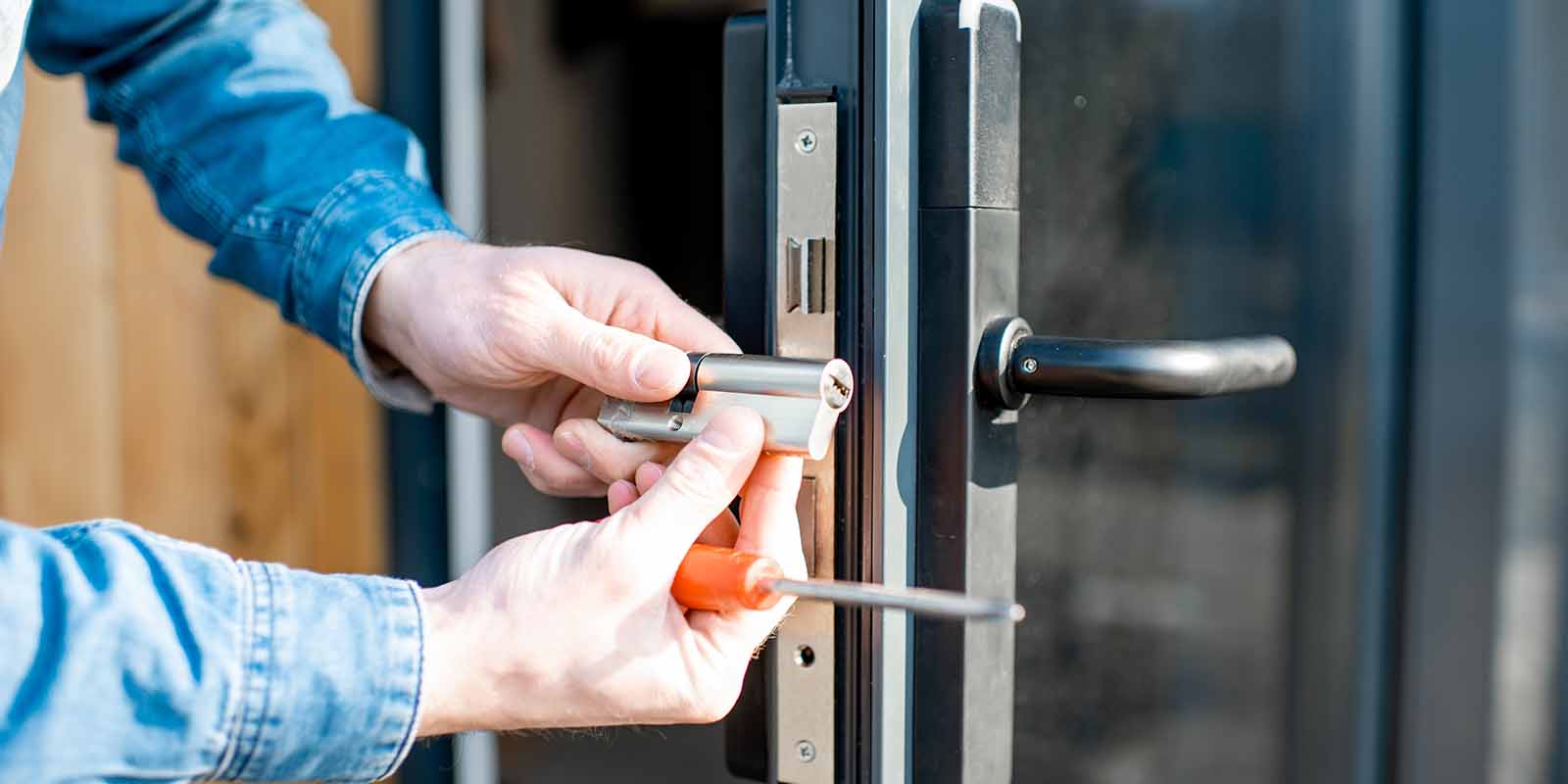
Sometimes the problem lies with the euro cylinder itself.
A worn or damaged cylinder can prevent the locking mechanism from disengaging correctly.
Common symptoms include:
- Keys sticking.
- Keys difficult to turn.
- The key turning without operating the lock.
- The cylinder working from one side only.
- Internal cylinder failure.
Replacing the cylinder is often a quick and cost-effective repair.
Hooks or Rollers Not Retracting
Sometimes the lock appears to unlock normally, but the door still refuses to open.
This often happens because one or more locking points remain partially engaged.
Possible causes include:
- Seized hooks.
- Worn rollers.
- Broken internal components.
- Damage within the multipoint mechanism.
The door can feel completely jammed even though the key has turned.
Broken Keys
A snapped key can prevent the cylinder from operating correctly.
Avoid:
- Forcing the remaining key.
- Pushing the broken section deeper into the lock.
- Using makeshift extraction methods.
Specialist extraction tools can often remove the broken key without damaging the cylinder.
Once removed, it's important to identify why the key snapped, as the underlying problem often remains.
Obsolete Mechanisms
Some older doors are fitted with locking mechanisms that are no longer manufactured.
That doesn't automatically mean you need a new door.
An experienced locksmith can often:
- Replace the gearbox.
- Repair the original mechanism.
- Source old stock.
- Fit a compatible replacement mechanism.
- Adapt replacement parts where appropriate.
This can save hundreds of pounds compared with replacing the entire door.
Previous DIY Repairs
Many doors become more difficult to open following unsuccessful DIY repairs.
Common issues include:
- Incorrect hinge adjustments.
- Wrong replacement gearboxes.
- Poorly fitted repair locks.
- Incorrect keep adjustments.
- Incorrect handle installation.
These repairs often increase strain on the mechanism and lead to further failures.
Don't Force the Door
If your door won't open, avoid forcing:
- The key.
- The handle.
- The door itself.
Excessive force can cause:
- Snapped keys.
- Broken handles.
- Damaged cylinders.
- Failed gearboxes.
- Damage to the frame.
- More expensive repairs.
A proper diagnosis is almost always cheaper than repairing damage caused by forcing the door.
Most Doors Can Be Repaired
Many homeowners assume a jammed door automatically means replacing the entire door.
In reality, most problems involve components such as:
- Failed gearboxes.
- Worn lock cylinders.
- Broken handles.
- Misaligned doors.
- Faulty multipoint mechanisms.
- Seized locking points.
Repairing these components is usually far more economical than replacing the whole door.
Watch for the Warning Signs
Most doors don't fail without warning.
Look out for:
- Stiff keys.
- Handles becoming harder to lift.
- Doors catching the frame.
- Loose or sagging handles.
- Difficulty locking.
- Hooks or rollers not moving freely.
- Having to push or pull the door before locking.
Having these symptoms investigated early can often prevent a complete lock failure and an inconvenient lockout.
Conclusion
A door that won't open is rarely caused by the door itself. More often, it's the result of a worn gearbox, faulty lock cylinder, broken handle, misaligned door or failing multipoint mechanism. The key is to identify the underlying cause rather than simply replacing parts unnecessarily.
With the correct diagnosis, most jammed doors can be repaired quickly, restoring both security and smooth operation without the cost of a replacement door.