Imagine returning home to discover that a burglar has entered your property. Your belongings have been stolen, but when you inspect the front door, there is little or no obvious damage. The frame is intact, the door is still hanging correctly and the lock appears almost normal.
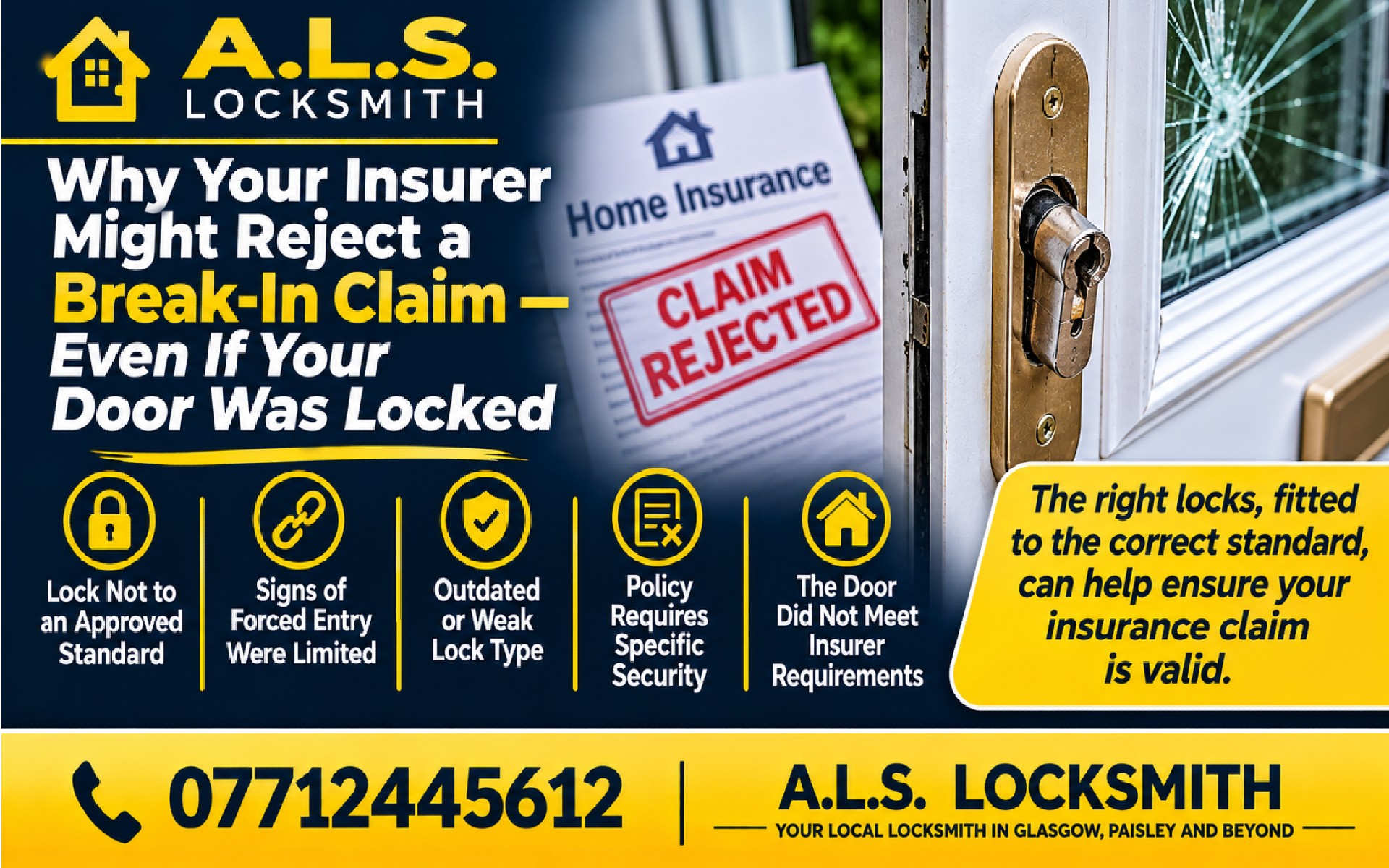
You assume your home insurance will cover the loss. But what if your insurer questions how the burglar gained entry?
Many homeowners are unaware that their insurance policy may contain conditions relating to forced entry, the type of locks fitted and whether those locks were properly used.
At A.L.S Locksmiths, we believe home security is about more than keeping intruders out. It is also about understanding your existing locks, reducing avoidable vulnerabilities and making informed decisions about your property's security.
Here is what you should know about lock snapping, lock bumping and the relationship between door security and home insurance.
1. What does 'forcible and violent entry' mean?
Some home insurance policies contain wording requiring theft to involve 'forcible and violent entry' or similar conditions. Depending on the policy, this requirement might apply to particular circumstances rather than every burglary claim.
The wording matters.
A burglar does not necessarily have to smash a window or cause extensive damage to a door to gain entry. Some methods of defeating a lock can leave relatively little visible evidence.
The Financial Ombudsman Service has considered disputes involving policies that require forcible or violent entry. Its decisions show that the interpretation depends on the precise policy wording and the evidence available. In some circumstances, manipulating a lock may satisfy the relevant wording even when there is no obvious physical damage. In other cases, insufficient evidence about how entry occurred can be significant.
This means that a lack of visible damage does not automatically invalidate a burglary claim, and a locked door does not automatically guarantee that every claim will be accepted.
Other factors can also affect a claim, including whether the locks were used as required, whether particular security conditions applied and what evidence is available.
The lesson is simple: read your policy rather than assuming every insurer applies the same rules.
2. What is lock snapping?
Lock snapping is a method of attacking certain euro-profile cylinders commonly found in uPVC and composite doors.
A conventional euro cylinder can have a vulnerable section around its fixing point. If the cylinder is insufficiently resistant to this type of attack and protrudes beyond the protective door furniture, an intruder may be able to apply force to break it and gain access to the locking mechanism.
Some vulnerable cylinders can be defeated quickly, potentially without causing the sort of extensive damage many homeowners associate with a break-in.
Modern security cylinders are designed with features that resist snapping and other forms of attack. The level of protection depends on the particular product and how it is fitted.
If your door has an older euro cylinder, it is worth checking whether it has suitable security protection rather than assuming that every cylinder offers the same resistance.
3. What is lock bumping?
Lock bumping is a different technique that can be used against some pin-tumbler locks.
It involves manipulating the pins inside a compatible lock using a specially prepared key and controlled impacts. Depending on the lock's design and security features, this may allow the lock to turn without the conventional key.
Not every cylinder is equally vulnerable, and lock bumping is not the same as lock snapping. However, both techniques demonstrate why the design and security rating of a lock matter.
When considering a replacement, look at the tested security features of the cylinder rather than relying solely on its price or appearance.
4. What is a TS007 3-star euro cylinder?
TS007 is a recognised British security standard for cylinders and related door hardware. A cylinder carrying a genuine TS007 3-star rating has been tested against defined attack methods, including cylinder snapping.
A 3-star cylinder is designed to provide enhanced resistance to attacks such as snapping, drilling and bumping. No lock is completely invulnerable, but choosing a suitably tested product can reduce the risk of common cylinder attacks.
There is also a recognised alternative within the TS007 system: a 1-star cylinder combined with suitable 2-star security door furniture can achieve the required 3-star overall rating.
When choosing a replacement, check that the product genuinely carries the appropriate rating and certification. Do not assume that a lock described simply as 'anti-snap' automatically meets the same standard.
5. Will upgrading to a 3-star cylinder protect your insurance claim?
Upgrading a vulnerable cylinder can improve your home's security, but it is important to understand what the upgrade does — and does not — guarantee.
A TS007 3-star cylinder may help protect against common attacks on euro cylinders. However, it does not guarantee that an insurer will accept a future claim, nor does it automatically satisfy every insurer's requirements.
Some policies specify particular lock types, security standards or conditions that must be met when the property is left unattended. Others may contain requirements that depend on the type of door or property.
Before changing your locks, consider these steps:
-
Read the security section of your home insurance policy.
-
Check whether it specifies a particular lock standard or type.
-
Ask your insurer whether a TS007 3-star cylinder, or an approved alternative, meets its requirements.
-
Check that the replacement is compatible with your door and locking mechanism.
-
Keep any relevant product information and the locksmith's invoice.
If your insurer requires a particular standard, obtain confirmation rather than relying on a general assumption about what is acceptable.
A suitable security upgrade is worthwhile for its protective benefits, but no cylinder can promise a successful insurance claim in every circumstance.
6. Why the way your door is locked matters
Many modern uPVC doors use a multipoint locking mechanism with hooks, rollers or bolts along the edge of the door.
On many designs, lifting the handle engages the multipoint locking points. Turning the key then deadlocks the mechanism.
If you simply pull the door shut without completing the locking procedure, the door may not be secured in the way you expect.
The exact operation depends on the door and mechanism, so familiarise yourself with how yours works. When leaving the property, follow the manufacturer's locking instructions and any relevant requirements in your insurance policy.
A high-security cylinder cannot compensate for a door that has not been secured correctly.
7. What if your lock is old, worn or faulty?
A lock does not have to be visibly broken to deserve attention.
Warning signs include:
-
A key that sticks or becomes difficult to turn.
-
A cylinder that is loose or protrudes excessively from the door.
-
A handle that has become stiff or unreliable.
-
A multipoint mechanism that does not engage consistently.
-
Visible damage around the cylinder or door furniture.
Some symptoms indicate a failing cylinder, while others may be caused by poor door alignment or a worn gearbox.
Replacing the cylinder without diagnosing the actual fault may not solve the problem. On a multipoint door, it is important to check that the complete locking system operates correctly.
If you suspect your door is vulnerable, have it assessed before the problem develops into a lockout or a more serious failure.
8. What should you do after a break-in?
If your home has been broken into, prioritise your safety and contact the police. Avoid disturbing potential evidence more than necessary.
You should also:
-
Obtain a police incident or crime reference number where applicable.
-
Photograph damage to the door, frame, cylinder and surrounding area before repairs, where it is safe to do so.
-
Contact your insurer promptly and follow its claims procedure.
-
Keep records of stolen property and any available proof of ownership.
-
Ask the insurer whether it needs an inspection or photographs before the lock is replaced.
-
Arrange to secure the property if the existing lock has been damaged or compromised.
If the property cannot be secured safely, explain the urgency to your insurer and arrange appropriate emergency assistance. Keep receipts and records of any work undertaken.
If your claim is rejected, ask the insurer to explain the decision in writing and identify the policy terms on which it relies. You can challenge the decision through the insurer's complaints procedure and, where eligible, refer the complaint to the Financial Ombudsman Service.
9. How A.L.S Locksmiths can help
At A.L.S Locksmiths, we work on uPVC and composite door locks across Glasgow, Paisley and surrounding areas.
We can inspect your existing euro cylinder, discuss suitable security upgrades and diagnose problems with multipoint mechanisms, gearboxes, handles and door alignment.
Our approach is to repair wherever practical and avoid recommending unnecessary replacements. If your existing cylinder is vulnerable or unsuitable for your requirements, we can explain the available options and agree on a price before proceeding.
We offer fixed pricing, no call-out fees and a 12-month guarantee on parts supplied and fitted, subject to the guarantee's terms and exclusions. We are not VAT registered, so we do not add VAT to our prices.
We cannot determine whether an insurer will accept a claim, but we can help you understand your door's locking system and consider appropriate security improvements. For policy-specific requirements, always check directly with your insurer.
Final thoughts: check your locks before you need to claim
Home insurance provides important financial protection, but the details of your policy matter. Conditions relating to locks, security standards and forced entry can affect how a claim is assessed.
A vulnerable euro cylinder may expose your home to avoidable risks, while a suitable TS007-rated security solution can offer greater resistance to common forms of attack.
Check your insurance wording, make sure you understand how your door locks and address any faults before they become a bigger problem.
If you are unsure whether your existing uPVC or composite door cylinder provides appropriate protection, A.L.S Locksmiths can assess the lock and discuss suitable options.
Better security starts with knowing what you have fitted — and making sure it does the job you need it to do.