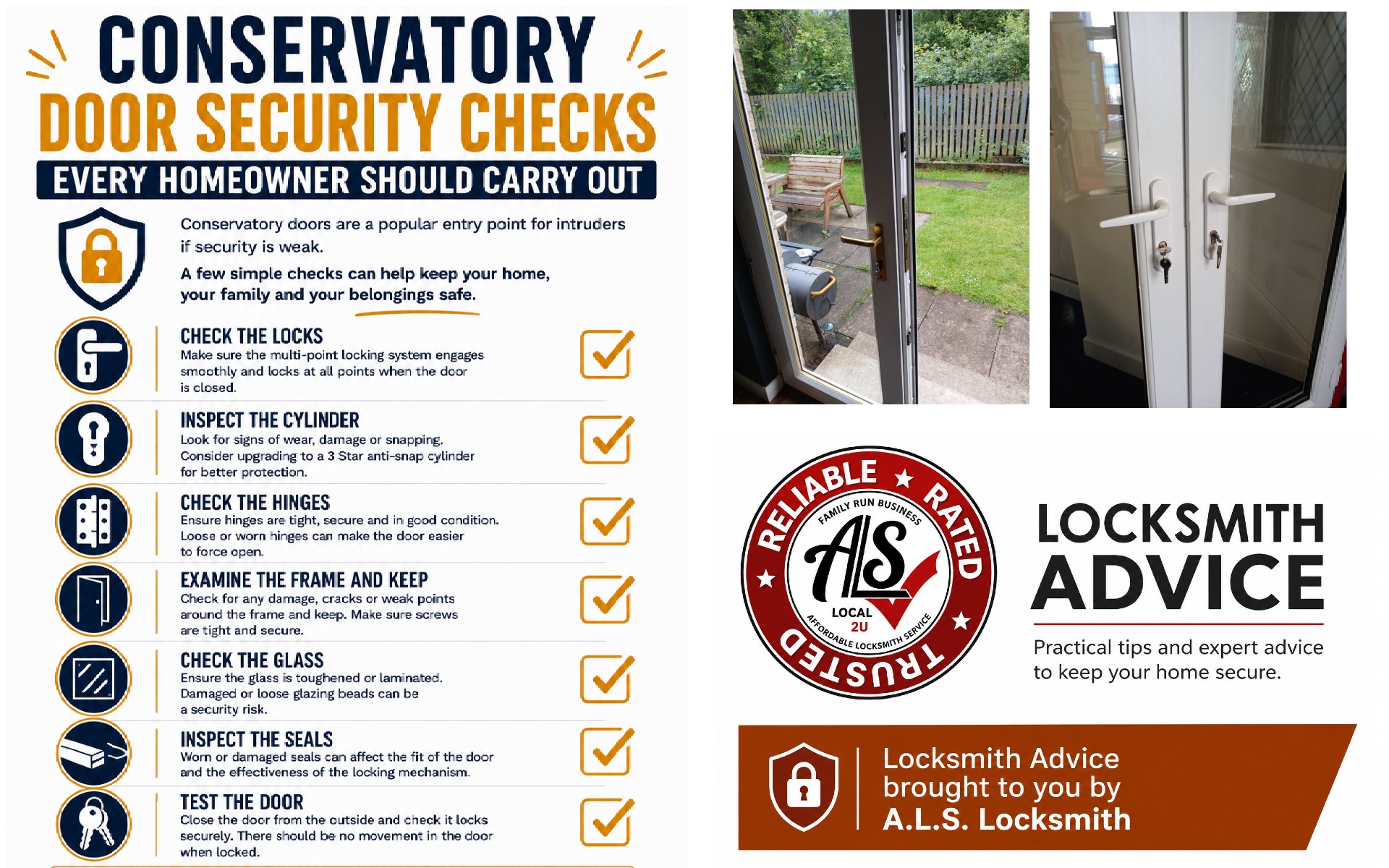
Conservatory doors are often one of the most frequently used entrances to a home, yet they're also one of the most overlooked when it comes to security. Regular checks only take a few minutes and can help prevent lock failures, improve security, and identify problems before they become expensive repairs.
Here are some simple checks every homeowner should carry out.
Check the Lock Operates Smoothly
Your key should turn easily, and the handle should lift without excessive force.
Watch for:
- A stiff key
- Difficulty lifting the handle
- Rough operation
- Locking points that don't engage properly
These are often early signs of a worn lock or alignment issue.
Inspect the Door Alignment
Conservatory doors can move over time due to regular use and seasonal temperature changes.
Look for:
- The door catching the frame
- Uneven gaps around the door
- Having to push or pull the door to lock it
- Scrape marks on the keeps
A dropped door places extra strain on the multipoint locking mechanism and can eventually lead to gearbox failure.
Check the Lock Cylinder
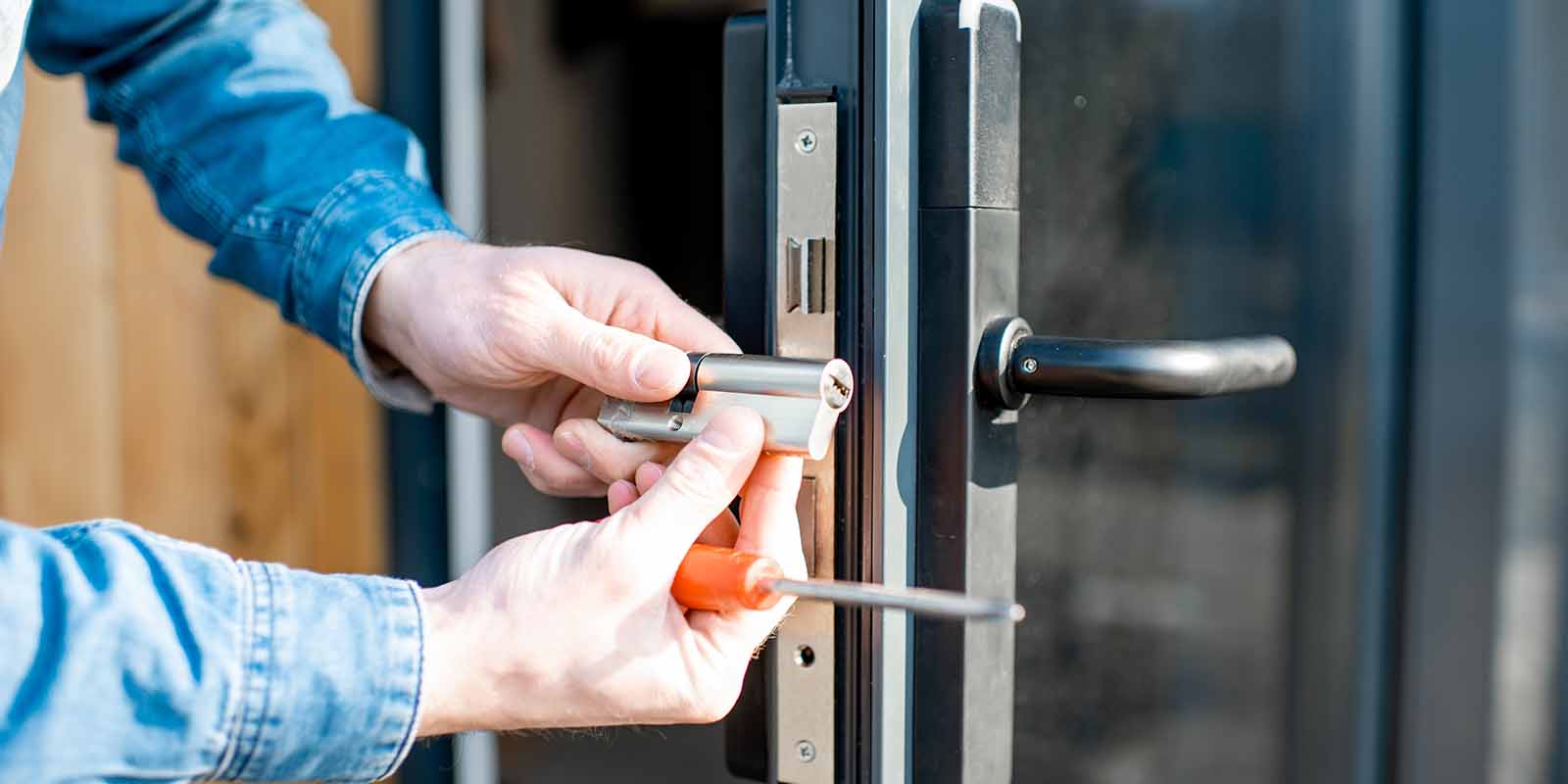
If your conservatory door has an older euro cylinder, it may be worth upgrading to a modern snap-resistant cylinder.
Inspect the cylinder for:
- Signs of damage
- Excessive wear
- Difficulty turning the key
- The cylinder protruding beyond the handles
A correctly sized, high-security cylinder offers better protection against common methods of attack.
Test the Multipoint Lock
Operate the lock several times with the door open.
Check that:
- Hooks extend fully
- Rollers move freely
- Deadbolts engage correctly
- All locking points retract smoothly
Any stiffness or uneven movement should be investigated before it leads to a complete failure.
Inspect the Handles
Door handles should feel firm and return to their normal position after use.
Look for:
- Loose handles
- Drooping handles
- Broken return springs
- Cracked backplates
Worn handles can place additional strain on the locking mechanism.
Check Hinges and Fixings
Loose hinges can cause the door to drop over time.
Inspect for:
- Loose screws
- Worn hinges
- Signs of movement
- Rust or corrosion
Keeping hinges secure helps maintain proper door alignment.
Inspect the Glass
If your conservatory door has glazed panels, check for:
- Cracked glass
- Loose glazing beads
- Signs of movement
- Damaged seals
Any damage should be repaired promptly to maintain security and weather resistance.
Check the Door Seals
Perished or damaged seals can allow:
- Draughts
- Water ingress
- Increased movement
- Reduced insulation
Replacing worn seals also helps the door close correctly.
Lock the Door Properly
Many multipoint locks only engage fully when the handle is lifted before turning the key.
Always make sure:
- The handle is fully lifted.
- The key is turned to lock the mechanism.
- Every locking point has engaged.
Simply pulling the door shut may leave it less secure than you realise.
Don't Ignore Small Problems
If you notice:
- A stiff lock
- A difficult handle
- The door catching the frame
- Grinding noises
- Difficulty locking
have the problem checked before it develops into a lockout or complete mechanism failure.
A Few Minutes Can Improve Your Security
Carrying out these simple checks every few months can help keep your conservatory door secure and operating smoothly. Most problems start as minor faults, and dealing with them early is often far cheaper than waiting until the lock fails completely.