
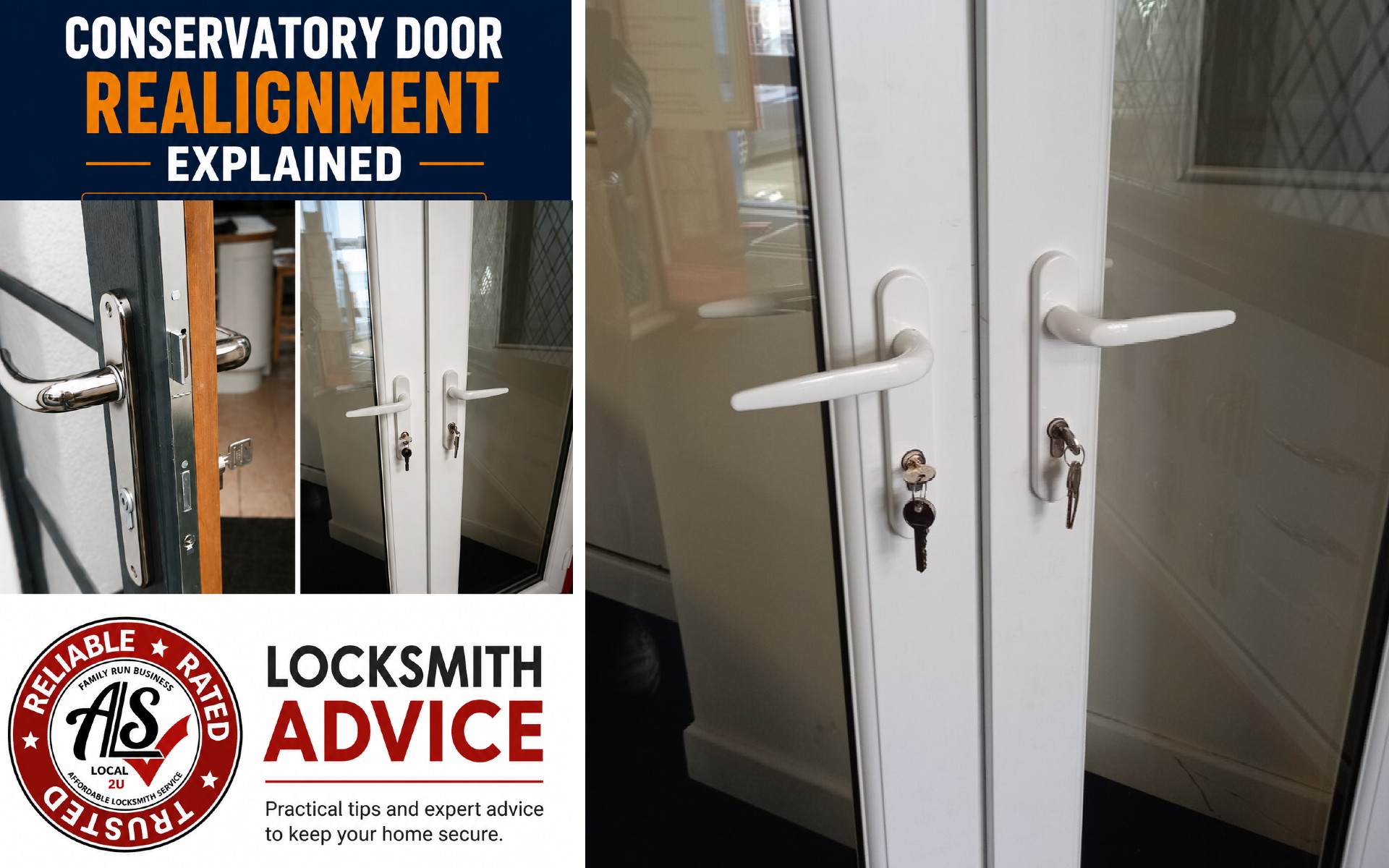
If your conservatory door has become difficult to lock, catches on the frame, or needs to be pushed or pulled before it will close properly, the problem may not be the lock at all. In many cases, the door has simply moved out of alignment.
Door realignment is one of the most common repairs we carry out, and it's often the solution to problems that homeowners mistakenly believe require a new lock or even a new door.
What Is Door Realignment?
Door realignment is the process of adjusting the door so it sits correctly within the frame.
Over time, a conservatory door can move slightly due to:
- Everyday use
- The weight of the door
- Hinge wear
- Seasonal expansion and contraction
- Natural movement of the conservatory
Even a few millimetres of movement can make a noticeable difference to how the lock operates.
Signs Your Conservatory Door Needs Realigning
Common symptoms include:
- The handle is difficult to lift.
- The key is becoming stiff.
- The door catches the frame.
- You need to push or pull the door to lock it.
- The locking points don't engage smoothly.
- Uneven gaps around the door.
- The door feels heavier to operate than it used to.
These are all signs that the locking mechanism is working harder than it should.
Why Alignment Matters
A multipoint locking mechanism is designed to operate with very little resistance.
If the door is out of alignment, every time you lift the handle you're forcing:
- The gearbox
- The locking points
- Internal linkages
- The handles
to work harder than intended.
Over time, this unnecessary strain can lead to premature wear and eventual failure.
It Can Prevent Gearbox Failure
Many failed gearboxes have one thing in common—they've spent months operating on a door that wasn't correctly aligned.
The constant pressure placed on the mechanism eventually causes internal components to wear or break.
Correcting the alignment early can often prevent this from happening.
Realignment Is Often Part of a Larger Repair
Sometimes realigning the door is all that's needed.
However, if the lock has already been damaged, the repair may also involve:
- Gearbox replacement
- Multipoint mechanism replacement
- Lock cylinder replacement
- New sprung handles
Once the faulty components have been replaced, the door should always be realigned to ensure the new parts aren't placed under the same strain.
Realignment Improves More Than Security
A correctly aligned conservatory door doesn't just protect the lock.
It also helps:
- The handle lift smoothly
- The key turn easily
- The locking points engage properly
- Reduce wear on moving parts
- Improve the door seal
- Eliminate rattles and draughts caused by poor door fit
The door simply feels easier and smoother to use.
Don't Keep Forcing the Handle
If your conservatory door has become difficult to lock, avoid forcing it.
Using excessive force can damage:
- The gearbox
- The multipoint mechanism
- The handles
- The lock cylinder
A simple realignment can become a much more expensive repair if the mechanism is repeatedly forced.
Most Conservatory Doors Can Be Realigned
Homeowners are often surprised how much difference a professional adjustment can make.
In many cases, realigning the door restores smooth operation without replacing any lock components. If replacement parts are required, ensuring the door is correctly aligned afterwards is one of the most important steps in achieving a reliable, long-lasting repair.
A Small Adjustment That Makes a Big Difference
Conservatory doors naturally move over time, but that doesn't mean they need replacing. A professional realignment can restore smooth locking, reduce unnecessary strain on the multipoint mechanism, and help prevent expensive gearbox failures. Combined with replacing any worn components where necessary, it can add many more years of reliable service to your existing door.