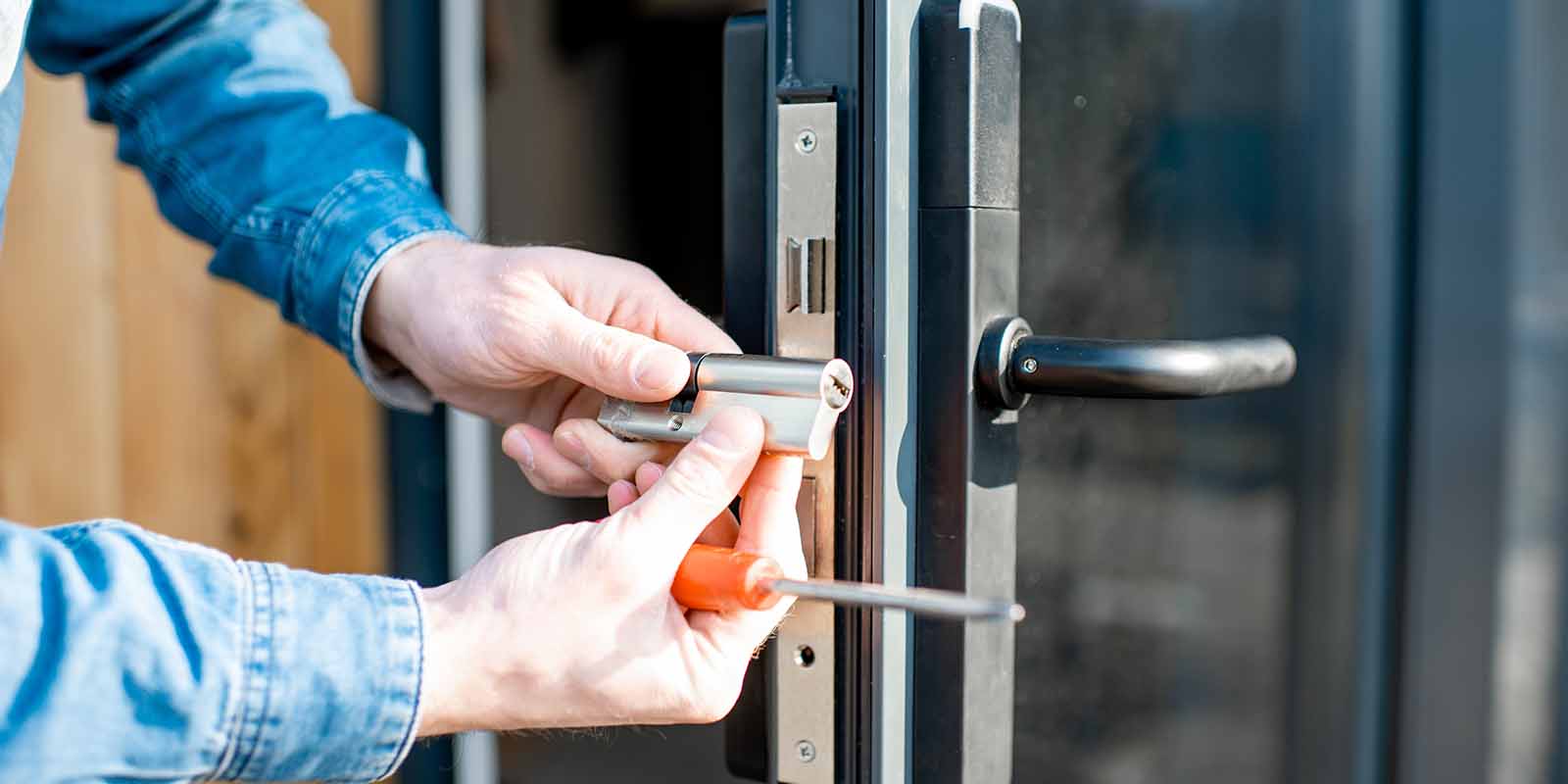
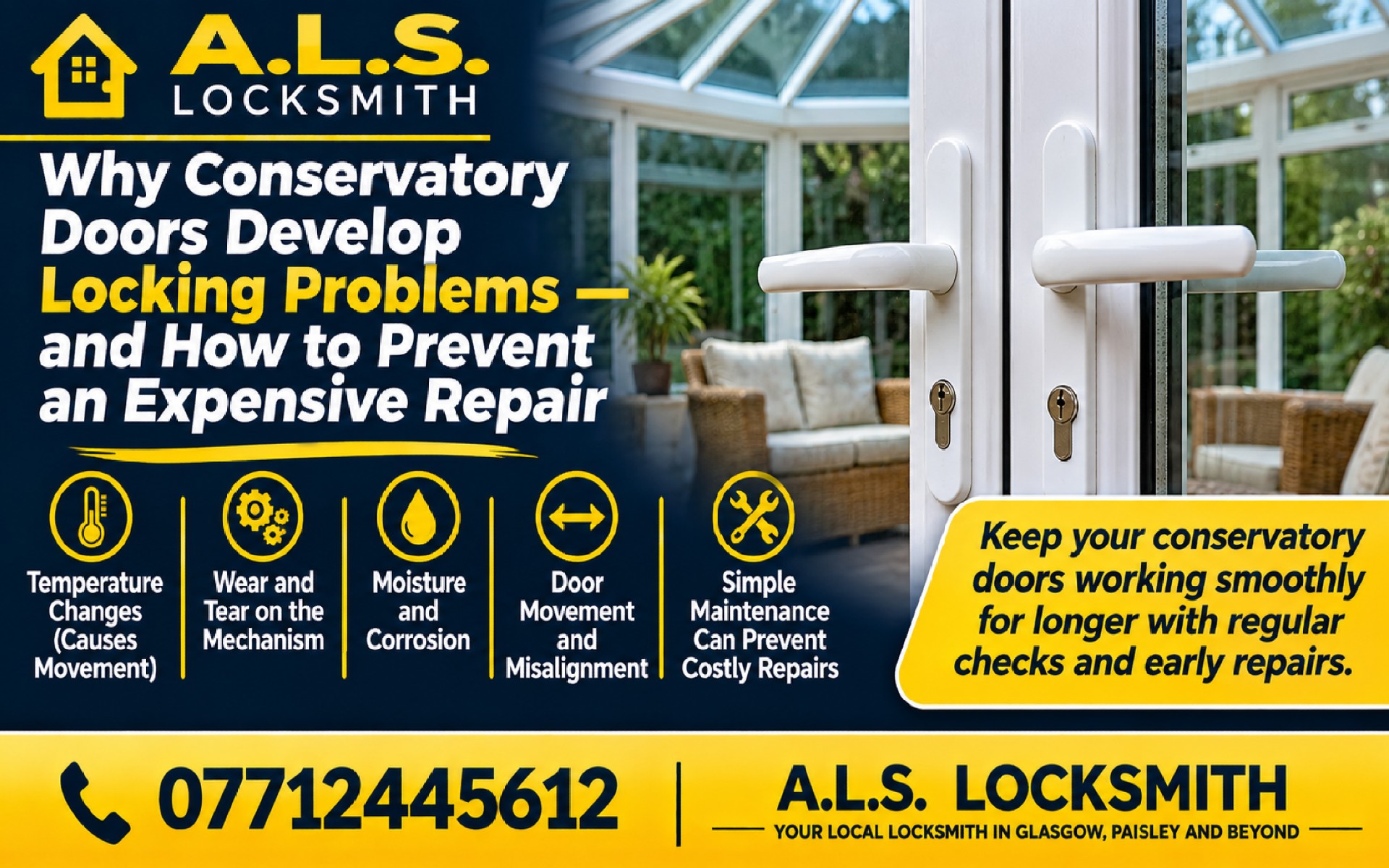
A conservatory is a great addition to a home, but its doors can experience conditions that are very different from those affecting a typical front entrance.
During a sunny spell, a conservatory can become extremely warm. In winter, temperatures can drop sharply, particularly overnight. These changing conditions can affect the door, frame, hinges and multipoint locking mechanism.
One of the first warning signs is often a handle that suddenly becomes stiff or difficult to lift.
It might be tempting to force it into position and carry on using the door. However, that can turn a relatively straightforward adjustment into a more expensive locking mechanism repair.
At A.L.S Locksmiths, we regularly deal with door faults where identifying the underlying problem early can make all the difference.
Why conservatory doors can be affected by temperature changes
Conservatory doors are often exposed to greater temperature fluctuations than doors in other parts of the home.
Large areas of glazing allow sunlight to heat the space, while the conservatory may lose heat quickly when the temperature outside falls. The door profile, frame and surrounding structure can expand or contract as conditions change.
UPVC is designed to cope with normal temperature changes, but it is not completely immune to movement. The amount of movement depends on the door's design, installation, exposure to sunlight, condition and the materials used.
If the door or frame moves slightly, the locking points may no longer line up as accurately with the keeps fitted to the frame.
That small change can be enough to make a multipoint locking mechanism harder to operate.
Why has your conservatory door handle suddenly become stiff?
A multipoint locking mechanism usually operates several locking points along the edge of a door. Depending on the design, these may include hooks, rollers or bolts.
When you lift the handle, the mechanism moves these locking points into position. If the door is correctly aligned, the parts should engage without excessive force.
Problems can develop when the locking points start rubbing against the frame keeps or the door has dropped slightly on its hinges.
Common causes include:
-
Door misalignment: The door has moved slightly, causing the locking points to catch on the keeps.
-
Temperature-related movement: Changes in temperature have affected the fit between the door and frame.
-
Worn hinges: The door has dropped or developed excessive movement.
-
A failing gearbox: Internal components are worn, damaged or beginning to fail.
-
A damaged multipoint mechanism: One or more locking points are sticking or failing to move correctly.
These faults can produce similar symptoms. A stiff handle does not automatically mean the gearbox needs replacing, which is why proper diagnosis matters.
How forcing the handle can damage the gearbox
This is where a minor problem can become a bigger one.
If the locking points are pressing against the frame keeps, the handle may require more force than usual to lift. That extra resistance places additional load on the mechanism.
Repeatedly forcing the handle can damage internal gearbox components, wear the operating parts or cause a mechanism that is already weakened to fail completely.
The result could be a handle that no longer moves, a door that cannot be locked or a mechanism that jams while the door is closed.
A gearbox does not necessarily break simply because a door becomes stiff, but continued force against a misaligned or faulty mechanism can increase the risk of damage.
If the handle suddenly becomes difficult to lift, do not force it. Find out why it is resisting.
Why early hinge adjustment can save money
In some cases, the problem is not the locking mechanism itself but the position of the door.
A door that has dropped slightly may cause the hooks, rollers or bolts to strike the edges of the frame keeps rather than entering them cleanly.
A competent locksmith can inspect the door's alignment, hinges, locking points and keeps to establish where the resistance is coming from.
If the problem is caused by misalignment, a suitable adjustment may restore smooth operation without replacing the gearbox.
However, hinge adjustment is not the answer to every stiff handle. If the gearbox is worn, components are damaged or the mechanism is failing internally, further repair may be necessary.
The important point is to identify the actual fault before replacing parts.
Five warning signs you should not ignore
Watch for these changes in how your conservatory door operates.
1. The handle needs extra force.
If lifting the handle becomes noticeably harder, something may be putting excessive resistance on the locking system.
2. You have to push or pull the door to lock it.
This can indicate that the locking points are not lining up correctly with the keeps.
3. The door catches against the frame.
Scraping, rubbing or visible marks may indicate alignment problems.
4. The key becomes difficult to turn.
The cause may be the cylinder, but resistance elsewhere in the locking mechanism can also affect operation.
5. The handle moves without operating the lock properly.
This may indicate a fault within the gearbox or multipoint mechanism and should be investigated promptly.
If you notice any of these symptoms, avoid repeatedly operating the handle with excessive force.
Does your conservatory door need a new mechanism?
Not necessarily.
A stiff handle can be caused by alignment problems, worn hinges, a faulty gearbox or a damaged locking strip. Each fault requires a different solution.
Depending on the condition of the door, the repair might involve:
-
Adjusting the door's position.
-
Correcting the alignment of the frame keeps.
-
Addressing a hinge problem.
-
Repairing or replacing a faulty gearbox.
-
Replacing a damaged multipoint locking mechanism.
A complete door replacement is not automatically necessary simply because the lock is difficult to operate.
If the door and frame remain in suitable condition, a targeted repair may be sufficient. Where the mechanism has suffered internal damage, the appropriate replacement will depend on the system fitted and the availability of compatible parts.
What can homeowners do to prevent problems?
You cannot prevent every fault, but a few sensible habits can help you identify problems before they become more serious.
-
Operate the handle gently and pay attention to changes in resistance.
-
Avoid forcing the locking points into position if they appear to be catching.
-
Check for visible rubbing marks around the door and frame.
-
Keep the door and frame clean, and use only suitable products where lubrication is required.
-
Arrange an inspection if the door repeatedly becomes difficult to lock or unlock.
Do not adjust hinges or dismantle a multipoint mechanism unless you know how the particular system works. Incorrect adjustments can make the alignment worse or compromise the door's operation.
Conservatory door repairs in Glasgow and Paisley
At A.L.S Locksmiths, we repair UPVC and composite door locks, including conservatory doors with stiff handles, alignment problems and faulty multipoint mechanisms.
Our approach is to diagnose the fault before recommending replacement parts. If a suitable adjustment can restore the door's operation, replacing the entire locking mechanism may not be necessary.
We provide fixed pricing, with no call-out fees. The agreed price includes the parts and labour for the specified work, and we offer a 12-month guarantee on parts supplied and fitted, subject to the guarantee's terms and exclusions.
We serve Glasgow, Paisley and surrounding areas.
Final thoughts
Conservatory doors can experience significant temperature changes, and movement in the door or frame can affect how the locking points engage. A stiff handle is not something to ignore or overcome by force.
Early inspection may identify a straightforward alignment issue before repeated use causes further damage to the locking mechanism.
If your conservatory door has become difficult to lock, the handle is stiff or the mechanism is starting to stick, contact A.L.S Locksmiths to discuss the problem.
A little attention at the right time may help you avoid a much bigger repair later.