Introduction
Composite doors have become one of the most popular choices for front and rear entrances thanks to their combination of strength, security, insulation and low maintenance. Designed to withstand years of daily use and changing weather conditions, a quality composite door can provide decades of reliable service.
However, while the door itself is extremely durable, the locking components inside it are mechanical parts that naturally wear over time. Problems such as stiff handles, difficult locking, failed gearboxes and worn lock cylinders are all common—but they rarely mean the door itself needs replacing.
Understanding door security standards and how a composite door is constructed, how its locking system operates and what causes common faults can help you recognise problems early and avoid unnecessary replacement costs.
What Is a Composite Door?
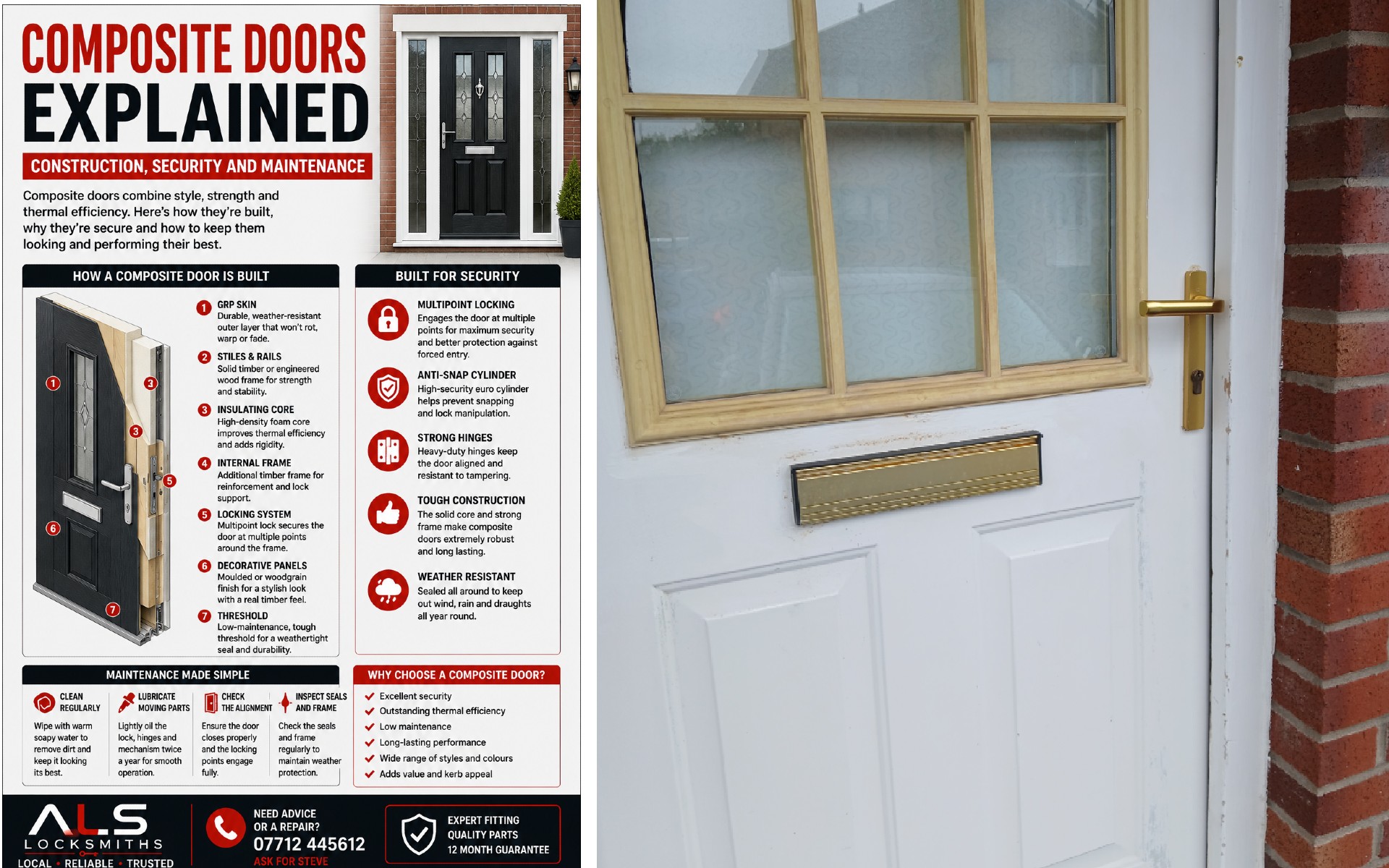
Unlike a traditional timber door, a composite door is manufactured from several materials that work together to provide strength, durability and thermal efficiency.
Most composite doors include:
- An insulated high-density core
- A tough Glass Reinforced Plastic (GRP) outer skin
- Reinforcement within the frame or door construction (depending on the manufacturer)
- Weather-resistant finishes
- High-performance seals around the frame
This combination creates a door that resists warping, requires very little maintenance and offers excellent security.
How Secure Are Composite Doors?
The strength of a composite door is only one part of its security.
The overall security depends on several components working together, including:
- A multipoint locking mechanism
- A correctly sized euro cylinder
- High-security door handles
- Strong hinges
- Reinforced keeps
- Correct door alignment
If one of these components fails, the security of the whole door can be compromised, even if the door itself remains in excellent condition.
How Does the Locking System Work?
Most composite doors use a multipoint locking system.
Running inside the edge of the door is a long locking mechanism containing:
- Gearbox
- Hooks
- Rollers
- Deadbolts
- Latch
- Connecting rods
When the handle is lifted, these locking points engage with keeps fitted to the frame, securing the door from top to bottom.
Turning the key locks the gearbox, preventing the mechanism from being operated until the door is unlocked again.
Are Composite Doors Better Than uPVC Doors?
This is a question homeowners ask regularly.
From a security perspective, both composite and uPVC doors can provide excellent protection when fitted with quality locking systems.
A well-maintained uPVC door fitted with a modern multipoint lock and high-security cylinder can be just as secure as a composite door.
The main advantages of composite doors are usually:
- Greater rigidity
- Improved insulation
- More traditional appearance
- Better resistance to dents and everyday knocks
Regardless of the door type, correct installation, good alignment and quality locking components remain the biggest factors affecting security.
Common Composite Door Problems
Even the highest-quality composite doors develop wear over time.
Typical faults include:
- Difficulty lifting the handle
- A stiff or sticking key
- The door becoming difficult to lock
- Handles that fail to return properly
- Failed gearboxes
- Worn multipoint locking mechanisms
- Loose or worn handles
- Lock cylinders wearing out
- Doors catching the frame
Most of these problems begin gradually before developing into complete lock failures.
Why Do Composite Door Locks Fail?
Locking mechanisms are designed to last for many years, but thousands of daily operations eventually take their toll.
The most common causes include:
- General wear and tear
- Doors gradually dropping on their hinges
- Poor alignment
- Forcing a stiff handle
- Worn internal components
- Lack of maintenance
- Ignoring early warning signs
In many cases, the mechanism hasn't failed because it was poorly made—it has failed because it's been working under unnecessary strain for months or even years.
Warning Signs You Shouldn't Ignore
Composite doors usually provide plenty of warning before complete failure.
Watch for:
- The handle becoming harder to lift
- The key becoming difficult to turn
- Having to push or pull the door closed
- The door rubbing on the frame
- Grinding or clicking noises
- Handles that no longer spring back properly
- Locking becoming inconsistent
Having these problems investigated early often prevents a simple repair becoming an emergency.
Can Composite Doors Be Repaired?
Absolutely.
One of the biggest misconceptions is that a faulty composite door needs replacing.
In reality, most repairs involve replacing worn components rather than the door itself.
Common repairs include:
- Gearbox replacement
- Multipoint locking mechanism replacement
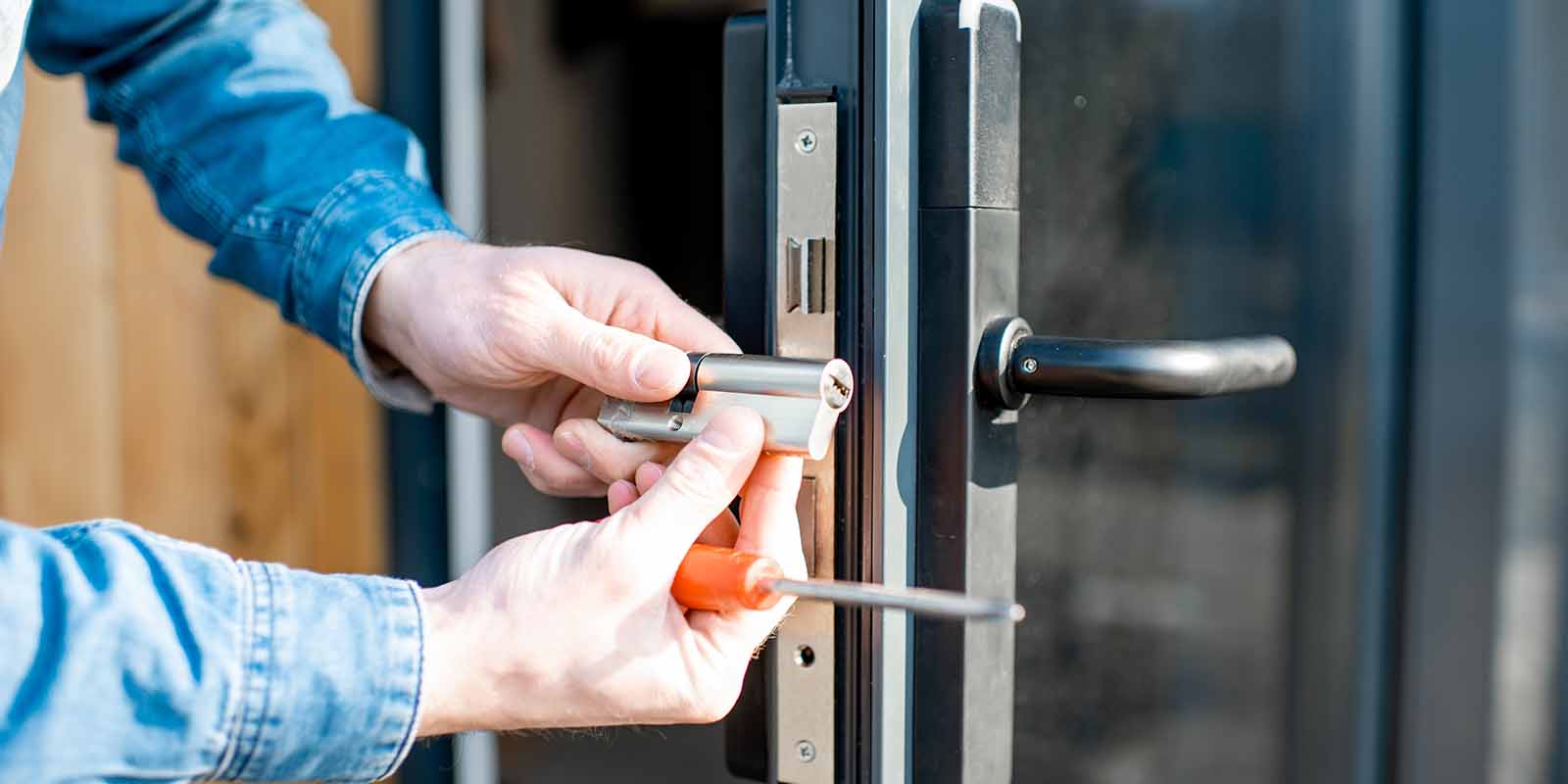
- Lock cylinder replacement
- Door handle replacement
- Door realignment
- Security upgrades
- Hinge adjustments
Provided the door and frame remain structurally sound, repairing the locking system is usually the most economical solution.
Why Door Alignment Matters
Door alignment is one of the most overlooked parts of any repair.
Even a movement of only a few millimetres can place significant pressure on the locking system.
When a door drops:
- Hooks and rollers no longer line up correctly.
- The gearbox works harder.
- The handle becomes stiff.
- The key becomes difficult to turn.
- Internal components wear much faster.
Replacing the gearbox without correcting the alignment simply allows the same problem to return.
A professional repair should always include checking and adjusting the door to remove unnecessary strain from the new components.
Can Composite Doors Warp?
Composite doors are considerably more stable than traditional timber doors, but they are not completely immune to movement.
Changes in temperature, prolonged direct sunlight and natural building movement can all affect how a door operates.
Often what appears to be a warped door is actually a minor alignment issue that can be corrected without replacing the door.
Looking After Your Composite Door
Composite doors require very little maintenance, but a few simple checks can greatly extend the life of the locking system.
It's worth:
- Keeping locking points clean.
- Lubricating hooks, rollers and latches occasionally.
- Tightening loose handle fixings.
- Replacing worn keys.
- Investigating stiffness as soon as it develops.
- Having the door adjusted if it starts catching the frame.
Preventative maintenance is far cheaper than dealing with a complete lock failure.
Can You Upgrade the Security?
Yes.
Many older composite doors can be significantly improved without replacing the door itself.
Popular upgrades include:
- TS007 3 Star snap-resistant cylinders
- TS007 1 Star cylinders combined with TS007 2 Star security handles
- High-quality sprung door handles
- New multipoint locking mechanisms
- Improved keeps where appropriate
These upgrades offer greater protection against common burglary techniques while improving the everyday operation of the door.
When Does a Composite Door Need Replacing?
Fortunately, not very often.
Replacement is normally only recommended when:
- The door has suffered structural damage.
- The frame has failed.
- Severe impact damage has occurred.
- Water ingress has permanently damaged the door core.
Mechanical faults alone rarely justify replacing the entire door.
Conclusion
Composite doors are designed to provide many years of reliable service, and most problems occur within the locking components rather than the door itself. Whether the fault is a worn gearbox, failed multipoint locking mechanism, damaged lock cylinder, poor alignment or worn handles, the vast majority of composite doors can be repaired quickly and cost-effectively.
A quality repair is about more than simply replacing worn parts. Correct diagnosis, high-quality replacement components and careful door realignment all work together to restore smooth operation, maximise the lifespan of the repair and help prevent future failures. In most cases, keeping your existing composite door is the most practical, economical and secure solution.