When a relationship ends, deciding who stays in the family home can be one of the most difficult parts of separating. One partner may move out, while the other remains in the property. Sometimes the person staying wants to change the locks to prevent their former partner from returning.
But is this legal in Scotland? Does it matter whose name is on the title deeds or tenancy agreement? And what happens if both partners still have rights to the home?
At A.L.S Locksmiths, we understand that changing locks can be about personal security and peace of mind. However, before changing locks following a separation, it is important to understand the legal position.
The key point is that you cannot assume you have the right to lock a former partner out simply because the relationship has ended or the property is in your name.
1. Can You Change the Locks If You Are Married?
In Scotland, the Matrimonial Homes (Family Protection) (Scotland) Act 1981 gives spouses occupancy rights in the matrimonial home in certain circumstances, including where only one spouse owns or rents the property.
This means that, during the marriage, a spouse may have a legal right to live in the family home even if their name does not appear on the title deeds or tenancy agreement.
If you separate, those rights do not automatically disappear.
Changing the locks to prevent your spouse from entering or returning home could interfere with their legal occupancy rights. If you are both entitled to occupy the property, neither of you should assume you can exclude the other unilaterally.
Where there are serious concerns about safety, harassment or domestic abuse, a court may grant an exclusion order suspending the other spouse's occupancy rights. Legal advice is important before taking action.
Official information is available in the Matrimonial Homes (Family Protection) (Scotland) Act 1981.
2. What If the House Is in Your Name Only?
You might own the house outright, have bought it before the relationship or be the only person named on the mortgage and title deeds.
However, if you are married and the property is your matrimonial home, your spouse may still have occupancy rights under Scottish law.
The fact that you are the sole owner does not automatically mean you can change the locks to exclude your spouse.
If you want your spouse to leave or need to prevent them from returning, a solicitor can explain the available legal options. Depending on the circumstances, a court order may be necessary.
It is important to distinguish between changing a lock for ordinary security reasons and changing it specifically to prevent someone with legal occupancy rights from entering.
3. Can You Change the Locks After a Divorce?
Divorce changes the legal position, but it is important to establish whether the divorce has been finalised and whether any other rights or court orders apply.
Under the 1981 Act, statutory occupancy rights based on being a spouse generally end when the marriage legally terminates, subject to the terms and effect of any relevant court orders.
However, your former spouse may still have rights if they jointly own the property, have a tenancy interest or have another legal basis for occupying it.
For example, if the house is jointly owned, divorce does not automatically transfer ownership to the person who remains living there.
Before changing the locks, establish whether your former partner retains any ownership, tenancy or court-ordered rights.
4. What If You Were Living Together but Were Not Married?
The rules are different for unmarried couples who were cohabiting.
Under Scottish law, an unmarried partner does not automatically have the same occupancy rights as a spouse simply because they lived together.
However, that does not mean every unmarried partner can immediately be locked out.
The legal position depends on factors including:
-
Whether both partners own the property.
-
Whether both names appear on the tenancy agreement.
-
Whether a court has granted occupancy rights.
-
Whether the former partner has moved out or is still living in the property.
-
Whether any other legal rights or court orders apply.
If you are the sole owner or tenant and your former partner has no independent right to occupy the property, you may have grounds to change the locks. However, if they are still living there or refuse to leave, obtain legal advice before taking steps that could amount to an unlawful exclusion or eviction.
A cohabitant can, in certain circumstances, apply to the court for occupancy rights. These may be granted for a limited period.
For further guidance, see mygov.scot — If you live together and separate.
5. What If You Jointly Own the House or Are Joint Tenants?
If both partners own the property or both are named on the tenancy agreement, the situation is more straightforward in one respect: both generally have legal rights to occupy the home.
One partner cannot ordinarily force the other to leave simply by changing the locks.
If you cannot agree on who should remain in the property, you may need legal advice or a court decision.
For jointly owned homes, possible solutions include agreeing that one partner buys out the other's share, selling the property or seeking a court decision if agreement cannot be reached.
For a joint tenancy, the tenancy arrangements and the landlord's requirements must also be considered.
Changing the locks does not remove another person's ownership interest or automatically terminate their tenancy rights.
6. What If Your Former Partner Has Already Moved Out?
If your former partner has moved out and you want to secure the property, the legal position will depend on their remaining rights.
For example, if you are the sole owner, were not married and your former partner has no occupancy rights or other legal interest, changing the locks may be appropriate.
However, if you are married and not yet divorced, your former spouse may retain occupancy rights despite having moved out. Joint ownership or tenancy can also affect the position.
Do not assume that moving out automatically means a person has surrendered every legal right to the property.
If you are unsure, establish the legal position before arranging a lock change.
7. What About Personal Belongings and Spare Keys?
Changing the locks does not automatically remove your former partner's rights to their personal belongings.
If your former partner has possessions in the property, it is sensible to agree on a collection date and time. Where possible, make a written list of the items to be collected and keep a record of what has been handed over.
Do not destroy, dispose of or withhold belongings simply because the relationship has ended. Disputes over ownership may need to be resolved separately.
If you are concerned about confrontation, you can arrange for a neutral third party to be present. If there is a genuine risk of violence or abuse, seek appropriate support and legal advice rather than arranging a meeting that could put anyone at risk.
8. What If You Need to Change the Locks Because of Domestic Abuse?
If you are worried about your safety or the safety of your children, getting appropriate protection is more important than trying to resolve the situation through a lock change alone.
In Scotland, a court can grant an exclusion order in appropriate circumstances. This can suspend a person's occupancy rights and may be accompanied by other protective measures.
The availability of an order depends on the circumstances and the legal requirements. You should not assume that changing the locks by itself provides legal protection or prevents a former partner from having rights to the home.
If you are in immediate danger, call 999. You can also seek advice from a family law solicitor or an organisation that supports people experiencing domestic abuse.
Official guidance is available at mygov.scot — Exclusion orders.
9. What Should You Do Before Changing the Locks?
Before arranging a lock change following a breakup or divorce, consider these steps:
-
Establish who owns or rents the property. Check the title deeds or tenancy agreement.
-
Clarify your relationship status. Being separated is not the same as being legally divorced.
-
Check for occupancy rights. Marriage, joint ownership, joint tenancy and court orders can all affect the legal position.
-
Seek legal advice if access is disputed. A Scottish family law or housing solicitor can advise whether you can lawfully exclude your former partner.
-
Consider security needs. If the lock is damaged or keys have been lost, you may need to secure the property, but this should be handled without unlawfully excluding someone with occupancy rights.
Lock Changes After Separation in Glasgow and Paisley
A.L.S Locksmiths provides lock replacement and repair services in Glasgow, Paisley and surrounding areas.
If you need a lock changed after a relationship breakdown, it is important to distinguish between securing your property and deciding who has the legal right to enter it.
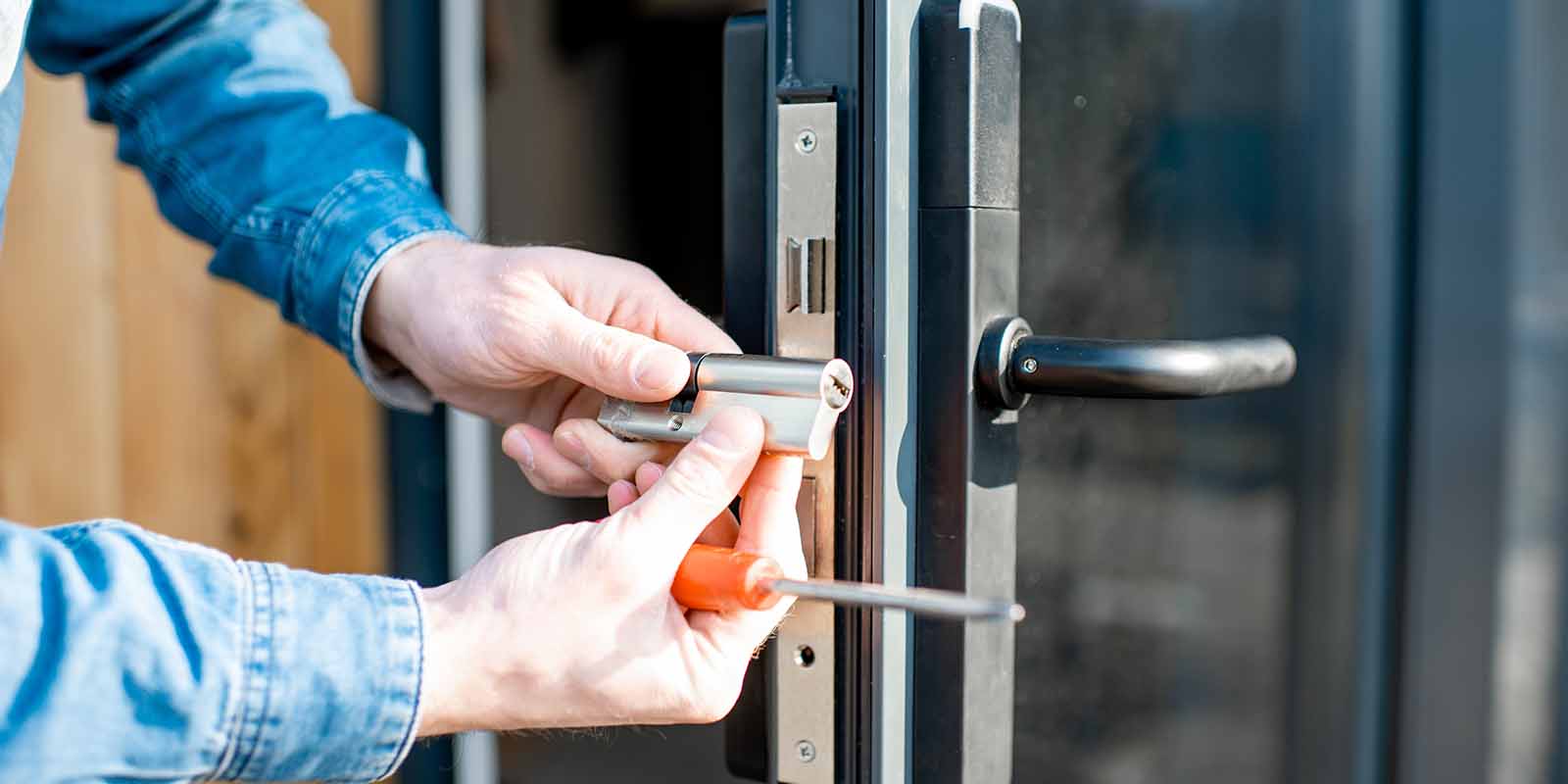
We can help with suitable lock replacements, euro cylinder changes and repairs to UPVC and composite door locking mechanisms. However, a locksmith cannot determine ownership or decide whether a former partner has occupancy rights.
If there is a dispute about who may enter the property, establish the legal position before instructing a locksmith to exclude another person.
The bottom line: in Scotland, changing the locks after a breakup or divorce may be lawful in some circumstances, but it is not automatically lawful just because the property is in your name or your former partner has moved out. The safest approach is to establish the relevant ownership, tenancy and occupancy rights before taking action.
This article provides general information about Scottish law and is not legal advice. Individual circumstances, court orders and the status of the relationship can change the legal position.