Introduction
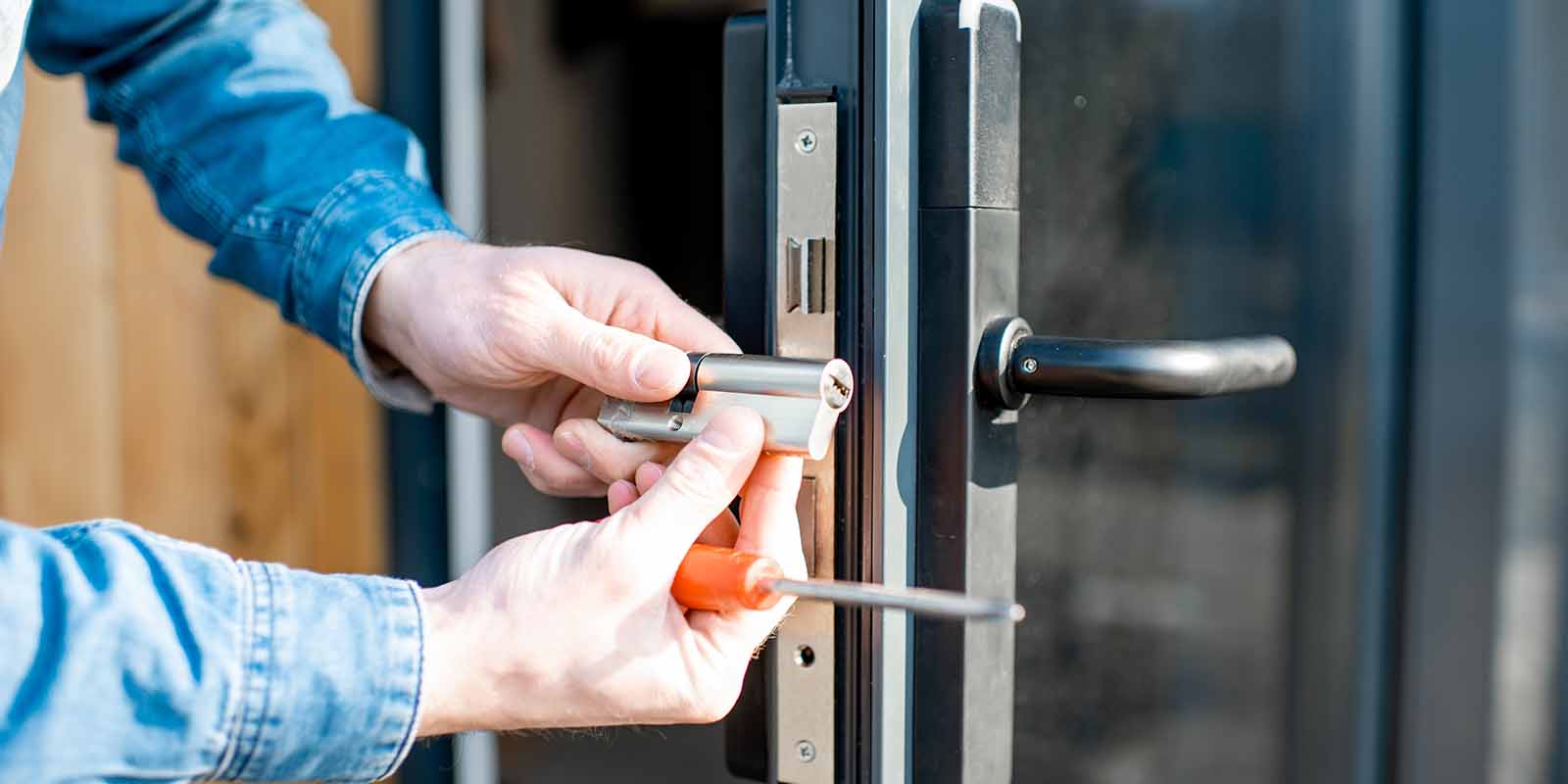
Modern front doors are far more sophisticated than many homeowners realise. Behind the handle are dozens of individual components working together to provide security, weather protection, insulation and smooth everyday operation.
Whether your home has a uPVC, composite, timber or aluminium door, understanding the purpose of each component can help you diagnose problems, understand repair recommendations and make informed decisions when maintaining or upgrading your door.
Many door faults are not caused by a single broken part but by several components working together. A worn hinge, misaligned keep or tired gearbox can all affect how the door locks and operates. Learning what each component does makes it easier to recognise early warning signs and understand why a repair has been recommended.
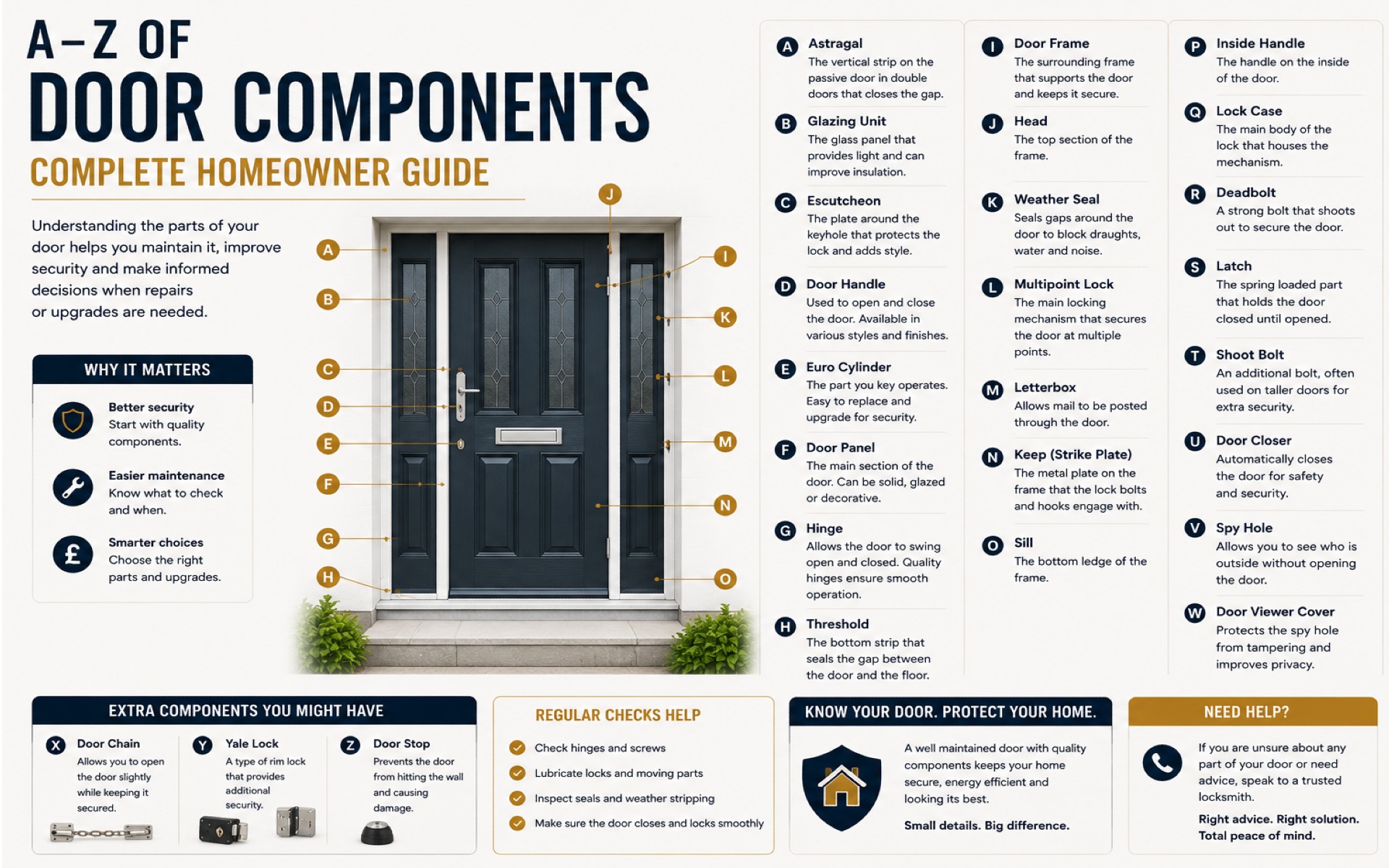
This A–Z glossary explains the most common structural and mechanical door components in plain English.
Common Door Components
Looking for a particular part? These are some of the components homeowners most commonly ask about.
- Gearbox
- Euro Cylinder
- Multipoint Lock
- Centre Case
- Door Handles
- Hinges
- Hooks
- Rollers
- Keeps
- Latch
- Spindle
- Threshold
- Weather Seals
A
Astragal
What it is
An astragal is a vertical moulding or sealing strip fitted where two doors meet, most commonly on French doors or double entrance doors.
Why it matters
It helps prevent draughts, improves weather resistance and provides additional protection against forced entry by covering the gap between the two door leaves.
Commonly Found On
- French doors
- Double composite doors
- Timber double doors
B
Backplate
What it is
The long metal plate forming the base of a door handle.
Why it matters
It supports the lever, conceals the fixing screws and protects the area surrounding the lock cylinder.
C
Centre Case
What it is
The central housing within a multipoint locking mechanism that contains the gearbox.
Why it matters
Often referred to as the heart of the locking system, the centre case transfers movement from the handles and key to the locking points and is one of the most commonly repaired components.
D
Door Frame
What it is
The structural surround fixed into the building that supports the door.
Why it matters
A correctly installed frame is essential for proper alignment, smooth locking and long-term security.
Door Panel
What it is
The main body of the door enclosed within the frame.
Why it matters
Its construction determines much of the door's strength, insulation, security and appearance.
E
Escutcheon
What it is
A protective plate fitted around the Euro cylinder or keyhole.
Why it matters
Security escutcheons help shield the cylinder from attack while improving the appearance of the door.
F
Faceplate
What it is
The visible metal strip running down the edge of a multipoint locking mechanism.
Why it matters
It supports the locking mechanism and often displays useful identification details such as the manufacturer and model.
G
Gearbox
What it is
The operating unit positioned behind the handles.
Why it matters
It transfers movement from the key and handles to the hooks, rollers, deadbolts and latch, making it one of the most important parts of a multipoint lock.
Related Guides
- Complete Guide to Multipoint Locking Systems
- A–Z of Common Lock Faults
Glazing Cassette
What it is
The frame securing the glazed unit within the door.
Why it matters
It holds the glass securely while maintaining weather resistance and supporting the door's structural integrity.
H
Hinge
What it is
The component allowing the door to pivot open and closed.
Why it matters
Correctly adjusted hinges support the full weight of the door, maintain alignment and reduce unnecessary strain on the locking mechanism.
I
Intumescent Strip
What it is
A fire-resistant strip fitted around certified fire doors.
Why it matters
When exposed to heat, it expands to seal the gap between the door and frame, slowing the spread of fire and smoke.
J
Jamb
What it is
The vertical side sections of the door frame.
Why it matters
Keeps, hinges and weather seals are usually fixed to the jambs, making them essential to correct door operation.
K
Keep
What it is
The metal receiver fixed to the frame that accepts the latch, hooks, rollers or deadbolts.
Why it matters
Accurate alignment between the locking points and keeps is essential for smooth locking and long-term reliability.
Related Guides
- Complete Guide to Door Alignment & Lock Performance
- Complete Guide to Door Locks
L
Latch
What it is
The spring-loaded bolt that keeps the door closed until the handle is operated.
Why it matters
It is one of the most frequently used moving parts and naturally experiences considerable wear over time.
Lock Case
What it is
The housing containing the internal locking mechanism.
Why it matters
Different lock cases are manufactured with different backsets, handle centres and locking configurations depending on the door.
M
Mushroom Cam
What it is
A mushroom-shaped locking point that engages with a matching keep.
Why it matters
It increases resistance to levering while pulling the door firmly against the weather seals.
N
Nightlatch
What it is
A surface-mounted lock that automatically latches when the door closes.
Why it matters
Still commonly used on timber entrance doors and often referred to as a Yale lock.
O
Overcentre Mechanism
What it is
A mechanical arrangement that passes through a central pivot point before locking into position.
Why it matters
It helps maintain compression against weather seals and contributes to smooth locking in certain door systems.
P
Panel
What it is
The central section of the door, which may be solid or glazed.
Why it matters
Panels contribute significantly to the door's strength, insulation, security and appearance.
Pivot Block
What it is
A support component used on some door systems to help distribute weight and maintain smooth movement.
Why it matters
Although not found on every door, pivot blocks help reduce stress on hinges and improve long-term door alignment.
Q
Quadrant Stay
What it is
A curved support arm fitted to some stable doors, outward-opening doors and specialist applications to control the opening angle.
Why it matters
It helps prevent excessive opening, reducing stress on hinges and surrounding structures.
R
Roller Cam
What it is
A cylindrical locking point that rotates into a matching keep.
Why it matters
It compresses the weather seals, improving draught resistance, water resistance and overall security.
S
Shoot Bolt
What it is
A steel bolt projecting into the head or threshold of the frame.
Why it matters
Commonly fitted to French doors where shoot bolts secure the passive door before the active door is locked.
Spindle
What it is
The square steel bar connecting the inside and outside door handles through the gearbox.
Why it matters
It transfers movement from the handles to the latch and locking mechanism.
Related Guides
- Complete Guide to uPVC & Composite Door Handles
- Complete Guide to Multipoint Locking Systems
T
Threshold
What it is
The bottom section of the doorway that the door closes onto.
Why it matters
Modern thresholds provide accessibility, drainage and weather protection while supporting the correct operation of the door.
U
uPVC Reinforcement
What it is
Steel or aluminium sections fitted inside many uPVC door frames and sashes.
Why it matters
Reinforcement increases rigidity, improves screw retention and helps prevent twisting under load.
V
Ventilator (Trickle Vent)
What it is
A small controllable vent fitted to some doors or adjacent frames.
Why it matters
It provides background ventilation, helping reduce condensation and improve indoor air quality.
W
Weather Seal
What it is
A rubber, foam or compression seal fitted around the door.
Why it matters
It helps prevent draughts, water ingress, dust and noise while improving energy efficiency.
Related Guides
- Complete Guide to Looking After Your uPVC & Composite Door
- A–Z of Why Doors Fail
These create natural internal links exactly where they're most relevant.
X
XPS (Extruded Polystyrene) Insulation Core
What it is
A rigid closed-cell insulation material used in some composite doors and insulated panels.
Why it matters
XPS provides excellent thermal insulation, moisture resistance and dimensional stability while helping keep the door lightweight.
Y
Yale Nightlatch
What it is
A nightlatch manufactured by Yale, one of the best-known lock manufacturers in the world.
Why it matters
Although many people use the term "Yale lock" for any nightlatch, Yale is a brand rather than a type of lock.
Z
Z-Bar
What it is
A Z-shaped aluminium or steel profile used on some door systems to provide structural support, secure cladding panels or assist with weatherproof detailing.
Why it matters
Its design adds rigidity while allowing different materials to be joined neatly and securely.
Every Component Has a Purpose
Modern doors are carefully engineered systems made up of many individual components, each performing a specific role. From the hinges that support the door to the gearbox that coordinates the locking mechanism and the weather seals that keep out the elements, every part contributes to the door's overall performance.
Understanding security standards and these components helps homeowners communicate more effectively when repairs are needed, recognise potential problems earlier and appreciate why accurate diagnosis often involves much more than simply replacing a lock. Many common faults can be traced to a single worn or misaligned component, making knowledge of how the door is constructed invaluable when maintaining or repairing it.
Related Complete Guides
f you'd like to learn more about how modern doors work, these detailed guides explain the components, locking systems and maintenance that keep entrance doors secure and operating smoothly.
Complete Guide to Door Components & Hardware
Explore the parts that make up a modern door, how they work together and why each component plays an important role.
Complete Guide to Multipoint Locking Systems
Learn how multipoint locks operate, the components they contain and the common causes of failure.
Complete Guide to Euro Cylinder Door Locks
Understand Euro cylinders, sizing, security ratings and how to choose the correct replacement.
Complete Guide to uPVC & Composite Door Handles
Discover the different handle styles, measurements, security features and replacement options.
Complete Guide to Door Alignment & Lock Performance
See how alignment affects every moving component within the door and why it is essential for smooth operation.
Complete Guide to Door Locks
Understand the different types of door locks, how they work and the most common problems homeowners experience.
Conclusion
Every modern door relies on dozens of carefully engineered components working together. From the hinges supporting the weight of the door to the gearbox coordinating the locking mechanism and the weather seals protecting against the elements, each part plays an important role in the door's overall performance.
Understanding these components helps homeowners recognise early signs of wear, communicate more effectively when repairs are needed and make informed decisions about maintenance and security upgrades. Whether you're identifying an unfamiliar part or simply learning how your door works, this A–Z guide provides a practical reference to the components most commonly found on modern entrance doors.