Discovering that someone has broken into your home is unsettling. Alongside the worry about your belongings and personal security, you may be left with a damaged door, a broken lock or a property that can no longer be secured properly.
Knowing what to do next can help you regain control and protect your home from further access.
At A.L.S. Locksmiths, we provide professional lock repairs, lock replacements and emergency security services throughout Glasgow, Paisley, Dumbarton, Alexandria, Balloch and surrounding areas. Here's what to consider after a break-in or attempted forced entry.
1. Make Sure It Is Safe to Enter
If you arrive home and discover signs of a break-in, do not enter if you think the intruder may still be inside.
Move to a safe location and contact Police Scotland if you suspect someone is present or there is an immediate danger. If a crime has occurred, report it to the police and follow their advice before disturbing the scene, where possible.
Once the property has been declared safe, you can begin assessing the damage and arranging repairs.
2. Check the Door and Lock for Damage
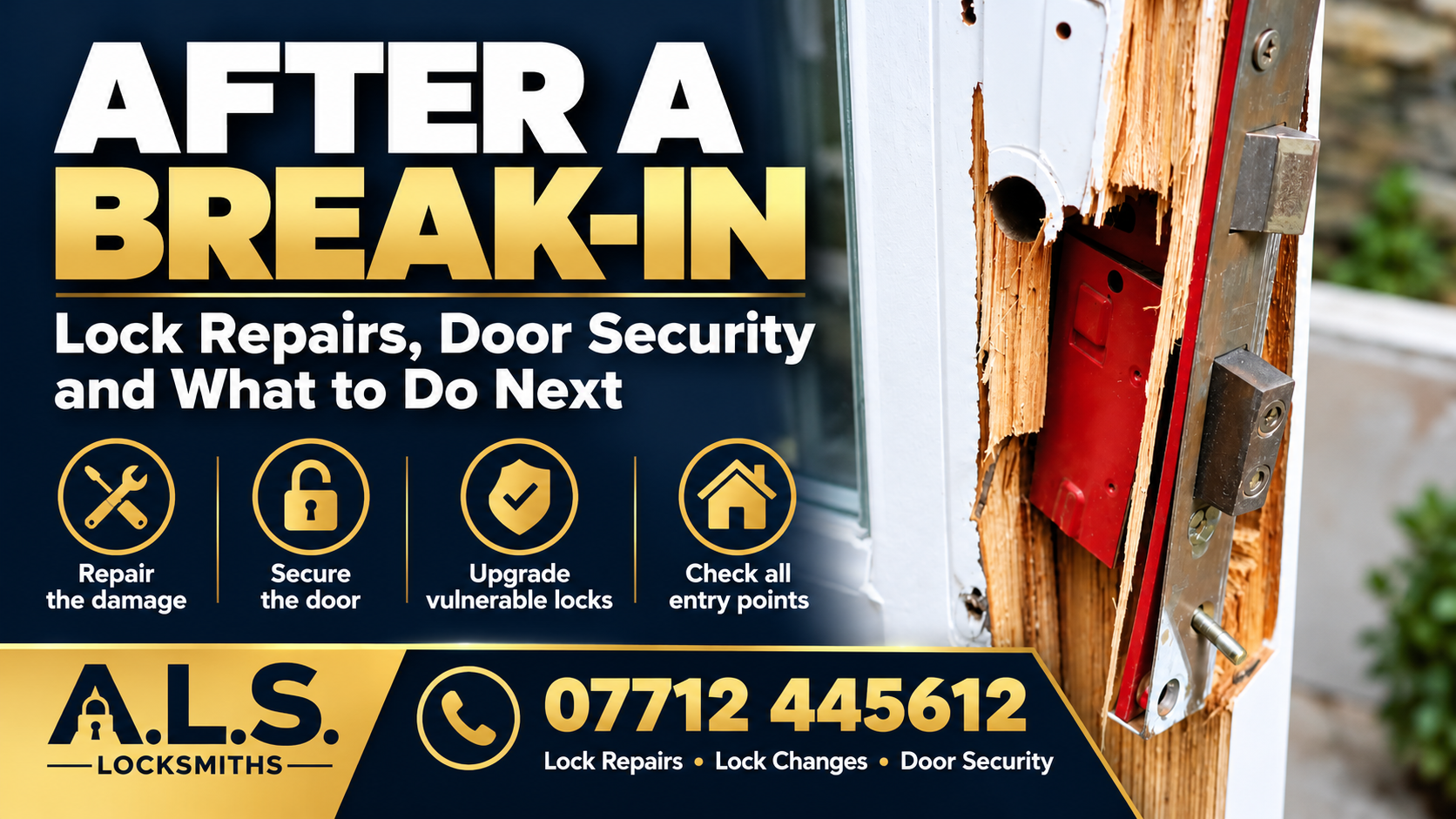
A forced entry attempt can damage more than the visible lock. The cylinder, handles, multipoint mechanism, door frame and keeps may all have been affected.
Common signs of forced entry include:
-
A snapped, damaged or missing euro cylinder.
-
Bent or broken door handles.
-
A multipoint locking mechanism that no longer operates.
-
Damage around the lock or handle.
-
A split door frame or damaged keeps.
-
A door that will not close or lock securely.
Even if the key still turns, the internal mechanism may have been weakened.
Avoid repeatedly operating a damaged lock. A professional locksmith can assess the condition of the locking system and identify which components need repairing or replacing.
3. Do You Need to Change the Locks?
After a break-in, changing the locks may be necessary, particularly if the cylinder has been damaged or the keys may have been stolen.
However, the correct solution depends on how the intruder gained entry and the condition of the existing hardware.
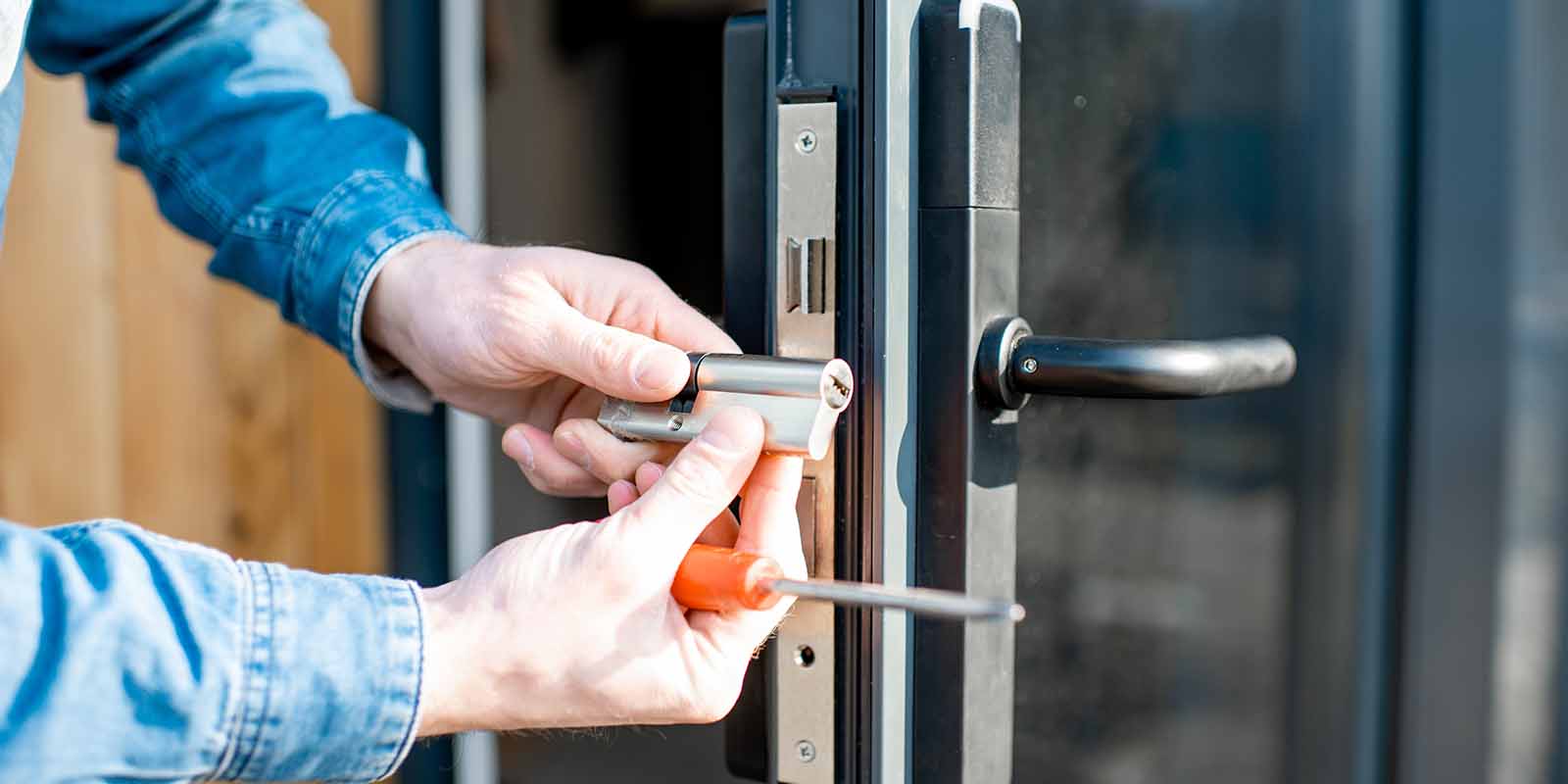
On many UPVC and composite doors, the euro cylinder can be replaced independently of the multipoint locking mechanism. If the cylinder is the only damaged component, this may be sufficient.
If the gearbox, handles or locking strip have also been damaged, additional repairs may be required.
Where the original mechanism is obsolete, a suitable replacement or upgrade may still be possible. The door does not automatically need to be replaced simply because its lock has failed.
4. What If Your UPVC or Composite Door Will Not Lock?
Forced entry can put considerable strain on a multipoint locking mechanism. Or could even force the lock to jam shut.
You may find that the handle no longer lifts properly, the key will not turn or the locking points fail to engage with the frame.
In some cases, the door may have dropped or the keeps may have been damaged during the attempt.
Replacing the cylinder alone will not solve these problems if the underlying mechanism or door alignment has also been affected.
A locksmith can assess the gearbox, locking points, handles and alignment to determine the most appropriate repair.
If the door cannot be secured, arrange assistance promptly rather than relying on a lock that no longer works correctly.
5. What About a Broken Door or Window?
Not every break-in can be resolved by changing a lock.
If the door itself has been split, the frame has been damaged or a window has been smashed, the property may need additional work before it can be made secure.
Depending on the damage, this could involve:
-
Emergency boarding to secure a broken window or damaged opening.
-
Glass replacement by a suitable glazing specialist.
-
Door or frame repairs by an appropriate contractor.
-
Replacement locking hardware once the door or frame is sound.
A locksmith can deal with the lock and associated locking mechanism, but structural door damage and broken glazing may require separate specialists.
If you need emergency boarding or glass replacement, establish which service is required and arrange a suitably qualified contractor.
6. Improve Your Security After a Break-In
Once the immediate damage has been addressed, it is worth reviewing your property's overall security.
Depending on the door and existing hardware, improvements may include:
Upgrading the euro cylinder: Consider a suitable security-rated cylinder designed to resist common attack methods, including snapping. Correct sizing and installation are essential.
Checking the multipoint locking system: Make sure all locking points engage correctly and the handle operates without excessive force.
Repairing door alignment: A door that does not close correctly can put unnecessary pressure on the mechanism and compromise reliable locking.
Reviewing other entrances: Check back doors, side doors, accessible windows, garages and garden gates for damage or weaknesses.
Changing compromised keys: If keys were stolen or you cannot account for who has access, consider replacing the affected locks.
Security upgrades should be chosen to suit the existing door and the risks identified, rather than assuming that the most expensive product is always the best option.
7. Document the Damage and Contact Your Insurer
If you intend to make an insurance claim, photograph the damage before repairs begin, provided it is safe to do so.
Keep records of the incident, any police reference number, quotations and invoices for emergency repairs. Contact your insurer as soon as practical and check whether it has specific requirements for approved contractors or evidence.
Where immediate work is needed to secure the property, explain the situation to your insurer and retain the relevant documentation.
8. Avoid Temporary Repairs That Leave Your Home Vulnerable
After a break-in, it can be tempting to use a damaged lock simply because it still appears to work.
However, a compromised cylinder, broken gearbox or damaged door frame may leave the property inadequately secured.
If the door cannot be locked reliably, seek professional assistance. Where the damage is severe, temporary boarding or other suitable emergency measures may be necessary until permanent repairs can be completed.
The priority is to make sure the property can be secured properly, not simply to make the door look as though it is closed.
Emergency Lock Repairs After a Break-In in Glasgow and Paisley
At A.L.S. Locksmiths, we help homeowners deal with damaged locks, failed gearboxes, broken cylinders and doors that will no longer lock correctly following forced entry.
We work with UPVC, composite and wooden doors, identifying whether a lock change, mechanism replacement or door realignment is required.
Our aim is to restore the security of your existing door wherever practical, without recommending unnecessary replacements.
We operate on a fixed-price basis, with no call-out fees. We explain the proposed work and provide a clear quotation before proceeding.
Need your locks repaired or replaced after a break-in?
Contact A.L.S. Locksmiths on 07712 445612 for professional locksmith services throughout Glasgow, Paisley, Dumbarton, Alexandria, Balloch and the surrounding areas.
If your door has been damaged and you cannot secure your property, do not leave the problem unresolved. Arrange the necessary repairs and restore your home's security as soon as possible.