Your uPVC or composite door has started playing up. The handle is getting harder to lift, the key feels stiff, or you have to push against the door just to get it to lock.
Most homeowners naturally want to fix the problem themselves. A quick spray of lubricant, a shove against the bottom of the door or a few turns of an adjustment screw might seem like an easy solution.
Unfortunately, these common DIY fixes can make the original problem worse — and potentially turn a straightforward repair into a much more expensive job.
At A.L.S Locksmiths, we regularly work on faulty door locks and multipoint mechanisms. Here are three common mistakes to avoid when your door starts becoming difficult to operate.
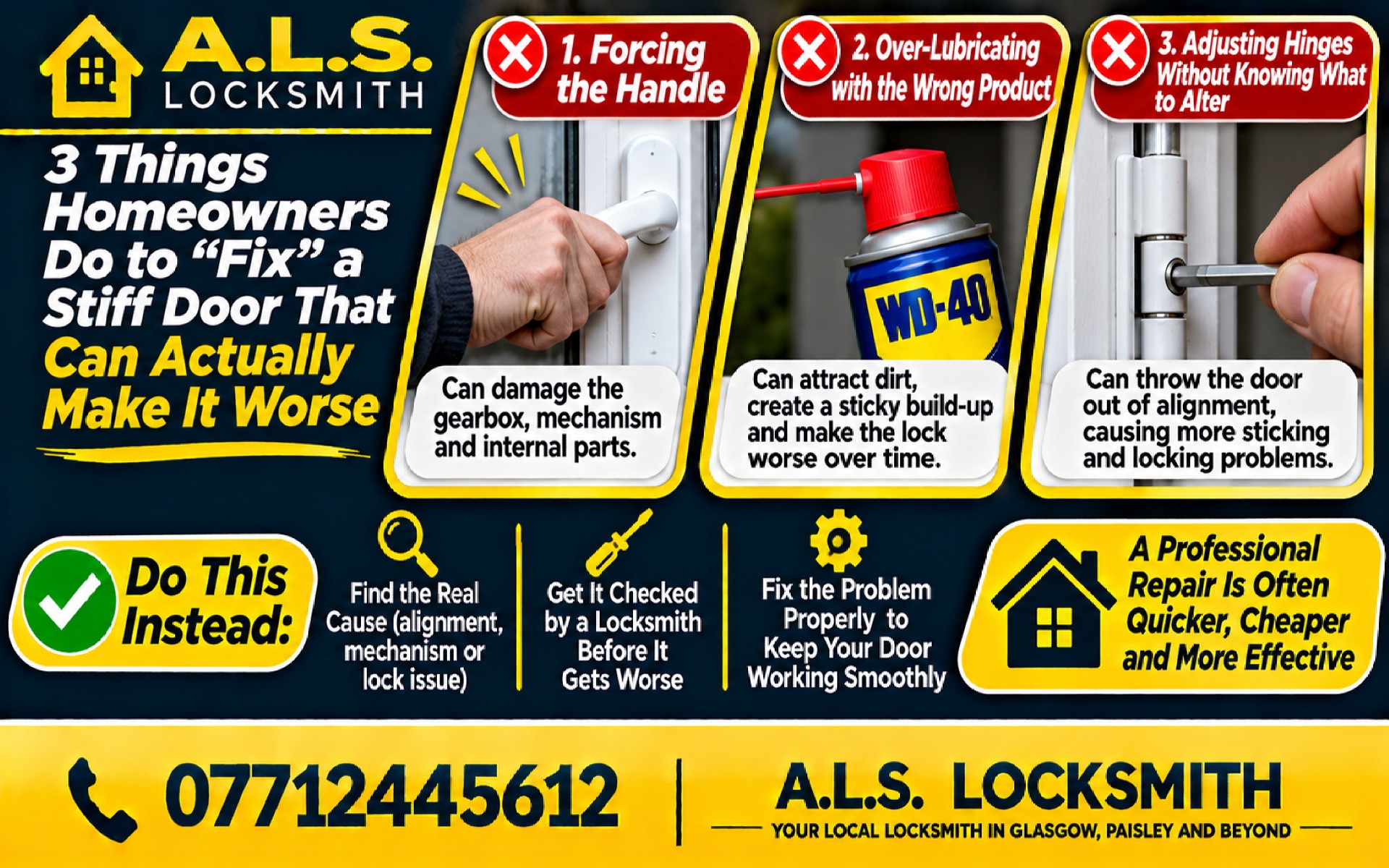
1. Spraying the wrong lubricant into the lock
When a key becomes difficult to turn, reaching for a can of WD-40 might seem like the obvious first step.
However, general-purpose penetrating oils and water-displacing sprays are not necessarily suitable for the delicate internal components of every lock cylinder.
Some products can leave residues that attract dirt or interfere with the smooth operation of a lock over time. Other lubricants may be unsuitable for the particular cylinder or its manufacturer's recommendations.
Why it can cause problems
A euro cylinder contains small internal components that must move correctly when the correct key is inserted. If the cylinder is sticking because of wear, damage or an internal fault, spraying a general-purpose product into it will not necessarily solve the underlying problem.
Excessive or unsuitable lubricant may also make diagnosis more difficult, particularly if the lock continues to deteriorate.
What should you do instead?
Check the lock manufacturer's maintenance recommendations and use a lubricant specifically approved for that type of cylinder. Some locks require a suitable dry lubricant rather than an oil-based product.
If the key is still difficult to turn, do not force it. The problem may be the cylinder itself, but resistance can also originate elsewhere in the locking mechanism or from door misalignment.
A locksmith can establish the cause before unnecessary products or replacement parts are introduced.
2. Kicking or forcing the bottom of the door
This is one of the worst things you can do when a door will not lock properly.
You lift the handle, but it refuses to move fully. You pull the door towards you, push against it or give the bottom a sharp kick, hoping to make everything line up.
Sometimes the door may appear to lock afterwards. That does not mean the problem has been resolved.
Why forcing the door can cause damage
UPVC and composite doors often use multipoint locking mechanisms, with hooks, rollers or bolts engaging into keeps along the frame.
If the door has dropped slightly on its hinges, the locking points may no longer line up with those keeps. Forcing the door can put additional strain on the handle, gearbox, locking strip, hinges and frame.
Repeatedly applying force may damage internal components or make the door harder to open later. In the worst case, the mechanism could fail while the door is closed.
A door that needs to be pushed, pulled or kicked to lock is telling you something is wrong.
What should you do instead?
Stop forcing the handle and inspect the door for obvious signs of rubbing or misalignment, without dismantling anything.
If the handle is stiff or the locking points are catching, arrange an inspection. The problem might be a simple alignment issue, worn hinges or a failing gearbox. Identifying the cause is the first step towards the correct repair.
A door that needs force to lock properly should be investigated, not fought with.
3. Adjusting hinge screws without understanding the door
Many modern uPVC doors have adjustable hinges. It can be tempting to grab an Allen key and start turning the adjustment screws when the door appears to have dropped.
The difficulty is that hinge designs vary, and different adjustment screws can control different movements.
Depending on the hinge, an adjustment may affect the door's height, its position sideways or its compression against the frame. Adjusting the wrong screw, or making large changes without checking the result, can make the alignment worse.
What is diagonal door drop?
A door can gradually move out of alignment so that the gap between the door leaf and frame is no longer consistent.
For example, the lower corner on the handle side may begin to catch against the frame. This can affect the alignment of the multipoint locking points and make the handle harder to lift.
The cause might involve hinge adjustment, worn components, the door's weight, the installation or other movement in the door and frame.
Turning hinge screws at random will not necessarily correct the problem. It can shift the door in the wrong direction or create additional pressure on the locking points.
What should you do instead?
Have the door's alignment assessed before making significant adjustments.
A competent locksmith can inspect the gaps around the door, the hinge condition, the frame keeps and the operation of the locking mechanism. This helps establish whether the problem is caused by alignment or by a fault within the mechanism itself.
Where adjustment is appropriate, it should be carried out carefully and checked by operating the door throughout its normal locking cycle.
If the gearbox or another component has already been damaged, hinge adjustment alone will not resolve that fault.
How can you tell whether the problem is the door or the lock?
Several faults can produce similar symptoms, so the handle alone does not always tell the full story.
| Symptom | Possible cause |
|---|---|
| Handle becomes stiff when locking | Misalignment, catching locking points or a faulty gearbox |
| Key is difficult to turn | Worn cylinder, pressure on the locking mechanism or another fault |
| Door catches at the bottom | Door drop, hinge problems or frame alignment |
| Handle moves but locking points do not operate correctly | Possible gearbox or mechanism failure |
| Door locks only when pushed or pulled | Locking points may not be aligning correctly with the keeps |
These are possible causes, not definitive diagnoses. A proper inspection can distinguish between them.
When should you call a locksmith?
It is worth getting professional help if:
-
The handle suddenly becomes much stiffer.
-
The key is difficult to turn or begins sticking.
-
You have to push, pull or lift the door to lock it.
-
The locking points appear to catch against the frame.
-
The mechanism makes unusual noises or stops operating consistently.
-
The door will no longer lock or unlock reliably.
If the door is already difficult to open, avoid repeatedly testing it in a way that could leave you locked out or unable to secure the property.
If it cannot be secured safely, treat the problem as urgent.
Repair the fault before it becomes a bigger problem
At A.L.S Locksmiths, we work on uPVC and composite door locks, multipoint mechanisms, faulty gearboxes, euro cylinders and door alignment problems across Glasgow, Paisley and surrounding areas.
Our approach is to identify the cause before recommending parts. Sometimes a suitable adjustment is all that is required; in other cases, a worn or damaged component needs replacing.
We offer fixed pricing, no call-out fees and a 12-month guarantee on parts supplied and fitted, subject to the guarantee's terms and exclusions. The agreed price includes the parts and labour for the specified work, and we are not VAT registered.
You do not need to replace an entire door simply because its handle has become stiff. But forcing it or making random adjustments can turn a manageable fault into a more expensive repair.
Final thoughts
If your door has become difficult to lock, resist the temptation to spray it with whatever lubricant is available, kick it into position or adjust the hinges at random.
The problem may be straightforward, but the right solution depends on identifying the cause.
Stop forcing the handle, avoid guesswork and get the fault checked before more damage occurs.
If your uPVC or composite door is sticking, catching or becoming difficult to lock, contact A.L.S Locksmiths to discuss a suitable repair.